Category: Dog Training

  • Positive Reinforcement Training for Stubborn Dogs

    Positive Reinforcement Training for Stubborn Dogs

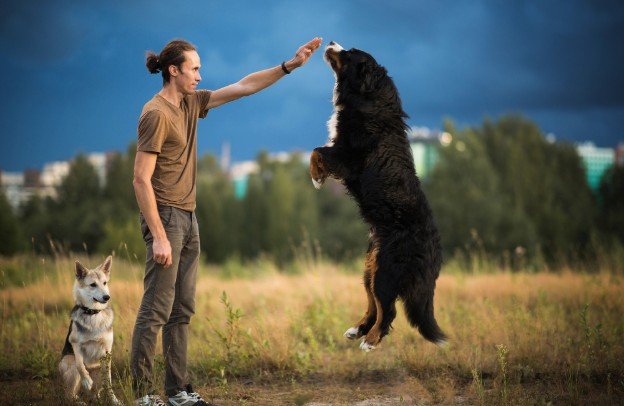
    I have learned that progress rarely comes from becoming louder, stricter, or more repetitive. It comes from finding what the dog values and making the correct choice easy.

    Positive reinforcement training for stubborn dogs replaces conflict with communication through clear cues, precise timing, and worthwhile rewards. A dog labelled stubborn may be confused, distracted, anxious, uncomfortable, or poorly motivated. Identify the obstacle first.

    Is Your Dog Really Stubborn?

    Dogs do not ignore instructions to prove a point. Their behavior reflects what has worked before and what feels rewarding now. A dog may sit in the kitchen but fail outdoors because scents, movement, people, and animals are more exciting than an ordinary biscuit.

    Unclear communication also resembles defiance. Repeating “come” can teach the dog that the first cue is optional. Changing words, gestures, or expectations makes learning harder.

    An overwhelmed dog may be unable to focus even when it knows the cue. Sudden resistance, stiffness, sensitivity, appetite changes, or withdrawal may indicate discomfort and deserve veterinary attention.

    Why Rewards Change Behavior

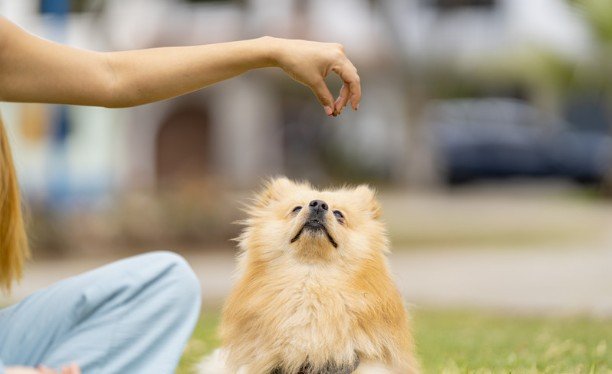
    Positive reinforcement means giving something the dog values immediately after a desired behavior, making that response more likely to happen again. Food helps, but praise, toys, play, sniffing, and access can also work.

    This approach suits independent dogs because it creates a predictable connection between the cue, the response, and a worthwhile outcome.

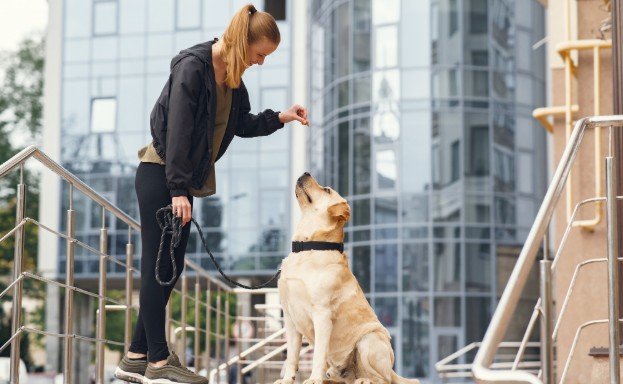
    Timing is crucial. Mark success immediately with “yes” or a clicker, then deliver the reward. The marker identifies the exact action that earned it.

    Choose a Better Reward

    Choose a Better Reward

    Kibble may work in a quiet room yet fail beside an exciting trail. Test safe options and watch which one wins attention.

    Higher-value choices may include tiny pieces of cooked chicken, cheese, or soft training treats. Keep portions small to avoid excessive calories.

    Some dogs prefer a ball, tug game, praise, or permission to sniff. Sitting before a door opens also teaches that calm behavior earns outdoor access.

    Build Skills Step by Step

    Begin Where Success Is Easy

    Start somewhere quiet. Ask for a simple behavior, such as eye contact or sitting. Mark the response and reward it immediately.

    Keep sessions between three and five minutes. Finish after success while the dog remains interested.

    Divide Difficult Behaviors

    Do not demand a finished skill immediately. For “stay,” reward one second of stillness before adding time. Increase distance only after the first stage is reliable.

    Build recall indoors from a few steps away, then increase distance gradually. Practise outdoors on a long line in a controlled location rather than risking failure in an open space.

    Add One Challenge at a Time

    Raising duration, distance, and distraction together often causes failure. Change one factor at a time and reduce the others.

    When the dog struggles, simplify the exercise rather than repeating the cue. Repeated failure means the task is too difficult, especially when trying to stop puppy from biting during play.

    Avoid Common Training Mistakes

    Avoid Common Training Mistakes

    Bribing and rewarding are different. With bribery, food appears before the response. In effective training, the cue comes first and the reward follows success. A lure can introduce a movement, but it should gradually disappear.

    Delayed rewards create confusion. If the dog sits, then stands before receiving food, it may believe standing earned the treat.

    Owners can accidentally reward unwanted actions. Attention after jumping, opening a door during scratching, or throwing a toy to stop barking may strengthen those behaviors. Reward four paws on the floor, quiet waiting, or another suitable alternative instead.

    Say each cue once. Pause and reduce the difficulty if necessary. Constant repetition weakens the cue and teaches the dog to wait for multiple instructions.

    When Treats Do Not Work

    A dog refusing food may be full, stressed, frightened, overheated, unwell, or too distracted to learn. Move away from the trigger or return to a quieter place. Better treats cannot fix an overwhelming environment.

    Training before a normal meal may improve interest, but food should never be withheld to create hunger. Try softer rewards, toys, movement, or access to an enjoyable activity.

    Gates, leads, closed doors, and chosen practice areas can prevent rehearsal of unwanted behavior while a new habit develops.

    Frequently Asked Questions

    1. Does positive reinforcement training for stubborn dogs Work for Every Breed?

    Reward-based methods suit every breed, but pacing should match the individual. Independent dogs may need shorter sessions, stronger motivation, and opportunities to sniff, chase toys, or solve simple problems.

    2. Should I Reward Every Correct Response?

    Reward every success while introducing a skill. Once the response is reliable, vary rewards while keeping occasional high-value surprises. Praise, play, and everyday privileges can replace some food.

    3. How Quickly Should I Expect Improvement?

    Simple behaviors may improve within several sessions, while reliable responses around distractions can take weeks or months. Progress depends on consistency, environment, health, reinforcement history, and difficulty.

    4. When Should I Seek Professional Help?

    Contact a qualified reward-based trainer when progress remains stalled, fear or aggression appears, or safety is at risk. Ask a veterinarian about sudden behavioral changes or possible pain.

    A Better Way Forward

    I no longer see a so-called stubborn dog as an opponent to defeat. I see a learner whose motivation, surroundings, or instructions need adjustment. Clear cues, valuable rewards, accurate timing, and achievable steps create cooperation without intimidation.

    Progress will not always be steady. A dog may succeed at home and struggle somewhere new. That does not erase the learning; it shows where more practice is needed. By lowering difficulty, rewarding genuine effort, and remaining consistent, I can help the dog choose the desired behavior with confidence.

  • How to Stop a Puppy From Biting During Play

    How to Stop a Puppy From Biting During Play

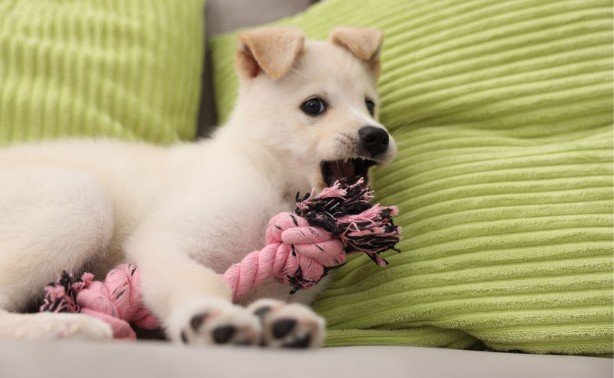
    When I first played with an excited puppy, I expected bouncing, chasing, and a few clumsy tumbles. I did not expect tiny teeth to grab my hands, sleeves, and ankles every few seconds. Although puppy biting can feel aggressive, it is usually a normal part of learning, teething, and exploring the world.

    Learning how to stop a puppy from biting during play begins with understanding that puppies repeat behaviors that keep games moving. If biting makes people squeal, wave their hands, or chase them, they may see the reaction as part of the fun. Calmly ending attention and rewarding appropriate play teaches a much clearer lesson.

    Why Puppies Bite During Play

    Puppies use their mouths much like young children use their hands. They investigate textures, communicate with littermates, and test what happens when they apply pressure. During early development, mouthing is one way they learn bite inhibition, which means controlling the strength of their bite.

    Teething can also increase biting. As baby teeth loosen and adult teeth emerge, chewing may relieve discomfort in the gums. A puppy may therefore target fingers, shoes, furniture, or clothing whenever excitement and teething happen at the same time.

    Fatigue is another common cause. An overtired puppy may become frantic, jump repeatedly, ignore toys, and bite harder than usual. In these situations, more active play is rarely the solution. The puppy may need a potty break, a calm activity, or a nap.

    What to Do When Your Puppy Bites

    The moment your puppy’s teeth touch skin or clothing, stop moving. Pulling your hand away quickly can activate the puppy’s chase instinct and make the game more exciting.

    Remain still for a moment, calmly remove your attention, and step away if necessary. You can cross your arms, turn your back, or move behind a puppy gate for a brief pause. The goal is not to frighten or punish the puppy. It is to show that biting immediately ends access to play.

    After several seconds of calm behavior, return with an appropriate toy. Resume the game only when the puppy engages with the toy rather than your body. This creates a simple pattern: teeth on people stop the game, while teeth on toys keep it going.

    Use the Game-Over Method Consistently

    Use the Game-Over Method Consistently

    A reverse time-out is one of the clearest ways to respond to play biting. Instead of placing the puppy somewhere as punishment, you briefly remove yourself from the interaction.

    Keep the pause short. Puppies may not connect a long isolation period with the bite that happened earlier. A brief, immediate break is easier to understand.

    Everyone in the household should follow the same rule. If one person stops play while another allows the puppy to wrestle with hands, progress will be slower. Consistency helps the puppy predict which behaviors earn attention.

    Redirect Biting to the Right Toys

    Keep suitable toys within reach before play begins. Long tug toys, soft puppy-safe toys, and lightweight fetch toys create distance between teeth and hands.

    Move the toy away from the puppy rather than pushing it toward the face. Prey-like movement often makes the toy more interesting. When the puppy grabs it, continue the game and offer praise.

    Do not repeatedly wave fingers near the puppy’s mouth or encourage hand wrestling. Even when it seems harmless, it teaches the puppy that human skin is an acceptable play target.

    When practicing how to stop a puppy from biting during play, introduce the toy before the puppy becomes overexcited. Prevention is usually easier than interrupting a puppy that is already jumping, growling playfully, and grabbing clothes.

    Keep Play Sessions Calm and Short

    Long, intense games can push a puppy beyond its ability to control impulses. Several short play sessions are often more productive than one exhausting session.

    Watch for early signs of overstimulation, such as faster movements, repeated jumping, sudden zooming, harder bites, barking, or an inability to respond to familiar cues. End the game before the behavior becomes chaotic.

    Alternate active play with calmer activities. Sniffing games, food puzzles, supervised chewing, and simple training exercises can provide mental stimulation without creating the same level of excitement.

    Puppies also need substantial sleep. A young puppy that suddenly becomes unusually mouthy may simply be tired. Guide the puppy to a quiet, comfortable resting area without treating the break as punishment.

    Should You Yelp When a Puppy Bites?

    Should You Yelp When a Puppy Bites

    Some training advice recommends making a brief yelping sound when a puppy bites too hard. This imitates feedback puppies may receive from littermates, while basic obedience commands can help redirect the puppy toward calmer, more controlled behavior.

    However, yelping does not work for every puppy. Sensitive puppies may pause, while highly excitable puppies may become more interested and bite again. A loud reaction can sound like a squeaky toy.

    Try one calm verbal interrupter if needed, but observe the result. If the puppy becomes more excited, stop making sounds and use quiet disengagement instead.

    How to Handle Biting Hands, Ankles, and Clothes

    Biting Hands

    Keep hands still and avoid pushing the puppy away. Redirect to a toy, then reward the puppy for choosing it. Practice gentle handling separately when the puppy is calm.

    Biting Ankles

    Stop walking as soon as the puppy targets your feet or pant legs. Movement encourages chasing. Keep a long toy nearby and reward the puppy for following the toy instead of grabbing clothing.

    Pulling Clothes

    Do not tug the fabric back because this turns clothing into a game. Freeze, calmly release the material if possible, and step away. Resume interaction only after the puppy settles.

    Helping Children Play Safely

    Children should always be supervised during puppy interactions. Running, squealing, waving hands, and sitting on the floor can trigger chasing and mouthing.

    Teach children to become still when the puppy gets too rough. Adults should manage the situation using gates, leashes, and long toys rather than expecting a child to train the puppy alone.

    Short, structured games such as tossing treats, rolling a ball, or practicing simple cues are generally safer than wrestling.

    Puppy-Biting Mistakes to Avoid

    Puppy-Biting Mistakes to Avoid

    Avoid hitting the puppy, holding the muzzle closed, yelling, or using physical intimidation. These reactions can create fear without teaching an appropriate replacement behavior.

    Do not use the crate as an angry punishment. A crate or playpen should remain a comfortable resting space. If the puppy needs a nap, guide it there calmly after meeting its bathroom and comfort needs.

    Avoid expecting instant results. Puppies learn through repetition, and teething may temporarily increase mouthing even when training is progressing.

    When Puppy Biting May Be Concerning

    Most play biting occurs with a loose body, bouncing movement, and easy redirection. Seek professional guidance when biting is accompanied by stiffness, prolonged freezing, guarding, repeated skin-breaking bites, or intense reactions to handling.

    A sudden behavior change can also indicate pain or illness. Contact a veterinarian when biting appears unexpectedly or occurs when a particular body area is touched.

    A qualified positive-reinforcement trainer or veterinary behavior professional can evaluate patterns that are difficult to manage safely.

    Frequently Asked Questions

    1. How can I learn how to stop a puppy from biting during play quickly?

    Use the same response every time. Freeze, remove attention briefly, return with a toy, and reward appropriate play. Consistent repetition is more effective than punishment or emotional reactions.

    2. At what age do puppies stop biting?

    Many puppies improve as teething ends and impulse control develops, but there is no exact age for every dog. Training, sleep, exercise, breed tendencies, and household consistency all influence progress.

    3. Why does my puppy bite harder in the evening?

    Evening biting often results from fatigue, accumulated excitement, or overstimulation. A potty break followed by a calm chew and scheduled rest may help more than additional energetic play.

    4. Can tug games make puppy biting worse?

    Tug can be safe when the puppy targets the toy, follows clear start-and-stop rules, and releases when asked. End the game whenever teeth contact skin or clothing.

    A Gentler Path to Better Play

    I have found that puppy biting becomes much easier to handle once every interaction follows the same predictable rule. I do not need to scare, overpower, or punish a puppy to change the behavior. I only need to make rough biting unrewarding and appropriate toy play worthwhile.

    With calm pauses, well-timed redirection, shorter games, enough rest, and consistent household rules, most puppies gradually develop better control. The process takes patience, but each successful play session helps build safer habits and a more trusting relationship.

  • Basic Obedience Commands Every Dog Should Learn

    Basic Obedience Commands Every Dog Should Learn

    Living with a dog becomes easier when both of you share a clear language. I have found that short, positive lessons work better than long, frustrating sessions. Teaching the basic obedience commands every dog should learn can improve safety, prevent unwanted behaviour and make daily routines more enjoyable.

    Obedience is not about controlling every move. It gives a dog predictable guidance and rewards good decisions.

    Why Obedience Training Matters

    A reliable “come” may stop a dog from running towards danger. “Leave it” and “drop it” can prevent swallowing harmful objects, while “stay” and “wait” help at doors, roads and crowded spaces.

    Train for five to ten minutes in a quiet area. Use small treats, praise or a favourite toy. Say a marker word such as “yes” the instant the correct behaviour happens, then reward. Everyone at home should use the same cues.

    1. Name Response

    Name Response

    Say the dog’s name once in a cheerful voice. Reward the moment the dog looks at you. Avoid repeating it, because attention is the foundation for every other skill.

    2. Sit

    Hold a treat near the nose and move it slowly upward and back. When the rear lowers, mark and reward. Add “sit” once the movement becomes predictable, and never push the dog’s hips down.

    3. Down

    From a sit, guide a treat towards the floor and slightly forward. Reward when the elbows and body touch the ground. Use a comfortable, non-slip surface and never force the position.

    4. Stay

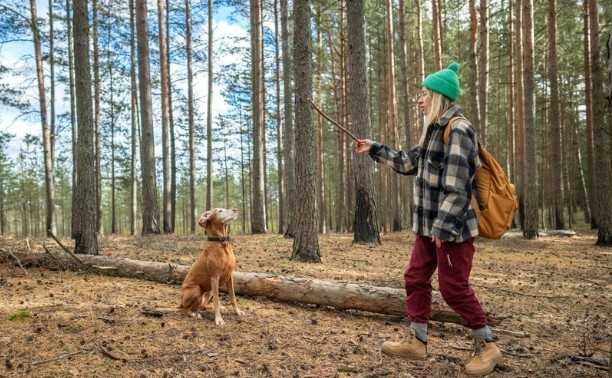
    When you train a rescue dog, ask for a sit or down, show an open palm, and say “stay.” Pause briefly, reward, and release. Increase duration before adding distance. Use a release cue such as “free” so the ending is clear.

    5. Come

    Begin indoors from a few steps away. Say the dog’s name followed by “come,” move backwards and reward generously on arrival. Never punish a dog after it comes. Use a long training line outdoors until recall is dependable.

    6. Emergency Recall

    Choose a special word that is not used in normal conversation. Practise it occasionally and give an unusually valuable reward.

    7. Wait

    Wait

    “Wait” requests a temporary pause rather than a fixed position. At a door, open it slightly, close it if the dog moves forward and reward calm waiting. Gradually open it farther before giving a release word.

    8. Leave It

    Place a low-value treat in a closed hand. When the dog moves away, mark the choice and reward from the other hand. Add “leave it,” then progress to an open palm and an item on the floor.

    9. Drop It

    Let the dog hold a toy, then offer a better reward. When the toy is released, say “drop it,” mark and reward. Return the toy when safe. Chasing or pulling can turn the situation into a game or encourage guarding.

    10. Off

    Use “off” when paws are on a person, counter or furniture. Guide all four paws to the floor and reward there. Keep “off” separate from “down” to avoid confusion.

    11. Loose-Leash Walking

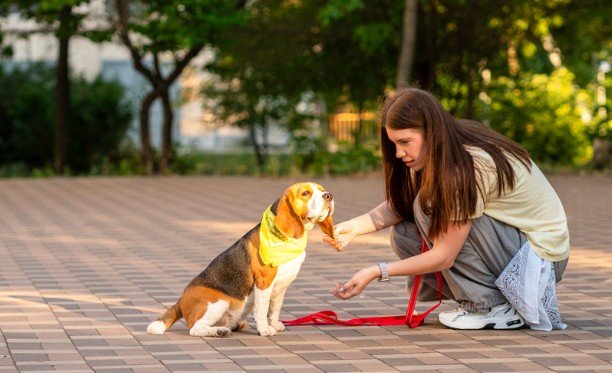
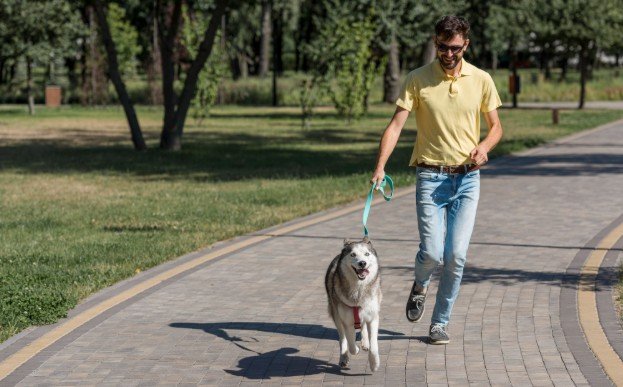
    Reward the dog beside your preferred side, take a few steps and reward again while the leash stays loose. If pulling begins, stop or change direction. Heel is a precise close position, while loose-leash walking allows more freedom.

    12. Release

    A release word tells the dog that stay, wait or another controlled behaviour has ended. Reward the held position, say “free,” then encourage movement.

    Make Every Cue Reliable

    Make Every Cue Reliable

    Dogs do not automatically understand that a cue learned in the kitchen also applies outside. Build reliability through duration, distance and distraction, increasing only one difficulty at a time.

    If performance weakens, make the exercise easier rather than repeating the cue. Rewards can become less frequent later, but occasional reinforcement should continue.

    Mistakes That Slow Progress

    Common mistakes include repeating commands, rewarding too late, training too long and progressing too quickly. Inconsistent vocabulary also creates confusion.

    Punishment may suppress behaviour without teaching a better choice. Reward-based training shows the dog what to do. Seek a qualified trainer or behaviour professional for aggression, severe fear, guarding or intense anxiety.

    Frequently Asked Questions

    1. What Are the First Five Commands to Teach?

    Start with name response, sit, down, stay and come. They create attention, body control and a basic safety system before harder exercises.

    2. How Long Does Obedience Training Take?

    A dog may understand a simple cue within several sessions, but reliability requires practice in different environments.

    3. What Is the Difference Between Stay and Wait?

    Stay means holding a particular position until released. Wait means pausing temporarily before moving forward.

    4. What Are the Basic Obedience Commands Every Dog Should Learn?

    The most practical set covers attention, stationary positions, recall, impulse control, object release, polite greetings and leash manners.

    5. Can an Older Dog Learn These Skills?

    Yes. Older dogs can learn when rewards are meaningful, sessions are short and physical limitations are respected. Age alone does not prevent progress.

    Final Thoughts

    I view training as an ongoing conversation, not a test a dog passes once. Real success means calm, dependable responses in different places and around ordinary distractions.

    By rewarding clearly, progressing gradually and practising for a few focused minutes each day, I can build useful habits without fear or force. Patience and consistency create better manners, greater safety and a stronger lifelong bond.

  • How to Train a Rescue Dog With Trust Issues

    How to Train a Rescue Dog With Trust Issues

    Bringing home a nervous rescue can feel joyful and overwhelming. I once expected affection to grow quickly, but I learned that trust develops only when a dog feels safe and free from pressure. Learning how to train a rescue dog with trust issues begins before formal obedience.

    Why Rescue Dogs May Struggle to Trust

    Fear does not automatically prove past abuse. Genetics, poor socialisation, pain, repeated moves, shelter stress, harsh handling, or unfamiliar surroundings can affect behaviour. 

    Hiding, freezing, barking, pacing, growling, guarding, and refusing food are communication, not stubbornness. Punishment may hide warning signs without changing the fear.

    Start With Safety, Not Commands

    Create a Quiet Retreat

    Provide a bed, crate, or calm corner away from busy doors, children, visitors, and loud appliances. Never drag the dog from this space. A dependable retreat gives the dog control.

    Build a Predictable Routine

    Feed, walk, rest, and train at consistent times. Keep the first days quiet and limit visitors. Use the 3-3-3 rule only as a flexible guide.

    Check Whether Your Dog Can Learn

    Before training, look for a loose body, normal breathing, interest in food, sniffing, and the ability to look away from a trigger. These signs suggest the dog can learn.

    A tucked tail, frozen posture, trembling, lunging, star gazing in a dog, or refusal of treats means the exercise is too difficult. Increase distance, reduce noise, shorten the session, or move somewhere quieter. A dog that will not eat may need safety, not a better treat.

    Nine Trust-Building Training Steps

    Nine Trust-Building Training Steps

    1. Let the Dog Approach

    Turn slightly sideways, soften your gaze, and avoid leaning over the dog. Toss a treat nearby instead of reaching toward its face. Voluntary approaches preserve choice.

    2. Discover the Best Reward

    Rewards may include food, toys, sniffing, praise, distance, or access to a safe place. Use what the dog values.

    3. Add a Calm Marker

    Choose a word such as “yes.” Say it when the dog performs the desired behaviour, then reward. This identifies the action that earned the result.

    4. Begin With Easy Wins

    Start with name recognition, hand targeting, eye contact, or one-step luring. These simple skills can also help stop dog from jumping on guests by redirecting attention toward calm, controlled behavior. Keep sessions under five minutes and finish comfortably.

    5. Reward Voluntary Check-Ins

    Reward the dog for looking toward you without being called. These check-ins create a habit of seeking guidance around distractions.

    6. Practise Consent-Based Touch

    Pet the chest or shoulder for three seconds, then pause. Continue only if the dog moves closer or stays relaxed. Stop if it turns away, freezes, lip-licks, or leaves.

    7. Introduce Triggers Gradually

    Present a mild version of a feared sight or sound from a comfortable distance and pair it with something pleasant. Move closer only while the dog remains relaxed.

    8. Socialise Without Overwhelming

    Let the dog calmly observe selected people, animals, surfaces, sounds, and environments. One controlled positive experience is better than several chaotic encounters.

    9. End on Success

    Finish after an easy response and allow the dog to rest. Frequent short sessions protect confidence, while long sessions may create frustration.

    A Simple First-Week Plan

    During days one and two, focus on decompression, meals, toilet breaks, quiet walks, and sleep. On days three and four, toss treats, say the dog’s name once, and reward calm attention. During days five through seven, add a marker word, hand targeting, and confidence games.

    Repeat an earlier stage whenever the dog appears worried.

    Signs Trust Is Growing

    Signs Trust Is Growing

    The dog may eat near you, sleep more deeply, enter voluntarily, initiate play, sniff during walks, or recover faster after sudden sounds. A loose body and regular check-ins also show progress. Track changes carefully from week to week.

    Mistakes That Can Damage Trust

    Avoid shouting, leash corrections, forced greetings, cornering, staring, and taking objects by force. Do not overwhelm the dog with visitors or expect cuddling as proof of gratitude.

    Never punish a growl. It gives you time to create distance. Suppressing the warning without resolving the fear can make future behaviour less predictable.

    When Professional Help Is Necessary

    Arrange a veterinary examination if behaviour changes suddenly, because pain or illness can cause fear or aggression. Seek qualified help if the dog bite infection, injures itself, cannot eat, panics when left alone, guards intensely, or makes little progress.

    Choose a reward-based trainer. Severe cases may require a veterinary behaviourist.

    Frequently Asked Questions

    1. How Long Does a Rescue Dog Take to Trust an Owner?

    There is no fixed timeline. Temperament, health, environment, and daily experiences matter most.

    2. Should I Ignore a Frightened Rescue Dog?

    Give the dog space without withdrawing care. Move calmly, follow a routine, and let interaction develop without pressure.

    3. What Is the Best Way to Learn How to Train a Rescue Dog With Trust Issues?

    Begin with safety, predictable routines, short reward-based sessions, voluntary interaction, gradual exposure, and professional guidance when fear or aggression creates risk.

    4. Can an Older Rescue Dog Learn to Trust?

    Yes. Adult and senior dogs can form secure relationships and learn new behaviours, although their pace should guide the plan.

    A Safer Bond Starts With Small Choices

    I have found that the biggest shift comes when I stop asking, “Why will this dog not obey?” and start asking, “What would help this dog feel safe enough to respond?” Trust grows through calm rewards and permission to step away.

    Stay patient and notice small victories. Obedience may be visible, but emotional safety makes lasting learning possible.

  • How to Stop a Dog From Jumping on Guests Without Shouting

    How to Stop a Dog From Jumping on Guests Without Shouting

    I know how embarrassing it can feel when I open the door and my dog immediately launches toward a visitor. Even when the jumping is friendly, guests may feel nervous, lose their balance or arrive with muddy paw prints on their clothes. Learning how to stop a dog from jumping on guests is not about punishing excitement. It is about showing the dog that calm behavior is the only reliable way to receive attention.

    The most effective approach combines preparation, consistent visitor rules and rewards for keeping all four paws on the floor. With regular practice, an uncontrolled doorway greeting can become a calm routine that both the dog and visitors understand.

    Why Dogs Jump on Visitors

    Dogs frequently jump because the behavior has worked before. A dog jumps, the person talks, pushes them away, makes eye contact or touches them. Although the reaction may be negative, it still gives the dog attention.

    Excitement also plays an important role. The sound of a doorbell, approaching footsteps or an opening door can signal that something interesting is about to happen. Dogs that have not learned another greeting behavior may respond by rushing forward and jumping.

    Some dogs jump because they naturally attempt to reach a person’s face. Others may be overstimulated, anxious or unsure about visitors. Understanding the reason helps owners choose the right response instead of treating every jump as deliberate disobedience.

    Prepare Before the Visitor Arrives

    Training is much easier when the dog cannot repeatedly practise the unwanted behavior. Before opening the door, attach a leash or place the dog behind a baby gate. Keep small, high-value treats nearby and prepare a mat or bed several feet away from the entrance.

    A short walk, play session or scent-based activity before visitors arrive may reduce excess energy. However, exercise alone will not solve the problem. The dog must still learn what to do when someone enters.

    Ask visitors to cooperate before they come inside. They should avoid speaking to, touching or making eye contact with the dog while the dog is jumping. Attention should begin only after the dog becomes calm.

    Use a Step-by-Step Doorway Routine

    Use a Step-by-Step Doorway Routine

    Prevent the First Jump

    Keep the dog on a leash at a comfortable distance from the doorway. The leash should prevent contact without becoming tight, as excessive restraint can contribute to barrier frustration in dog behavior.

    Ask the visitor to enter quietly and stand still. If the dog tries to jump, move farther away or guide the dog back without shouting, jerking the leash, or pushing the dog.

    Reward Four Paws on the Floor

    The moment all four paws remain on the ground, mark the behavior with a calm word such as “yes” and provide a treat. Rewards should be delivered low, near the dog’s nose or toward the floor. Holding food too high can encourage the dog to lift upward again.

    Repeat this several times before allowing the visitor to greet the dog.

    Allow a Controlled Greeting

    When the dog is calm, invite the visitor to offer brief attention. The visitor can gently stroke the dog’s chest or side rather than leaning over the head.

    If the dog jumps, attention must stop immediately. The visitor should stand upright, fold their arms and look away. Once four paws return to the floor, the greeting may resume.

    This teaches a simple pattern: calm behavior makes people approach, while jumping makes attention disappear.

    Teach an Alternative Greeting Behavior

    A sit can be helpful because a sitting dog cannot jump at the same time. Practise the cue in quiet rooms before expecting the dog to respond near an exciting visitor.

    Some dogs become too excited to hold a sit. For them, rewarding four paws on the floor may be more realistic. Another useful option is teaching the dog to go to a designated mat when the doorbell rings.

    Begin mat training without visitors. Reward the dog for looking at the mat, stepping onto it and eventually remaining there. Gradually add distance, door sounds and a familiar helper entering the home.

    A dog can also be taught to collect a toy before greeting. Carrying an object may redirect excitement and give the dog a predictable arrival task.

    Give Guests Clear Instructions

    Visitors often unintentionally weaken training by encouraging jumping. Some pat their chest, speak excitedly or say that they do not mind. However, occasional permission makes the rule confusing.

    Use a straightforward guest instruction: “Please ignore the dog until all four paws are down. Then you can calmly say hello.”

    Children, elderly visitors and anyone who feels nervous should not participate in early training sessions. Keep the dog behind a secure barrier until the greeting is reliably controlled.

    Try a Seven-Day Practice Plan

    Try a Seven-Day Practice Plan

    On the first two days, practise calm leash greetings with a household member. The person should step outside, knock and re-enter several times. On days three and four, use a familiar helper. Keep sessions short and repeat only a few successful greetings.

    On day five, practise the mat or place cue while the helper opens and closes the door. On day six, add realistic distractions such as a doorbell sound, a coat, a bag or more enthusiastic movement. 

    On day seven, combine the entire routine. The dog waits, the visitor enters, calm behavior is rewarded and a controlled greeting follows. Progress depends on repetition, not speed. If the dog becomes increasingly excited, make the exercise easier rather than continuing until the dog fails.

    Avoid Common Training Mistakes

    Do not knee the dog in the chest, step on the paws or hold the front legs. These methods can cause pain, fear or defensive behavior.

    Pushing the dog away may also feel like play. Repeating “down” while touching the dog can provide the attention the dog wanted. Following beginner leash training tips that reward calm behavior instead of reacting to jumping can help your dog learn better self-control.

    Another mistake is rewarding too late. If the treat appears after the dog has jumped again, the dog may associate the reward with the wrong action. Timing must be immediate and consistent.

    Family members must follow the same rule. Allowing jumping during some greetings but correcting it during others slows progress.

    Frequently Asked Questions

    1. How do I stop my dog from jumping on people at the door?

    Use a leash or gate, reward four paws on the floor and ask visitors to remove attention whenever jumping occurs.

    2. How long does greeting training take?

    Some dogs improve within several sessions, while highly excitable dogs may require weeks of consistent practice in different situations.

    3. Should visitors turn their backs when my dog jumps?

    Turning away can help, provided the visitor remains calm and the dog is not likely to scratch, mouth or knock them over.

    4. What is the best method for how to stop a dog from jumping on guests?

    Prevent access to the visitor, reward calm behavior immediately and allow attention only while the dog’s paws remain on the floor.

    5. When should I contact a professional trainer?

    Seek qualified help if the dog growls, lunges, snaps, guards the entrance, becomes panicked or is too strong to manage safely.

    A Calmer Welcome Starts With Consistency

    I would not expect my dog to understand polite greetings without teaching and practising them. The doorway is an exciting environment, so management is just as important as training.

    When I prevent jumping, reward calm choices and ask every visitor to follow the same rules, the dog receives a clear message. Jumping no longer opens the door to attention. Calm behavior does. That consistency creates safer arrivals, more relaxed visitors and a dog that knows exactly how to earn a friendly welcome.

  • Beginner Leash Training Tips for Dogs That Build Better Walks

    Beginner Leash Training Tips for Dogs That Build Better Walks

    When I first worked on leash manners, I thought success simply meant stopping a dog from pulling. I soon learned that calm walking depends on communication, reward timing, confidence, and consistency. These beginner leash training tips for dogs can help puppies, adopted adults, and dogs with frustrating walking habits.

    The goal is not a competition-style heel. A good everyday walk means the leash stays mostly loose, the dog checks in with you, and both of you move safely.

    Understand Loose-Leash Walking

    A loose leash forms a soft curve instead of remaining tight. Your dog may walk beside you, slightly ahead, or pause to sniff without dragging you. Everyday leash training allows freedom while still rewarding calm behavior and attention.

    This is different from formal heeling, which requires a dog to remain in a precise position. For normal walks, focus on safety, responsiveness, and a relaxed leash.

    Choose Comfortable Walking Equipment

    Start with a standard fixed-length leash. Retractable leashes can make early training harder because pulling often gives the dog more distance.

    A flat collar may suit a calm dog, while a well-fitted harness can provide better control and reduce neck pressure. A dog harness may redirect a strong puller, but no piece of equipment replaces consistent training.

    Check that everything is secure without restricting movement or breathing. Uncomfortable equipment can make a dog freeze, scratch, resist walking, or associate the leash with stress.

    Begin Training Indoors

    Begin Training Indoors

    Introduce the Leash Positively

    Let your dog inspect the leash, collar, or harness. Pair each item with treats, praise, play, or meals. Put the equipment on briefly, remove it, and repeat.

    If your dog freezes, bites the leash, scratches continuously, or tries to escape, slow down. The equipment may simply feel unfamiliar.

    Reward Attention and Proximity

    Begin in a quiet room with few distractions. Reward your dog for looking at you, standing nearby, and following one or two steps.

    Use a marker word such as “yes” when the correct behavior happens. Deliver the treat beside your leg rather than reaching forward. Treat placement teaches your dog that remaining near you is rewarding.

    Build a Simple Walking Pattern

    Choose a walking cue such as “let’s go.” Take two or three steps, mark the loose leash, and reward beside your leg. Gradually increase the number of steps between rewards.

    Keep early sessions between three and five minutes. Brief, successful practice is more useful than a long walk filled with pulling and frustration.

    Stop while your dog is still focused. Ending on a successful repetition helps make the next session easier.

    Stop Pulling Without Harsh Corrections

    When the leash tightens, stop moving. Avoid dragging your dog backward, shouting, or repeatedly jerking the leash.

    Wait for your dog to turn, step toward you, or release the tension. Mark that moment, reward beside you, and start walking again. This creates a clear rule: pulling stops progress, while a loose leash keeps the walk moving.

    You can also make a calm turn before the leash becomes fully tight. Direction changes encourage your dog to notice where you are going instead of charging toward every distraction.

    Everyone who walks the dog should follow the same rule. Allowing pulling occasionally can make the habit much harder to change.

    Add Outdoor Distractions Gradually

    Add Outdoor Distractions Gradually

    Progress from a quiet room to a yard, driveway, calm sidewalk, and eventually busier places. Do not move directly from indoor practice to a crowded park.

    Increase only one challenge at a time. You might practice for fewer minutes in a harder environment or remain somewhere familiar while asking for more loose-leash steps.

    If your dog ignores treats outdoors, move farther away from people, dogs, traffic, or exciting smells. A dog that cannot eat, respond, or look at you may be too overwhelmed to learn effectively.

    Use Sniffing as a Reward

    Many dogs value sniffing as much as food. Ask for several relaxed steps and then use a release cue such as “go sniff.”

    This creates a useful pattern in which calm walking earns access to interesting smells. Planned sniff breaks also make walks more enjoyable and reduce random zigzagging.

    A training walk should not prevent your dog from exploring. It should teach your dog how to earn that freedom without pulling.

    Follow a Seven-Day Starter Plan

    Days One and Two

    Practice wearing the equipment and following you indoors as you train a dog to walk without pulling. Reward every few steps and finish while your dog remains interested.

    Days Three and Four

    Move to a quiet outdoor space. Practice short straight lines, gentle turns, and stopping whenever the leash tightens.

    Days Five and Six

    Add mild distractions from a comfortable distance. Reward voluntary check-ins and use sniffing as a planned reward.

    Day Seven

    Try a short neighborhood session. Measure success by calm steps rather than distance. Five controlled minutes can be more productive than a stressful thirty-minute walk.

    Solve Common Beginner Problems

    Solve-Common-Beginner-Problems

    Your Dog Refuses to Walk

    Do not pull the dog forward. Encourage one small step with a treat, cheerful voice, or movement away from the dog. Check for fear, fatigue, hot asphalt in dogs, uncomfortable equipment, or possible pain.

    Your Puppy Bites the Leash

    Keep the leash still so it does not become a tug toy. Redirect the puppy with a treat, toy, or familiar cue, then reward calm walking before the biting restarts.

    Your Dog Pulls Toward People or Dogs

    Create distance before excitement becomes unmanageable. Reward attention while the person or dog remains far enough away. Avoid forced greetings during training sessions.

    Training Works Indoors but Fails Outside

    Choose a quieter location, use higher-value treats, and reward more frequently. Indoor success does not automatically transfer to distracting outdoor environments.

    Frequently Asked Questions

    1. How long do beginner leash training tips for dogs take to work?

    Some dogs improve within several sessions, while others need several weeks. Age, previous habits, confidence, environmental distractions, and training consistency all influence progress.

    2. Can an adult rescue dog learn loose-leash walking?

    Yes. Adult dogs can learn new walking habits. Fearful, reactive, or experienced pullers may need slower progression, greater distance from triggers, and professional support.

    3. Should leash training happen before or after exercise?

    A short training session may be easier after your dog has released some energy. However, avoid exhausting your dog before asking for focus and self-control.

    4. When should I seek professional help?

    Contact a qualified reward-based trainer, behavior consultant, or veterinarian if your dog lunges, panics, redirects aggression, cannot recover around triggers, or appears to experience pain.

    The Walk Ahead

    I have learned to measure leash-training progress through small wins rather than distance. A few relaxed steps, a voluntary check-in, or one calm response to a distraction can show that meaningful learning is happening.

    Clear rules, brief sessions, well-timed rewards, and realistic expectations create lasting improvement. With patience and consistency, daily walks can become safer, calmer, and more enjoyable for both ends of the leash.

  • How to Teach a Dog to Stay Home Alone Without Stress

    How to Teach a Dog to Stay Home Alone Without Stress

    When I help a dog adjust to time alone, I never begin by leaving for an hour and hoping everything works out. Independence is a skill that must be taught gradually.

    Learning how to teach a dog to stay home alone means creating short, positive separations before barking, pacing, destruction, or fear becomes a pattern. Each session should finish while the dog is still comfortable.

    Why Dogs Struggle With Being Left Alone

    Dogs are social animals, so many prefer staying near their people. Puppies may find separation unfamiliar, while adopted or adult dogs can struggle after a move, illness, schedule change, or long period of constant companionship.

    Briefly watching the door is normal. Continuous barking, panting, drooling, scratching exits, refusing food, or trying to escape can signal serious distress. Dogs showing panic or risking injury need help from a veterinarian or qualified behavior professional.

    Prepare Your Dog and Home

    Meet Physical Needs

    Provide an age-appropriate walk, bathroom break, and fresh water before training. Reduce restlessness without exhausting the dog. Puppies, seniors, and dogs with health conditions need more frequent breaks.

    Create a Safe Resting Area

    Choose a quiet, hazard-free space with a bed, water, and room to move. It may be a gated room, puppy pen, open crate, or familiar living area.

    Use a closed crate only when your dog already rests there willingly. Confinement can worsen distress in dogs that bite bars, scratch frantically, or try to escape. The right setup is one in which your dog genuinely relaxes.

    Set Up a Camera

    A camera reveals hidden behavior such as pacing, whining, panting, trembling, or abandoning a food toy. The footage shows whether to progress, repeat the duration, or make the next session easier.

    Build Independence While You Are Home

    Build Independence While You Are Home

    Reward your dog for relaxing on a bed or mat away from you. Move around and quietly give a treat whenever the dog stays settled.

    Next, step behind a baby gate or into another room for one or two seconds. Return before worry appears, then practise during normal activities such as cooking or working. Calm independence should become part of daily life.

    Practise Very Short Departures

    Pick up your keys, put on your shoes, open the door, step outside, and return after a few seconds. Keep your movements casual. Repeating these actions without a long absence reduces sensitivity to departure cues.

    Increase time in small, irregular steps: five seconds, ten, eight, fifteen, and then twenty. Moving up and down prevents every repetition from becoming harder. Return while your dog is calm. Letting a frightened dog “cry it out” can strengthen fear instead of teaching independence.

    Follow Behavior, Not a Calendar

    Use a simple traffic-light guide. Green behavior includes eating, sniffing, lying down, or calmly changing positions. Increase the next absence slightly.

    Yellow behavior includes repeatedly watching the exit, pausing a food toy, mild pacing, or one short whine. Repeat or shorten the duration. Red behavior includes nonstop barking, trembling, escape attempts, heavy panting, or refusing high-value food. End the exercise and return to an easier stage next time.

    Create Positive Departure Routines

    Create Positive Departure Routines

    Offer a stuffed food toy, lick mat, or safe chew reserved for training. Remove choking hazards. If your dog normally loves the item but ignores it after you leave, the session may be too difficult.

    Keep departures and reunions calm. Dramatic goodbyes can make leaving feel worrying, while excited greetings may increase the contrast between presence and absence.

    Background music may comfort dogs accustomed to household noise, but it cannot treat separation anxiety. It should support gradual training, not replace it.

    Manage Unavoidable Long Absences

    Training sessions and necessary absences should be handled separately. If your dog currently remains relaxed for twenty minutes, arrange a walker, sitter, trusted friend, or suitable daycare instead of testing an entire workday.

    There is no single safe duration for every dog. Age, health, bladder control, temperament, and training history matter. Puppies and anxious dogs usually need shorter periods and extra support.

    Frequently Asked Questions

    1. How long does training take?

    Some dogs improve within weeks, while others need months. Progress depends on history, sensitivity, consistency, and whether sessions stay below the stress threshold.

    2. Should I ignore my dog before leaving?

    No. Use a calm, ordinary goodbye without emotional speeches or repeated reassurance.

    3. What is the best method for how to teach a dog to stay home alone?

    Begin with separation inside the home, practise departures lasting seconds, use a camera, and increase time only when the dog remains relaxed. Seek professional guidance for panic, escape attempts, or self-injury.

    4. Will Getting Another Dog Solve the Problem?

    Usually not. Distress is often connected to a particular person leaving, so another dog may not resolve it. A second pet also creates new care and compatibility needs.

    Final Thoughts

    I believe calm behavior matters more than reaching a particular number of minutes. Successful alone-time training is built through patience, observation, and easy repetitions. Short sessions that preserve confidence are more valuable than one long, frightening absence. 

    By preparing the environment, respecting body-language signals, progressing gradually, and seeking expert support when needed, I can help a dog develop a safer and more comfortable relationship with time alone.

  • How to Train a Dog to Walk Without Pulling Fast

    How to Train a Dog to Walk Without Pulling Fast

    I once assumed leash pulling meant a dog was stubborn. In most cases, the dog is simply moving toward something rewarding and has never learned what a loose leash should feel like. 

    Once I understood that, walks became less frustrating. The clearest way to learn how to train a dog to walk without pulling is to reward calm movement beside you while making tight-leash walking unsuccessful.

    Why Dogs Pull on the Leash

    Dogs naturally walk faster than people and explore through scent. Pulling helps them reach trees, people, dogs, or interesting smells. Each time the handler follows, the dog learns that tension creates progress.

    Excitement, anxiety, excess energy, or unfamiliar leash pressure may also contribute. Understanding the cause helps you choose the right training environment and reward.

    What You Need Before Training

    A Fixed-Length Leash

    A standard leash gives predictable control and makes tension easy to notice. Retractable leashes can encourage pulling because dogs learn to move forward against pressure.

    Comfortable Equipment

    Use a properly fitted collar or harness that does not restrict breathing or movement. A front-clip harness may help manage a strong dog, but equipment should support training rather than replace it. Avoid tools that rely on pain or fear.

    High-Value Rewards

    Choose small treats your dog can eat quickly. Regular food may work indoors, while chicken, cheese, or another favourite reward may be needed outside. Praise and permission to sniff can also reinforce good walking.

    Step-by-Step Loose-Leash Training

    Step-by-Step Loose-Leash Training

    1. Begin Indoors

    Start in a quiet room. Reward your dog for looking at you, moving toward your side, or standing calmly near your leg. This builds attention before distractions are added.

    2. Reward the Correct Position

    Choose which side you want your dog to walk on. Take one or two steps and reward beside your leg while the leash remains loose. Feeding too far ahead may encourage rushing.

    Reward frequently at first, then gradually increase the number of steps.

    3. Add a Walking Cue

    Use a consistent phrase such as “let’s go” immediately before moving. The cue should predict calm forward movement.

    4. Stop When the Leash Tightens

    The moment your dog reaches the end of the leash, stop. Do not pull backward or keep walking. Wait for the dog to turn, step back, or loosen the leash.

    Mark the response with praise or a click, reward beside your leg, and continue. A loose leash creates progress, while pulling makes progress pause.

    5. Change Direction Early

    If your dog becomes focused on something ahead, turn smoothly before the leash becomes tight. Reward the dog for following. Direction changes improve attention and prevent pulling from becoming a repeated habit.

    6. Use Sniffing as a Reward

    Ask for several calm steps, then release your dog with a phrase such as “go sniff.” This gives the walk structure while still meeting the dog’s natural need to explore.

    Sniffing can be as rewarding as food for many dogs. Using it strategically helps your dog understand that calm walking provides access to interesting places.

    7. Add Distractions Slowly

    Move from indoors to a garden, quiet path, and busier location only after your dog succeeds at each stage. If the dog cannot respond near another animal, person, or bicycle, create more distance.

    Training too close to a distraction can make learning almost impossible. Begin where your dog can still look at you, accept treats, and respond to familiar cues.

    A Five-Minute Loose-Leash Training Routine

    A Five-Minute Loose-Leash Training Routine

    Spend the first minute rewarding eye contact and voluntary check-ins. Use the next two minutes for short sections of loose-leash walking with frequent rewards.

    Spend the fourth minute changing direction before tension develops. Finish with one minute of relaxed sniffing as a reward for calm behaviour.

    Short, successful sessions are often more useful than a long walk filled with pulling. This routine can be completed before a normal walk or practised separately in a quiet location.

    Common Mistakes That Encourage Pulling

    Inconsistent rules cause confusion. If pulling works when you are busy but not during training, the dog receives mixed information. Everyone who walks the dog should follow the same basic approach.

    Other mistakes include rewarding too late, choosing an area that is too distracting, and using food that is not valuable enough. Rewards should appear while the dog is in the desired position rather than after the dog has already moved ahead.

    Avoid expecting a strict heel for the entire walk. Loose-leash walking should allow comfortable movement, sniffing, and exploration without constant tension.

    Handling Dogs, People, and Wildlife

    Stay far enough from distractions for your dog to remain calm and accept rewards. Reinforce looking at the trigger and then checking back with you. This teaches the dog to notice exciting things without immediately pulling toward them. The same gradual, reward-based approach can also help you teach a dog to stay home alone without creating unnecessary stress.

    If the dog lunges, barks, freezes, or ignores treats, move farther away instead of forcing a close encounter. Increasing distance can restore focus and prevent the dog from becoming overwhelmed.

    For squirrels or other wildlife, turn before the chase begins and reward the dog for following. Early action is usually more effective than trying to regain attention after the dog has reached full excitement.

    How Long Does Training Take?

    How Long Does Training Take

    Some dogs improve within a few quiet sessions, but reliable walking around distractions can take weeks or months. Age, energy level, previous habits, environment, and consistency all affect progress.

    Look for smaller signs of success, including faster check-ins, fewer tight-leash moments, and quicker recovery after distractions. These improvements show that your dog is learning even before the behaviour becomes completely dependable.

    When to Seek Professional Help

    Seek professional support when a dog is strong enough to cause injury, reacts aggressively, chases vehicles, shows intense fear, or cannot recover around normal triggers.

    A qualified reward-based trainer or veterinary behaviour professional can identify the cause and develop a safer plan. Sudden changes in walking behaviour should also be discussed with a veterinarian because pain or illness may affect movement and reactions.

    Frequently Asked Questions

    1. What is the fastest way to reduce leash pulling?

    Begin in a quiet place, reward beside your leg every few steps, and stop whenever the leash tightens. Short daily sessions usually create better results than occasional long sessions.

    2. Should I use a harness for a dog that pulls?

    A well-fitted harness can improve comfort and control, especially for a strong dog. However, it should still be combined with consistent reward-based training.

    3. Can an older dog learn loose-leash walking?

    Yes. Older dogs can learn new walking habits, although a long history of pulling may require additional repetition and patience.

    4. How often should I practise how to train a dog to walk without pulling?

    Practise for five to ten minutes once or twice daily, or include short training sections within regular walks. Finish while your dog is still focused and successful.

    Final Thoughts

    I have found that calm walking improves fastest when I stop treating the leash as a contest of strength. I reward attention, pause when tension appears, and increase distractions only when the dog is ready.

    Progress may not always be steady, especially in unfamiliar places. However, short sessions, precise rewards, and regular opportunities to sniff can create dependable habits. With patience and consistency, everyday walks can become safer, calmer, and more enjoyable for both the dog and the person holding the leash.