Category: hare indian dog

  • What Did the Hare Indian Dog Look Like? Full Guide

    What Did the Hare Indian Dog Look Like? Full Guide

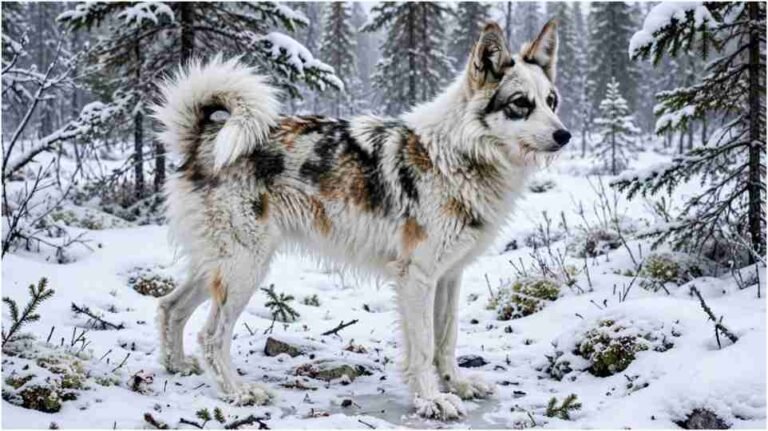
    The Hare Indian dog looked like a small, delicately built coyote wrapped in a thick northern coat. It had a narrow muzzle, upright ears, long legs, broad furry feet, and a bushy tail.

    When I first studied historical illustrations, I was struck by how little it resembled a heavy Arctic sled dog. Anyone asking what did the hare indian dog look like should picture an agile hunting canine rather than a powerful freight animal.

    Its appearance reflected its purpose. This extinct dog needed speed, balance, and snow-ready feet to pursue game across northern Canada.

    The Hare Indian Dog at a Glance

    The Hare Indian dog was a small and slender domesticated canid. Its body fell somewhere between the size of an American red fox and a coyote, according to historical descriptions.

    It had a small head, a sharply pointed muzzle, long legs, erect ears, and a thick tail. Its base coat was usually white, broken by gray, black, brown, and fawn markings.

    The overall impression was graceful rather than muscular. Its narrow frame made it look alert, swift, and almost foxlike from certain angles.

    The breed is now extinct or has lost its separate identity through interbreeding. A genetic study of Native American dogs also lists the Hare Indian dog among Indigenous Arctic dog populations that disappeared as traditional hunting practices declined.

    How Large Was the Hare Indian Dog?

    How Large Was the Hare Indian Dog?

    No reliable modern breed standard records an exact height or weight. Historical writers instead compared its size with familiar wild canids.

    The Hare Indian dog was reportedly larger than an American red fox but smaller than a coyote. That description suggests a lightweight hunting dog, not a large wolf-sized animal.

    Its proportions mattered more than raw size. Long legs increased its stride, while a narrow body reduced the effort required to travel over snow.

    When reconstructing extinct breeds, I avoid assigning precise measurements without trustworthy evidence. Illustrations can distort scale, and nineteenth-century descriptions did not follow modern kennel-club standards.

    What Did Its Head and Face Look Like?

    What Did Its Head and Face Look Like?

    The dog’s head created much of its distinctive coyote-like appearance. It was small in relation to the body, with fine features and an alert expression.

    A Long, Narrow Muzzle

    Its muzzle was exceptionally slender, elongated, and sharply pointed. The hair around the muzzle was short and predominantly white.

    This narrow facial structure made the dog look less like a broad-headed domestic breed and more like a fox or coyote. Historical naturalist John Richardson described a small head, slender muzzle, oblique eyes, and a mild expression.

    Although the muzzle appeared delicate, it belonged to an active hunting dog. The breed helped pursue game rather than overpowering animals through jaw strength.

    Erect Ears and Dark Facial Markings

    The ears were broad at the base, pointed at the tips, and carried fully upright. They were reportedly positioned closer together than those of the Canadian Eskimo Dog.

    Short brown hair covered the outer ears and became darker near the base. Longer white fur lined the interior.

    Black markings around the eyes stood out against the white facial coat. Its nose, lips, and eyelashes were also dark, giving the face a sharply outlined appearance.

    These features produced an alert expression that may have appeared both gentle and wild.

    What Type of Body Did It Have?

    What Type of Body Did It Have?

    The answer to what did the hare indian dog look like becomes clearer when its body is viewed as a complete hunting system.

    It had a narrow torso, fine bones, and unusually long, slender legs. Nothing about the breed suggests the square, heavy build associated with powerful pulling dogs.

    Long Legs and a Lightweight Frame

    The Hare Indian dog’s legs were slim but well suited to sustained movement. Its light build likely helped it conserve energy while following animals over long distances.

    Historical accounts connect the breed with coursing. In coursing, dogs pursue visible game through speed and endurance rather than tracking only by scent.

    Its frame would have favored quick direction changes and steady movement. However, it was too small to serve effectively as a draft or pack animal.

    Broad Feet Built for Snow

    The feet may have been the breed’s most practical adaptation. They were broad and covered with thick fur.

    Long hair grew between the toes and extended beyond the soles. This hair helped protect the feet from frozen ground while spreading the dog’s weight over soft snow.

    I think of these feet as natural snowshoes. That comparison is not merely decorative. A broad, furry foot can reduce sinking and protect sensitive tissue from direct exposure to ice.

    The breed reportedly had tough, hairless pads or calloused areas beneath the toes and soles. Together, the fur and pads supported travel through harsh winter terrain.

    What Color Was the Hare Indian Dog?

    The Hare Indian dog was not simply white. Its coat carried irregular markings that gave every animal a varied, natural appearance.

    White Fur With Irregular Patches

    White formed the primary background color. Large grayish-black patches appeared across the body, often mixed with brown and fawn shades.

    The markings were irregular rather than symmetrical. Some historical illustrations show darker shading across the back, ears, shoulders, and flanks.

    Its legs and muzzle were usually lighter. The combination of white and muted earth tones may have helped the dog blend into snowy woodland and tundra landscapes.

    No evidence supports a rigid modern color standard. The surviving descriptions represent animals observed by nineteenth-century naturalists, not generations registered by a kennel organization.

    A Dense Coat for Northern Conditions

    Its coat was long, straight, and thick. Dense woolly underfur reportedly grew close to the body and around the tail.

    That layered coat would have trapped warm air near the skin. Longer guard hairs could also shed snow and reduce direct exposure to wind.

    The hair became especially thick near the shoulders and feet. In contrast, the muzzle carried shorter hair that preserved the dog’s fine facial outline.

    What Did Its Tail Look Like?

    The Hare Indian dog had a thick, bushy tail. It usually carried the tail curved upward over its right hip.

    The curl was noticeable but apparently less extreme than the tightly curled tail of some Arctic spitz breeds. A white tip often completed the tail.

    Historical accounts repeatedly mention the right-sided carriage. That precise detail is unusual and helps distinguish the breed’s documented silhouette from a generic coyote reconstruction.

    The tail also contributed insulation. When resting, a northern dog can curl its body and place a bushy tail near its face for added warmth.

    Did the Hare Indian Dog Look Like a Coyote?

    Yes, early observers considered the resemblance striking. Richardson compared the Hare Indian dog with the prairie wolf, the historical name often used for the coyote.

    The similarities included a slender frame, narrow muzzle, erect ears, long legs, and agile movement. However, the dog had longer fur, broader snow-adapted feet, and more white coloration than a typical coyote.

    Its exact biological classification remains uncertain. Writers have described it as a domestic dog, a coydog, or possibly a domesticated form of coyote. Those ideas should not be presented as settled fact.

    The safest visual description is a small, long-coated, white-patched hunting dog with strong coyote-like proportions.

    Readers interested in how this unusual canine developed can explore the hare indian dog breed history and origin for the wider historical context.

    How Historical Artwork Helps Us Picture the Breed

    Because no verified photographs survive, modern readers depend on naturalists’ descriptions and historical artwork.

    The Brooklyn Museum holds an Audubon lithograph titled Hare Indian Dog. The artwork presents a lightly built canine with upright ears, a pointed face, long legs, and a full tail.

    The Biodiversity Heritage Library and Wikimedia Commons also preserve scanned nineteenth-century illustrations associated with the breed.

    Artwork must still be interpreted carefully. Artists may emphasize posture, coat patterns, or landscape drama. A lithograph is evidence, but it is not the same as a measured anatomical record.

    My reconstruction method compares features repeated across both written accounts and illustrations. The pointed muzzle, upright ears, long legs, broad feet, patterned white coat, and bushy tail appear consistently enough to form a credible visual profile.

    Why Its Appearance Suited Its Hunting Role

    The Hare Indian dog’s appearance makes sense only when connected to the environment in which it worked.

    Its long legs supported an efficient stride. Its narrow body reduced unnecessary weight. Broad feet improved movement across snow, while thick toe hair added protection.

    The white and gray-brown coat suited a northern landscape filled with snow, exposed earth, rock, and brush. Dense fur protected the dog during long periods outside.

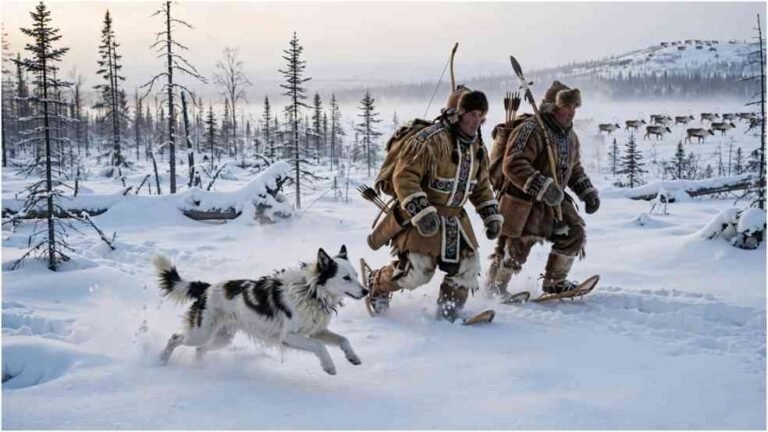
    The breed reportedly pursued large animals through deep snow and helped hold their attention until hunters arrived. It did not need the bulk required to pull sleds or physically overpower game.

    This creates an important distinction. The dog looked delicate because speed and endurance mattered more than brute strength. Its body was specialized, not fragile.

    FAQs

    1. What did the Hare Indian dog look like compared with a modern dog?

    It resembled a small, long-haired coyote mixed with the finer build and curled tail of a northern spitz-type dog.

    2. Was the Hare Indian dog white?

    Its base coat was mainly white, with irregular grayish-black, brown, and fawn patches across the back and body.

    3. Did the Hare Indian dog have a curled tail?

    Yes. It had a thick, bushy tail that usually curved upward over the right hip and often ended in white.

    4. Why did the Hare Indian dog have furry feet?

    Long hair between its toes protected the feet from ice and helped spread its weight while moving through deep snow.

    Gone, but Hard to Forget

    So, what did the hare indian dog look like? It looked like nature had blended a coyote’s sharp outline with a northern dog’s coat, feet, and curled tail.

    Its small head, pointed muzzle, upright ears, lean legs, patterned white fur, and snowshoe-like feet created a memorable silhouette. Every major feature supported fast hunting in a demanding Arctic environment.

    The breed may be gone, but its historical portraits still speak clearly. Study the early illustrations beside the written descriptions, and the Hare Indian dog stops looking like a vague legend. It becomes a highly specialized northern hunting companion.

  • Hare Indian Dog Breed History and Origin Explained

    Hare Indian Dog Breed History and Origin Explained

    The hare indian dog breed history and origin begins in northern Canada, not the Indian subcontinent. This extinct canine lived alongside the Sahtu Dene and other northern Indigenous communities, which valued it as a swift hunting partner.

    What caught my attention was not simply the dog’s extinction. It was how closely its body, behavior, and hunting style matched the difficult landscape around it. This was a specialized working dog shaped by snow, speed, prey, and human cooperation.

    Where Did the Hare Indian Dog Come From?

    Where Did the Hare Indian Dog Come From?

    Understanding the hare indian dog breed history and origin requires looking toward the Mackenzie River and Great Bear Lake regions. Historical descriptions place these dogs across parts of what are now Canada’s Northwest Territories and surrounding northern areas.

    The Sahtu Dene and the Dog’s Canadian Homeland

    The breed is most closely associated with the people historically called the Hare or Hareskin Indians. Today, the name Sahtu Dene is more appropriate. Sahtu communities have long lived around Great Bear Lake and the wider Mackenzie Valley.

    Neighboring Indigenous peoples also reportedly kept similar dogs. Historical accounts mention Dogrib, Slavey, Cree, Bear Lake and Mountain communities. This wider distribution suggests the dog was part of a regional hunting culture rather than a narrowly isolated household breed.

    Research on pre-Columbian American dogs confirms that Indigenous communities kept distinct canine populations before European settlement. The Hare Indian Dog is among the northern types that later disappeared as traditional hunting systems changed.

    Why the Name Has Nothing to Do With India

    The word “Indian” reflects outdated terminology once applied broadly to Indigenous peoples in North America. It does not connect the breed to India.

    The “Hare” portion refers to the Hare Dene, not necessarily to the animal it hunted. Readers searching for an Indian sighthound used to chase hares may instead be thinking of the Chippiparai or Mudhol Hound.

    That distinction prevents one of the most common misunderstandings surrounding the hare indian dog breed history and origin.

    How the Hare Indian Dog Supported Northern Hunters

    How the Hare Indian Dog Supported Northern Hunters

    The Hare Indian Dog was developed for coursing. Coursing dogs pursue prey by sight and speed rather than tracking only by scent.

    Coursing Game Across Deep Snow

    Historical descriptions suggest that hunters used these dogs to pursue large game through snowy terrain. The dogs were not powerful enough to kill animals such as moose or caribou by themselves.

    Instead, they could chase, distract or hold an animal’s attention until hunters caught up. Their speed became especially useful when deep snow slowed heavier prey.

    This creates a practical picture of their hunting method. Imagine a light dog running across crusted snow while a much heavier ungulate sinks deeper with each step. The dog’s advantage came from weight distribution, agility and endurance, not brute strength.

    That function-first reconstruction is one of the clearest ways to understand the breed. Its unusual build was not decorative. Almost every feature appears connected to movement in a cold northern environment.

    A Hunting Dog, Not a Sled Dog

    The Hare Indian Dog should not be confused with powerful Arctic freight dogs. It had a smaller, lighter frame and was reportedly unsuitable for pulling heavy loads.

    Its job was pursuit. This difference separates it from the Canadian Eskimo Dog and other northern working breeds developed for hauling or sled travel.

    What Did the Hare Indian Dog Look Like?

    What Did the Hare Indian Dog Look Like?

    Nineteenth-century naturalist John Richardson provided one of the most influential descriptions. He portrayed a slender animal with a narrow muzzle, erect ears, long legs and a thick, bushy tail.

    Its coat was usually white with irregular gray, black or brown markings. Longer hair around the feet and toes may have offered protection against snow and cold ground.

    Sources also describe broad or well-furred feet. These features likely improved surface contact and protected the paws. However, claims that the feet were literally “webbed” should be treated cautiously because historical wording varies.

    A Canadian historical dictionary describes the dog as small, commonly weighing about 15 to 20 pounds. It also records black-and-white or brown piebald coloring and a range extending through northern British Columbia, Yukon and the Mackenzie region.

    Was the Hare Indian Dog Part Coyote?

    Questions about coyote ancestry dominate many accounts of the hare indian dog breed history and origin. Yet the evidence remains less certain than some modern summaries suggest.

    Richardson’s Coyote Comparison

    Richardson examined these dogs during the early nineteenth century. He believed their form resembled the coyote, then often called the prairie wolf.

    Their pointed faces, upright ears, light frames and vocal behavior strengthened that comparison. Some later writers proposed that the breed was a domesticated coyote or a dog-coyote hybrid.

    These observations are historically valuable, but physical resemblance alone cannot establish ancestry.

    What Modern Research Can and Cannot Prove

    I found no widely accepted genetic study based on a confirmed Hare Indian Dog specimen that proves the breed was a coyote hybrid. That missing evidence matters.

    Broader genetic research shows that pre-Columbian American dogs descended largely from dog lineages brought from Eurasia by human populations. It also identifies the Hare Indian Dog as one of several Indigenous types that disappeared.

    Therefore, the safest conclusion is simple: coyote ancestry is a historical hypothesis, not a settled genetic fact. The dog may have been a distinct domestic lineage whose appearance reflected similar environmental pressures.

    What Was Its Temperament Like?

    Historical accounts describe an active, playful and sociable dog. It could reportedly approach strangers without the suspicion expected from some isolated working breeds.

    However, it was not considered highly obedient in the modern training sense. It disliked confinement and had an independent nature suited to free-ranging hunting work.

    The breed also gained attention for its voice. Reports claimed that it rarely barked in its homeland. It howled or produced rising, howl-like sounds instead. Puppies transported to Europe allegedly learned to imitate barking dogs around them.

    Such anecdotes are fascinating, although they come from a limited number of historical observers. They reveal how differently people understood canine temperament before standardized breed clubs and behavior tests existed.

    Readers interested in another North American landrace can also explore is a carolina dog a good family pet. That comparison shows why primitive appearance alone does not determine suitability for modern homes.

    Why Did the Hare Indian Dog Become Extinct?

    The breed appears to have declined during the nineteenth century. No single event caused its disappearance.

    Firearms made coursing dogs less essential in some hunting situations. Changes in wildlife access, settlement patterns and Indigenous life also disrupted the system that had maintained the dogs.

    Colonial expansion placed severe pressure on Indigenous communities and their traditional practices. As imported European dogs entered northern settlements, surviving Hare Indian Dogs likely interbred with them.

    A dog population does not need every animal to die before it becomes extinct as a recognizable type. Once uncontrolled crossbreeding removes its stable characteristics and lineage, the original population can lose its separate identity.

    That distinction explains why some accounts say the dog “became extinct,” while others say it was absorbed into mixed northern dog populations.

    The Hare Indian Dog’s Lasting Significance

    The hare indian dog breed history and origin offers more than a story about an unusual extinct animal. It shows how people developed dogs for precise local needs long before kennel clubs created written standards.

    The breed’s speed, light body, snow-ready feet and independent behavior formed a complete working system. Remove the landscape or hunting practice, and the reason for preserving that system weakens.

    It also reminds me to read old breed histories carefully. Terms used for Indigenous peoples may be outdated. Claims about ancestry may rest on appearance rather than DNA. Extinction stories may also hide the effects of colonial disruption behind simple phrases such as “lost its usefulness.”

    Frequently Asked Questions

    1. Where did the Hare Indian Dog originate?

    The dog originated in northern Canada and was closely associated with the Sahtu Dene of the Mackenzie Valley and Great Bear Lake region.

    2. Was the Hare Indian Dog a coyote?

    Possibly, but no confirmed genetic evidence proves it; the theory largely comes from nineteenth-century observations of its appearance and voice.

    3. What was the Hare Indian Dog used for?

    It was a lightweight coursing dog used to pursue game across snow and keep prey occupied until hunters arrived.

    4. What does hare indian dog breed history and origin reveal about its extinction?

    It shows that changing hunting practices, colonial disruption and interbreeding likely caused the dog to lose its distinct identity.

    Gone, but Far Too Interesting to Forget

    The hare indian dog breed history and origin belongs to northern Canada’s Indigenous history. This small, swift hunter was neither an Indian sighthound nor a miniature sled dog. It was a specialized Sahtu Dene hunting companion adapted to cold terrain and fast pursuit.

    Its exact ancestry may remain unresolved, but that uncertainty makes accuracy more important, not less. My best tip is to separate documented descriptions from later theories whenever you research an extinct breed. The truth is often more compelling than a tidy legend.