Category: portuguese water dog

  • Portuguese Water Dog Temperament and Personality Guide

    Portuguese Water Dog Temperament and Personality Guide

    A Portuguese Water Dog can be affectionate enough to follow you from room to room and clever enough to outthink your training plan. That combination makes the Portuguese Water Dog temperament and personality appealing, but it also creates challenges for an unprepared owner.

    When I assess this breed, I do not see a low-maintenance companion. I see an athletic working dog that needs movement, mental challenges, clear boundaries, and close family contact. The right household gets a loyal, funny, responsive partner. The wrong household may get barking, chewing, jumping, and constant demands for attention.

    What Is a Portuguese Water Dog Really Like?

    The typical Portuguese Water Dog is bright, lively, affectionate, confident, and eager to participate. These dogs rarely want to watch family life from a distant bed. They prefer to become part of every activity.

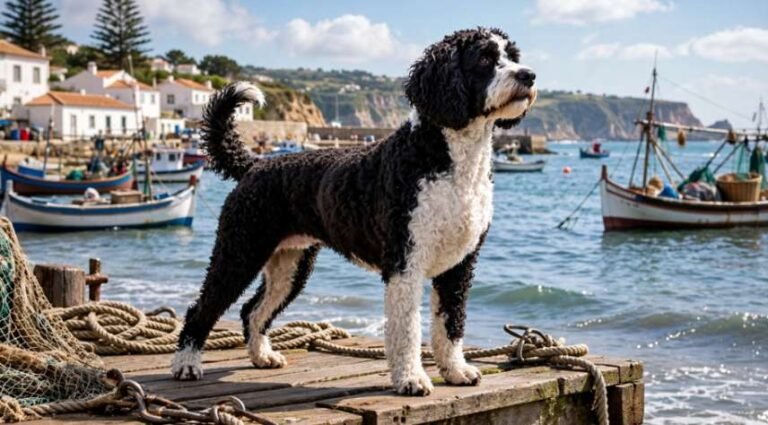
    The breed’s original work helps explain this attitude. Portuguese Water Dogs assisted fishing crews by retrieving objects, carrying messages between boats, moving fishing floats, and guarding equipment. Those jobs demanded athletic ability, initiative, and cooperation with people.

    That history still shapes the modern Portuguese Water Dog temperament and personality. The dog may no longer work beside fishermen, but it still expects physical activity and purposeful interaction.

    The Core Portuguese Water Dog Personality Traits

    The Core Portuguese Water Dog Personality Traits

    Affectionate and Closely Attached to Family

    Portuguese Water Dogs usually form strong connections with their people. Many follow family members around the home, seek physical contact, and become involved in daily routines.

    This devotion feels wonderful, but it can become excessive dependence. A puppy that receives constant attention may struggle when left alone. I would teach short, calm periods of independence from the beginning rather than waiting for separation problems to appear.

    Owners who work long hours away from home should plan for exercise, enrichment, and reliable daytime care. This breed generally does poorly when repeatedly isolated without an outlet.

    Intelligent, Trainable, and Sometimes Too Clever

    Intelligence is one of the most recognizable Portuguese Water Dog personality traits. These dogs can learn cues quickly, notice patterns, and anticipate what an owner will do next.

    Fast learning does not guarantee automatic obedience. A Portie may understand a command and still test whether following it is worthwhile. Repetitive drills can also cause boredom.

    The Portuguese Water Dog Club of America warns that these intelligent dogs learn unwanted behavior as quickly as desirable behavior. The club recommends early training and puppy classes that combine manners, basic cues, and socialization.

    I would keep sessions short and varied. A five-minute exercise involving recall, impulse control, and retrieving can achieve more than a long session of repeated sits.

    Energetic, Athletic, and Ready to Work

    High energy sits at the center of the Portuguese Water Dog temperament and personality. The American Kennel Club describes the breed as athletic and active, with a need for vigorous daily exercise.

    A casual walk around the block may not satisfy a healthy young adult. These dogs often enjoy swimming, hiking, retrieving, agility, scent games, obedience work, and structured play.

    Exercise should involve more than frantic movement. Endless ball throwing can create a fitter dog that remains mentally restless. I prefer a balanced routine that combines aerobic activity, sniffing, training, and calm recovery.

    Swimming can be an excellent outlet, but owners should introduce water safely. Not every individual automatically feels confident in every pool, lake, or ocean setting.

    Playful, Mouthy, and Highly Communicative

    Porties often use their mouths to investigate, carry toys, or initiate interaction. This tendency reflects their retrieving history, but it can become uncomfortable when an excited adolescent grabs hands, sleeves, or household items.

    They can also be expressive. Some bark, grumble, whine, or make amusing muttering sounds. Vocal behavior does not always signal aggression. Owners should read the dog’s full body language and the situation.

    I would redirect inappropriate mouthing toward a toy, reward four paws on the floor, and teach “drop,” “leave it,” and “settle” early. Punishment may stop a behavior momentarily without teaching the dog what to do instead.

    Are Portuguese Water Dogs Good Family Dogs?

    Are Portuguese Water Dogs Good Family Dogs?

    The Portuguese Water Dog temperament and personality can work beautifully in an active family. However, “family-friendly” does not mean suitable for every family.

    Behavior Around Children

    A well-socialized Portie can become an affectionate and enthusiastic playmate for respectful children. The dog’s stamina may suit families that enjoy outdoor adventures and interactive games.

    Young Portuguese Water Dogs can be bouncy. They may jump or collide with a small child during play. The breed club suggests that active homes with well-behaved children over roughly five to seven years old can be a good fit, although individual dogs and children differ.

    Adults should supervise every interaction. Children must learn not to climb on the dog, disturb meals, or chase a dog that is trying to leave.

    Compatibility With Dogs and Cats

    Many Portuguese Water Dogs live peacefully with other dogs and cats, particularly when introduced carefully and socialized early. Another playful dog may even provide companionship and an appropriate outlet for social play.

    Compatibility still depends on personality, age, training, and the resident pet. I would use gates, leashes, separate feeding areas, and gradual introductions rather than expecting instant friendship.

    Reactions to Strangers

    Most Porties are alert and may bark when someone approaches. This trait can make them effective announcers, but they are not typically valued as aggressive guard dogs.

    A properly socialized dog may remain watchful at first and then greet a visitor enthusiastically. Early exposure to different people, sounds, surfaces, and environments can help prevent suspicion or uncontrolled excitement.

    Common Portuguese Water Dog Behavior Problems

    Most unwanted behaviors come from unmet needs rather than a fundamentally bad Portuguese Water Dog temperament and personality. Common problems include destructive chewing, digging, jumping, attention barking, stealing objects, leash pulling, and ignoring recall around distractions.

    The first question I would ask is not, “How do I stop this?” It is, “What is the dog gaining from it?”

    A bored dog may steal a sock because it triggers a chase. A lonely dog may bark because barking brings attention. A restless dog may dig because the yard offers no structured activity. Management must remove the reward while training provides a better option.

    How I Would Train and Manage This Breed

    How I Would Train and Manage This Breed

    Positive reinforcement suits this intelligent, people-focused breed. I would reward the behaviors I want before unwanted habits become established.

    My priorities would include recall, loose-leash walking, polite greetings, handling tolerance, impulse control, independence, and settling on a mat. I would also rotate food puzzles and training games rather than leaving every toy available all day.

    Consistency matters more than harshness. If jumping sometimes earns affection, the dog will keep trying it. Every family member should follow the same rules.

    A responsible breeder also matters. The PWDCA recommends looking for puppies raised in a household environment, exposed to normal sights and sounds, and born to a dam with a good temperament.

    My Body, Brain, and Bond Compatibility Test

    I use three questions to evaluate whether a household suits the Portuguese Water Dog temperament and personality:

    Body: Can the family provide meaningful daily physical activity?

    Brain: Will someone offer training, problem-solving games, or purposeful work?

    Bond: Can the dog receive regular companionship while also learning safe independence?

    A household does not need a swimming pool or a professional dog trainer. It does need time, consistency, and an active plan. Meeting only one of these three needs often produces an unbalanced dog.

    For example, running three miles may satisfy the body but leave the brain underused. Puzzle toys may exercise the brain but cannot replace movement. Constant companionship may strengthen the bond but create dependence unless the dog also practices being alone.

    Who Should Own a Portuguese Water Dog?

    This breed may suit an active owner who enjoys training and wants a highly involved companion. It can also thrive with families interested in swimming, hiking, obedience, agility, rally, or scent work.

    A Portie may be a poor choice for someone seeking a quiet, independent, sedentary dog. The breed club is direct about this mismatch. It states that people wanting minimal grooming, little exercise, limited mental stimulation, or a naturally passive dog should consider another breed.

    Prospective owners should also research grooming and health screening. The breed has curly or wavy coat varieties, and both require consistent maintenance. The Orthopedic Foundation for Animals maintains breed-specific screening guidance through its CHIC program.

    Frequently Asked Questions

    1. Are Portuguese Water Dogs calm in the house?

    They can settle indoors after enough exercise and mental work, but young or under-stimulated dogs may remain restless and demanding.

    2. Is a Portuguese Water Dog good for first-time owners?

    A committed first-time owner can succeed with professional training support, although the breed’s energy and cleverness create a steep learning curve.

    3. Can Portuguese Water Dogs be left alone?

    They can learn to stay alone for reasonable periods, but gradual independence training is essential because they often form strong family attachments.

    4. Does Portuguese Water Dog temperament and personality suit children?

    It often suits active families with respectful children, although supervision is needed because a young Portie may jump or play too forcefully.

    Sass, Splash, and the Final Verdict

    The Portuguese Water Dog temperament and personality offers intelligence, devotion, athleticism, humor, and an unmistakable desire to participate. Those same qualities demand more effort than many families expect.

    Before choosing one, test your household against the Body, Brain, and Bond framework. Plan one realistic weekday that includes exercise, training, grooming, rest, and alone time. If that schedule feels exciting rather than exhausting, this spirited water dog may be your ideal match.

  • Portuguese Water Dog Size and Appearance Explained

    Portuguese Water Dog Size and Appearance Explained

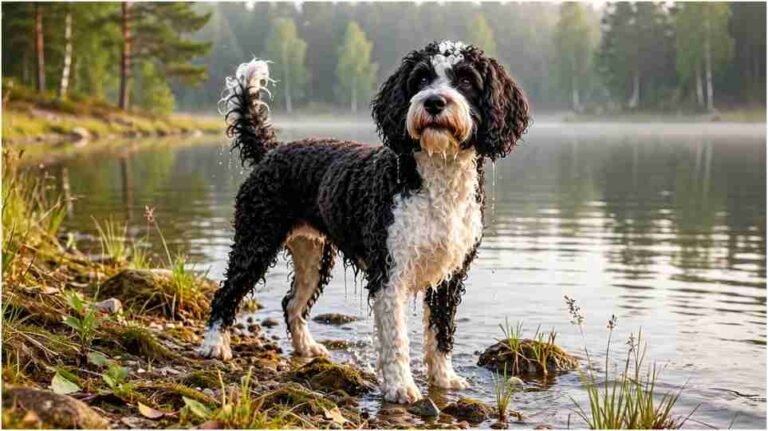
    The Portuguese Water Dog size and appearance can surprise people who have only seen the breed in photographs. Beneath that thick, curly coat is a strong, athletic dog with substantial bone, powerful legs, and a body shaped for demanding water work.

    When I first looked closely at the breed, I noticed that it appeared sturdier than a Poodle but more compact than many retrievers. That balance between strength, agility, and manageable size defines the Portuguese Water Dog.

    Portuguese Water Dog Height and Weight

    Portuguese Water Dog Height and Weight

    The Portuguese Water Dog is officially classified as a medium-sized working breed. However, its muscular frame and dense coat can make it appear larger than its measurements suggest.

    The American Kennel Club breed standard gives separate height and weight ranges for males and females. Height is measured at the withers, which is the highest point of the shoulder blades.

    Male Portuguese Water Dog Size

    An adult male normally stands between 20 and 23 inches tall at the shoulder. The ideal height listed in the breed standard is 22 inches.

    Males generally weigh between 42 and 60 pounds. A well-conditioned male should look powerful without appearing heavy, bulky, or slow.

    Female Portuguese Water Dog Size

    An adult female usually stands between 17 and 21 inches tall. The breed standard identifies 19 inches as the ideal female height.

    Females normally weigh between 35 and 50 pounds. They may look slightly finer than males, but they should still have strong bone and visible athletic substance.

    Individual dogs can mature at different rates. Genetics, nutrition, exercise, and overall health may influence adult weight, although a healthy dog should remain within a proportionate range.

    What Does a Portuguese Water Dog Look Like?

    What Does a Portuguese Water Dog Look Like?

    The most important feature of the Portuguese Water Dog size and appearance is balance. The dog should not resemble a fragile, narrow athlete or an oversized, heavy retriever.

    Its entire structure reflects endurance, swimming ability, and the strength once needed to work beside fishermen.

    Body Shape and Muscular Build

    The official breed standard describes the body as “off-square.” This means the dog is slightly longer from chest to rear than it is tall from shoulder to ground.

    The difference is subtle. A Portuguese Water Dog should still look compact and balanced rather than long-backed.

    The body includes a deep chest, strong shoulders, muscular hindquarters, and substantial bone. Its build is more solid than many people expect beneath the coat. The Royal Kennel Club also describes the breed as robust, well-balanced, and strongly muscled through the shoulders.

    A useful visual test is to imagine the coat removed. The remaining silhouette should show a powerful working dog, not a narrow or delicate companion breed.

    Head, Eyes, and Expression

    The head is broad, large, and well proportioned to the body. A strong muzzle and developed jaws add to the breed’s workmanlike appearance.

    The eyes are medium-sized and set well apart. They may be black or various shades of brown, although darker eyes are preferred under the AKC standard.

    The expression should appear steady, alert, and attentive. Heart-shaped ears hang close to the head and contribute to the breed’s distinctive outline.

    This focused expression often matches the breed’s alert nature. Readers interested in how physical presence connects with behavior can also explore portuguese water dog temperament and personality.

    Webbed Feet and Rudder-Like Tail

    Portuguese Water Dogs have noticeable skin between their toes, commonly described as webbing. This feature helps increase the surface area of the feet during swimming.

    Their feet alone do not create swimming ability. Strong shoulders, muscular rear legs, balance, conditioning, and confidence in water also matter.

    The tail is thick at its base and narrows toward the tip. It is carried in a ring when the dog is alert and helps with balance and direction in water. The breed’s webbed feet and water-working ability remain among its best-known physical characteristics.

    Portuguese Water Dog Coat Types and Colors

    Portuguese Water Dog Coat Types and Colors

    The coat has a major influence on the Portuguese Water Dog size and appearance. A full coat can hide the waist, broaden the chest, and make the legs look thicker.

    The breed has a profuse, single coat without the typical undercoat found in many double-coated working dogs. It sheds minimally but continues growing and requires consistent maintenance.

    Curly Coat

    The curly variety has compact, cylindrical curls. Its texture may appear dense and somewhat matte rather than glossy.

    Curls can differ slightly across the body. Hair around the ears may appear softer or more wavy than the coat along the back.

    Wavy Coat

    The wavy coat falls in loose, flowing waves instead of forming tight curls. It may have a slight sheen and often creates a softer outline.

    Neither coat type receives preference under the American breed standard. A curly dog and a wavy dog can both represent the breed correctly.

    Accepted Coat Colors

    Recognized colors include black, white, and various shades of brown. Black-and-white and brown-and-white combinations are also accepted.

    White Portuguese Water Dogs are not albino when they have correct dark pigment around the nose, mouth, and eyelids. Coat color does not determine the dog’s adult size, working ability, or personality.

    Although the coat is often marketed as hypoallergenic, no dog breed is completely allergy-free. Dog allergens can come from saliva, dander, and urine, not simply loose hair. The American College of Allergy, Asthma and Immunology advises allergy-sensitive families to evaluate their response to individual dogs before making a commitment.

    Lion Clip vs Retriever Clip

    Grooming can dramatically change the perceived Portuguese Water Dog size and appearance.

    The retriever clip trims the entire body to follow its natural outline. The coat must remain no longer than one inch, while the hair at the end of the tail stays full. This clip reveals the dog’s athletic proportions clearly.

    The lion clip leaves the coat longer over the front of the body. The muzzle, middle section, hindquarters, and base of the tail are clipped closely. A full plume remains at the tail tip.

    Both presentations are accepted equally under the AKC standard. The lion clip creates a dramatic, traditional outline, while the retriever clip offers a practical and even appearance.

    How Large Does a Portuguese Water Dog Look Indoors?

    How Large Does a Portuguese Water Dog Look Indoors?

    Measurements do not always explain how much physical space a dog occupies.

    A 50-pound Portuguese Water Dog may look larger than a short-coated dog of equal weight because the coat adds visual volume. Its active movement, long tail, and strong body also require more practical room than the term “medium-sized” might suggest.

    I use a simple space test when evaluating this breed. Picture a dog standing beside a standard kitchen counter. Its back remains well below the counter, but its head may approach the surface when it stretches upward.

    This breed can fit into many homes, including apartments, but floor space alone should not drive the decision. Daily activity, training, coat care, and access to safe exercise matter more.

    Owners should also learn how to introduce your dog to unfamiliar environments, especially when taking an energetic Portuguese Water Dog to new parks, homes, training facilities, or travel destinations.

    How to Recognize the Breed at a Glance

    A quick silhouette check can help distinguish a Portuguese Water Dog from a Standard Poodle, Labradoodle, or another curly-coated dog.

    Look for three features together:

    1. A compact body that is slightly longer than tall
    2. Strong bone with a broad, substantial head
    3. A curly or wavy coat paired with an athletic working outline

    A Poodle usually presents a more refined, square profile with a narrower impression. A Portuguese Water Dog should appear rugged, muscular, and ready for physical work.

    Coat texture alone is not enough for identification. Mixed breeds can inherit similar curls, colors, or facial furnishings without sharing the Portuguese Water Dog’s proportions.

    Appearance Changes From Puppy to Adult

    A puppy may look round, fluffy, and somewhat short-legged because its coat and body proportions are still developing.

    As the dog matures, the chest deepens, the head broadens, and the limbs gain muscle. Many Portuguese Water Dogs reach close to adult height during their first year, but their chest and overall substance may continue developing afterward.

    Owners should avoid judging final Portuguese Water Dog size and appearance from an eight-week-old puppy. The parents’ structure, pedigree, sex, and growth pattern offer better clues.

    Regular body-condition checks are also important. Thick curls can hide ribs, a narrowing waist, or gradual weight gain. I prefer using my hands to assess the ribs and waist instead of relying only on the dog’s outline.

    Frequently Asked Questions

    1. Is a Portuguese Water Dog considered a medium or large dog?

    It is officially a medium-sized dog, although its muscular frame and full coat can make it look larger.

    2. How big does a full-grown male Portuguese Water Dog get?

    A mature male usually reaches 20 to 23 inches and weighs between 42 and 60 pounds.

    3. Does a Portuguese Water Dog have hair or fur?

    It has a continuously growing, low-shedding coat that may be curly or wavy and requires regular grooming.

    4. Does grooming change Portuguese Water Dog size and appearance?

    Grooming changes the visible outline significantly, but it does not alter the dog’s actual height, weight, or body structure.

    Final Splash: Built for More Than Good Looks

    The Portuguese Water Dog size and appearance tell the story of a genuine working breed. Its muscular body, broad head, strong legs, webbed feet, and functional coat were shaped by demanding work around water.

    I would never choose this breed based only on its curls or stylish haircut. The coat may attract attention, but the athlete underneath defines the dog.

    Before bringing one home, meet several adult Portuguese Water Dogs in person. Watch them move, feel the density of the coat, and compare males with females. That experience will give you a far more accurate picture than photographs alone.