When I first worked on leash manners, I thought success simply meant stopping a dog from pulling. I soon learned that calm walking depends on communication, reward timing, confidence, and consistency. These beginner leash training tips for dogs can help puppies, adopted adults, and dogs with frustrating walking habits.
The goal is not a competition-style heel. A good everyday walk means the leash stays mostly loose, the dog checks in with you, and both of you move safely.
Understand Loose-Leash Walking
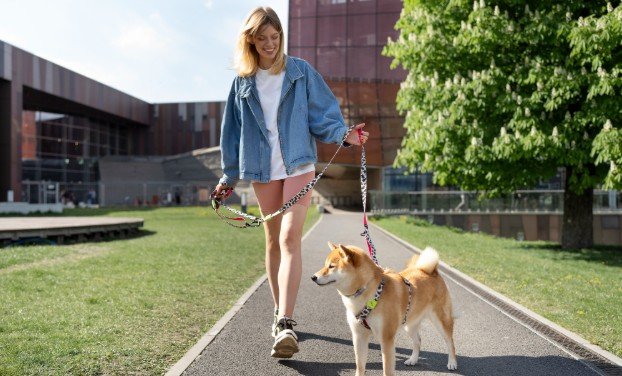
A loose leash forms a soft curve instead of remaining tight. Your dog may walk beside you, slightly ahead, or pause to sniff without dragging you. Everyday leash training allows freedom while still rewarding calm behavior and attention.
This is different from formal heeling, which requires a dog to remain in a precise position. For normal walks, focus on safety, responsiveness, and a relaxed leash.
Choose Comfortable Walking Equipment
Start with a standard fixed-length leash. Retractable leashes can make early training harder because pulling often gives the dog more distance.
A flat collar may suit a calm dog, while a well-fitted harness can provide better control and reduce neck pressure. A dog harness may redirect a strong puller, but no piece of equipment replaces consistent training.
Check that everything is secure without restricting movement or breathing. Uncomfortable equipment can make a dog freeze, scratch, resist walking, or associate the leash with stress.
Begin Training Indoors

Introduce the Leash Positively
Let your dog inspect the leash, collar, or harness. Pair each item with treats, praise, play, or meals. Put the equipment on briefly, remove it, and repeat.
If your dog freezes, bites the leash, scratches continuously, or tries to escape, slow down. The equipment may simply feel unfamiliar.
Reward Attention and Proximity
Begin in a quiet room with few distractions. Reward your dog for looking at you, standing nearby, and following one or two steps.
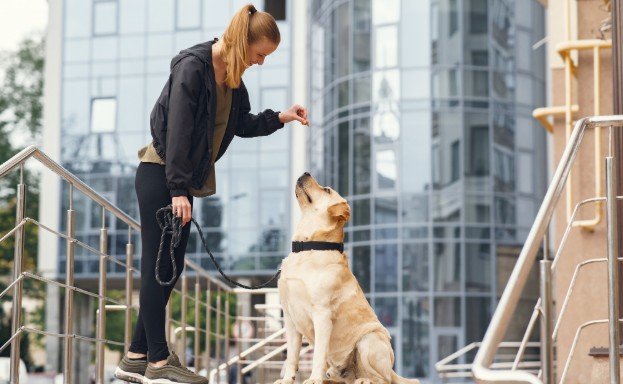
Use a marker word such as “yes” when the correct behavior happens. Deliver the treat beside your leg rather than reaching forward. Treat placement teaches your dog that remaining near you is rewarding.
Build a Simple Walking Pattern
Choose a walking cue such as “let’s go.” Take two or three steps, mark the loose leash, and reward beside your leg. Gradually increase the number of steps between rewards.
Keep early sessions between three and five minutes. Brief, successful practice is more useful than a long walk filled with pulling and frustration.
Stop while your dog is still focused. Ending on a successful repetition helps make the next session easier.
Stop Pulling Without Harsh Corrections
When the leash tightens, stop moving. Avoid dragging your dog backward, shouting, or repeatedly jerking the leash.
Wait for your dog to turn, step toward you, or release the tension. Mark that moment, reward beside you, and start walking again. This creates a clear rule: pulling stops progress, while a loose leash keeps the walk moving.
You can also make a calm turn before the leash becomes fully tight. Direction changes encourage your dog to notice where you are going instead of charging toward every distraction.
Everyone who walks the dog should follow the same rule. Allowing pulling occasionally can make the habit much harder to change.
Add Outdoor Distractions Gradually
Progress from a quiet room to a yard, driveway, calm sidewalk, and eventually busier places. Do not move directly from indoor practice to a crowded park.
Increase only one challenge at a time. You might practice for fewer minutes in a harder environment or remain somewhere familiar while asking for more loose-leash steps.
If your dog ignores treats outdoors, move farther away from people, dogs, traffic, or exciting smells. A dog that cannot eat, respond, or look at you may be too overwhelmed to learn effectively.
Use Sniffing as a Reward
Many dogs value sniffing as much as food. Ask for several relaxed steps and then use a release cue such as “go sniff.”
This creates a useful pattern in which calm walking earns access to interesting smells. Planned sniff breaks also make walks more enjoyable and reduce random zigzagging.
A training walk should not prevent your dog from exploring. It should teach your dog how to earn that freedom without pulling.
Follow a Seven-Day Starter Plan
Days One and Two
Practice wearing the equipment and following you indoors as you train a dog to walk without pulling. Reward every few steps and finish while your dog remains interested.
Days Three and Four
Move to a quiet outdoor space. Practice short straight lines, gentle turns, and stopping whenever the leash tightens.
Days Five and Six
Add mild distractions from a comfortable distance. Reward voluntary check-ins and use sniffing as a planned reward.
Day Seven
Try a short neighborhood session. Measure success by calm steps rather than distance. Five controlled minutes can be more productive than a stressful thirty-minute walk.
Solve Common Beginner Problems
Your Dog Refuses to Walk
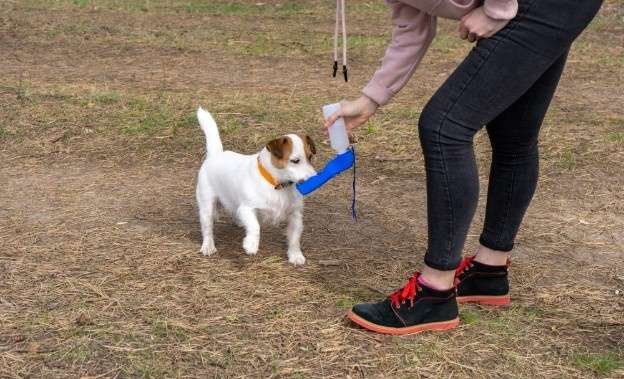
Do not pull the dog forward. Encourage one small step with a treat, cheerful voice, or movement away from the dog. Check for fear, fatigue, hot asphalt in dogs, uncomfortable equipment, or possible pain.
Your Puppy Bites the Leash
Keep the leash still so it does not become a tug toy. Redirect the puppy with a treat, toy, or familiar cue, then reward calm walking before the biting restarts.
Your Dog Pulls Toward People or Dogs
Create distance before excitement becomes unmanageable. Reward attention while the person or dog remains far enough away. Avoid forced greetings during training sessions.
Training Works Indoors but Fails Outside
Choose a quieter location, use higher-value treats, and reward more frequently. Indoor success does not automatically transfer to distracting outdoor environments.
Frequently Asked Questions
1. How long do beginner leash training tips for dogs take to work?
Some dogs improve within several sessions, while others need several weeks. Age, previous habits, confidence, environmental distractions, and training consistency all influence progress.
2. Can an adult rescue dog learn loose-leash walking?
Yes. Adult dogs can learn new walking habits. Fearful, reactive, or experienced pullers may need slower progression, greater distance from triggers, and professional support.
3. Should leash training happen before or after exercise?
A short training session may be easier after your dog has released some energy. However, avoid exhausting your dog before asking for focus and self-control.
4. When should I seek professional help?
Contact a qualified reward-based trainer, behavior consultant, or veterinarian if your dog lunges, panics, redirects aggression, cannot recover around triggers, or appears to experience pain.
The Walk Ahead
I have learned to measure leash-training progress through small wins rather than distance. A few relaxed steps, a voluntary check-in, or one calm response to a distraction can show that meaningful learning is happening.
Clear rules, brief sessions, well-timed rewards, and realistic expectations create lasting improvement. With patience and consistency, daily walks can become safer, calmer, and more enjoyable for both ends of the leash.