When I help a dog adjust to time alone, I never begin by leaving for an hour and hoping everything works out. Independence is a skill that must be taught gradually.
Learning how to teach a dog to stay home alone means creating short, positive separations before barking, pacing, destruction, or fear becomes a pattern. Each session should finish while the dog is still comfortable.
Why Dogs Struggle With Being Left Alone
Dogs are social animals, so many prefer staying near their people. Puppies may find separation unfamiliar, while adopted or adult dogs can struggle after a move, illness, schedule change, or long period of constant companionship.
Briefly watching the door is normal. Continuous barking, panting, drooling, scratching exits, refusing food, or trying to escape can signal serious distress. Dogs showing panic or risking injury need help from a veterinarian or qualified behavior professional.
Prepare Your Dog and Home
Meet Physical Needs
Provide an age-appropriate walk, bathroom break, and fresh water before training. Reduce restlessness without exhausting the dog. Puppies, seniors, and dogs with health conditions need more frequent breaks.
Create a Safe Resting Area
Choose a quiet, hazard-free space with a bed, water, and room to move. It may be a gated room, puppy pen, open crate, or familiar living area.
Use a closed crate only when your dog already rests there willingly. Confinement can worsen distress in dogs that bite bars, scratch frantically, or try to escape. The right setup is one in which your dog genuinely relaxes.
Set Up a Camera
A camera reveals hidden behavior such as pacing, whining, panting, trembling, or abandoning a food toy. The footage shows whether to progress, repeat the duration, or make the next session easier.
Build Independence While You Are Home
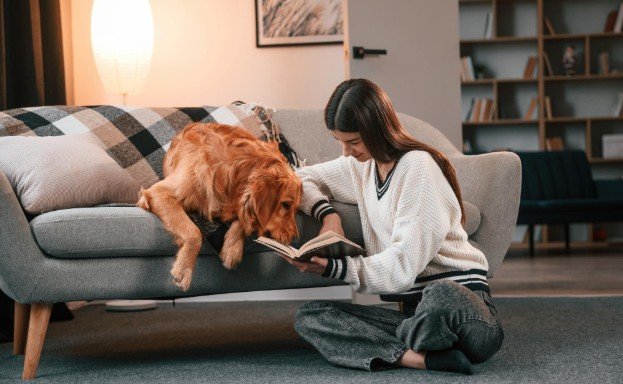
Reward your dog for relaxing on a bed or mat away from you. Move around and quietly give a treat whenever the dog stays settled.
Next, step behind a baby gate or into another room for one or two seconds. Return before worry appears, then practise during normal activities such as cooking or working. Calm independence should become part of daily life.
Practise Very Short Departures
Pick up your keys, put on your shoes, open the door, step outside, and return after a few seconds. Keep your movements casual. Repeating these actions without a long absence reduces sensitivity to departure cues.
Increase time in small, irregular steps: five seconds, ten, eight, fifteen, and then twenty. Moving up and down prevents every repetition from becoming harder. Return while your dog is calm. Letting a frightened dog “cry it out” can strengthen fear instead of teaching independence.
Follow Behavior, Not a Calendar
Use a simple traffic-light guide. Green behavior includes eating, sniffing, lying down, or calmly changing positions. Increase the next absence slightly.
Yellow behavior includes repeatedly watching the exit, pausing a food toy, mild pacing, or one short whine. Repeat or shorten the duration. Red behavior includes nonstop barking, trembling, escape attempts, heavy panting, or refusing high-value food. End the exercise and return to an easier stage next time.
Create Positive Departure Routines
Offer a stuffed food toy, lick mat, or safe chew reserved for training. Remove choking hazards. If your dog normally loves the item but ignores it after you leave, the session may be too difficult.
Keep departures and reunions calm. Dramatic goodbyes can make leaving feel worrying, while excited greetings may increase the contrast between presence and absence.
Background music may comfort dogs accustomed to household noise, but it cannot treat separation anxiety. It should support gradual training, not replace it.
Manage Unavoidable Long Absences
Training sessions and necessary absences should be handled separately. If your dog currently remains relaxed for twenty minutes, arrange a walker, sitter, trusted friend, or suitable daycare instead of testing an entire workday.
There is no single safe duration for every dog. Age, health, bladder control, temperament, and training history matter. Puppies and anxious dogs usually need shorter periods and extra support.
Frequently Asked Questions
1. How long does training take?
Some dogs improve within weeks, while others need months. Progress depends on history, sensitivity, consistency, and whether sessions stay below the stress threshold.
2. Should I ignore my dog before leaving?
No. Use a calm, ordinary goodbye without emotional speeches or repeated reassurance.
3. What is the best method for how to teach a dog to stay home alone?
Begin with separation inside the home, practise departures lasting seconds, use a camera, and increase time only when the dog remains relaxed. Seek professional guidance for panic, escape attempts, or self-injury.
4. Will Getting Another Dog Solve the Problem?
Usually not. Distress is often connected to a particular person leaving, so another dog may not resolve it. A second pet also creates new care and compatibility needs.
Final Thoughts
I believe calm behavior matters more than reaching a particular number of minutes. Successful alone-time training is built through patience, observation, and easy repetitions. Short sessions that preserve confidence are more valuable than one long, frightening absence.
By preparing the environment, respecting body-language signals, progressing gradually, and seeking expert support when needed, I can help a dog develop a safer and more comfortable relationship with time alone.