
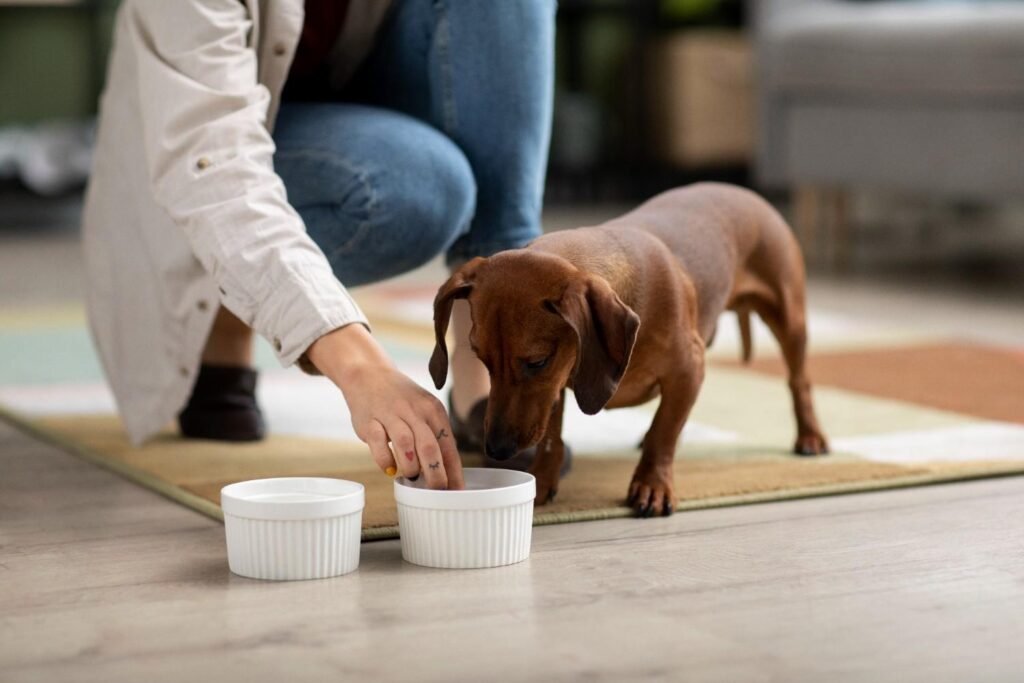
Feeding a dog should be simple, yet the numbers on a kibble bag can become confusing. I created this dog feeding chart by weight in pounds to give US dog owners a practical starting point for adults, puppies, and seniors.
An adult may need roughly ⅓ cup to more than 4½ cups of dry food daily, but weight is not the only factor. Age, activity, body condition, health, treats, and calories per cup all affect the correct portion.
Every amount below covers 24 hours. Divide the total between meals and check the feeding instructions on your specific food before deciding how much to serve.
How Much Dry Food Should an Adult Dog Eat Daily?
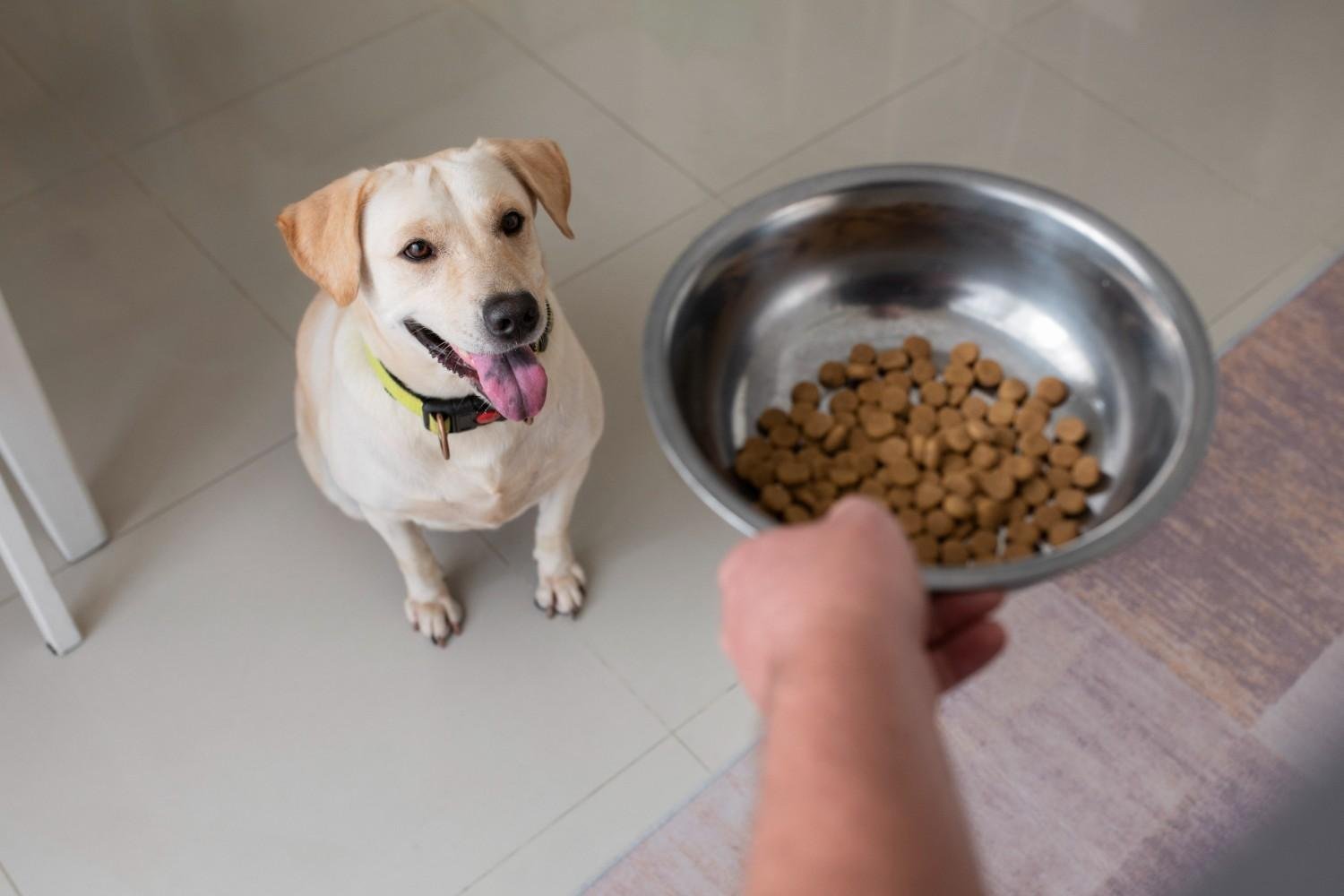
Purina explains that package charts show daily recommendations and that portions differ among formulas because calorie density varies. Most healthy adults do well when the daily amount is split between two meals.
| Adult dog weight | Daily dry food amount |
| 3–12 pounds | ⅓–1 cup |
| 13–20 pounds | 1–1⅓ cups |
| 21–35 pounds | 1⅓–2 cups |
| 36–50 pounds | 2–2⅔ cups |
| 51–75 pounds | 2⅔–3⅓ cups |
| 76–100 pounds | 3⅓–4¼ cups |
| Over 100 pounds | 4¼ cups, plus ¼ cup per 10 pounds over 100 |
Treat the table as a baseline. PetMD’s adult example uses food with about 379 calories per cup and shows somewhat higher portions. Two reputable charts can therefore disagree when they are based on foods with different calorie densities.
How Do I Convert Dog Food Calories Into Cups?
Find the “Calorie Content” statement on the package. AAFCO says it should list kilocalories per kilogram and per familiar unit, such as a cup or can. Complete and balanced foods must also carry feeding directions based on weight and life stage.
Daily calorie target ÷ calories per cup = cups per day
If your dog needs 800 calories and the kibble contains 400 calories per cup, serve two cups daily. A 500-calorie-per-cup formula would provide the same energy in 1.6 cups. Recheck this number whenever you switch foods.
How Much Should I Feed a Puppy by Age?
Puppies need extra energy for growth. Use expected adult weight, not only current weight, to find the starting portion. Divide the daily total into three or four meals for young puppies. Large-breed puppies need food formulated for controlled growth and may stay on puppy food longer.
| Expected adult weight | 1½–3 months | 4–5 months | 6–8 months | 9–11 months |
| 3–12 pounds | ½–1 cup | ⅔–1⅓ cups | ½–1½ cups | Feed as adult |
| 13–20 pounds | ½–1¼ cups | 1⅛–2 cups | ¾–1⅓ cups | 1–1½ cups |
| 21–50 pounds | ½–1½ cups | 1½–2¾ cups | 1⅛–2⅓ cups | 2–3 cups |
| 51–75 pounds | ⅝–2⅓ cups | 1½–4 cups | 1½–3¾ cups | 2½–4¾ cups |
| 76–100 pounds | 1–2⅔ cups | 2⅞–3¾ cups | 2⅞–6⅓ cups | 3⅞–7 cups |
These are generic ranges. Merck uses higher energy multipliers for growing puppies than adults but emphasizes that every calorie calculation remains a starting estimate.
How Much Food Does a Senior Dog Need?
Older dogs often become less active and may need fewer calories. However, age alone does not justify cutting portions. Some seniors lose muscle or develop health conditions that require a different diet rather than simply less food. PetMD’s senior chart below is based on a formula containing 423 calories per cup.
| Senior dog weight | Daily dry food amount |
| 3–12 pounds | ⅓–1 cup |
| 13–20 pounds | 1–1¼ cups |
| 21–35 pounds | 1⅓–2 cups |
| 36–50 pounds | 2–2⅓ cups |
| 51–75 pounds | 2⅓–3 cups |
| 76–100 pounds | 3–3⅔ cups |
| Over 100 pounds | 4 cups, plus ¼ cup per 10 pounds over 100 |
Monitor body weight, muscle condition, mobility, and appetite. Unexplained weight loss, chewing difficulty, or sudden appetite changes deserve veterinary attention.
Should Active or Indoor Dogs Get Different Portions?
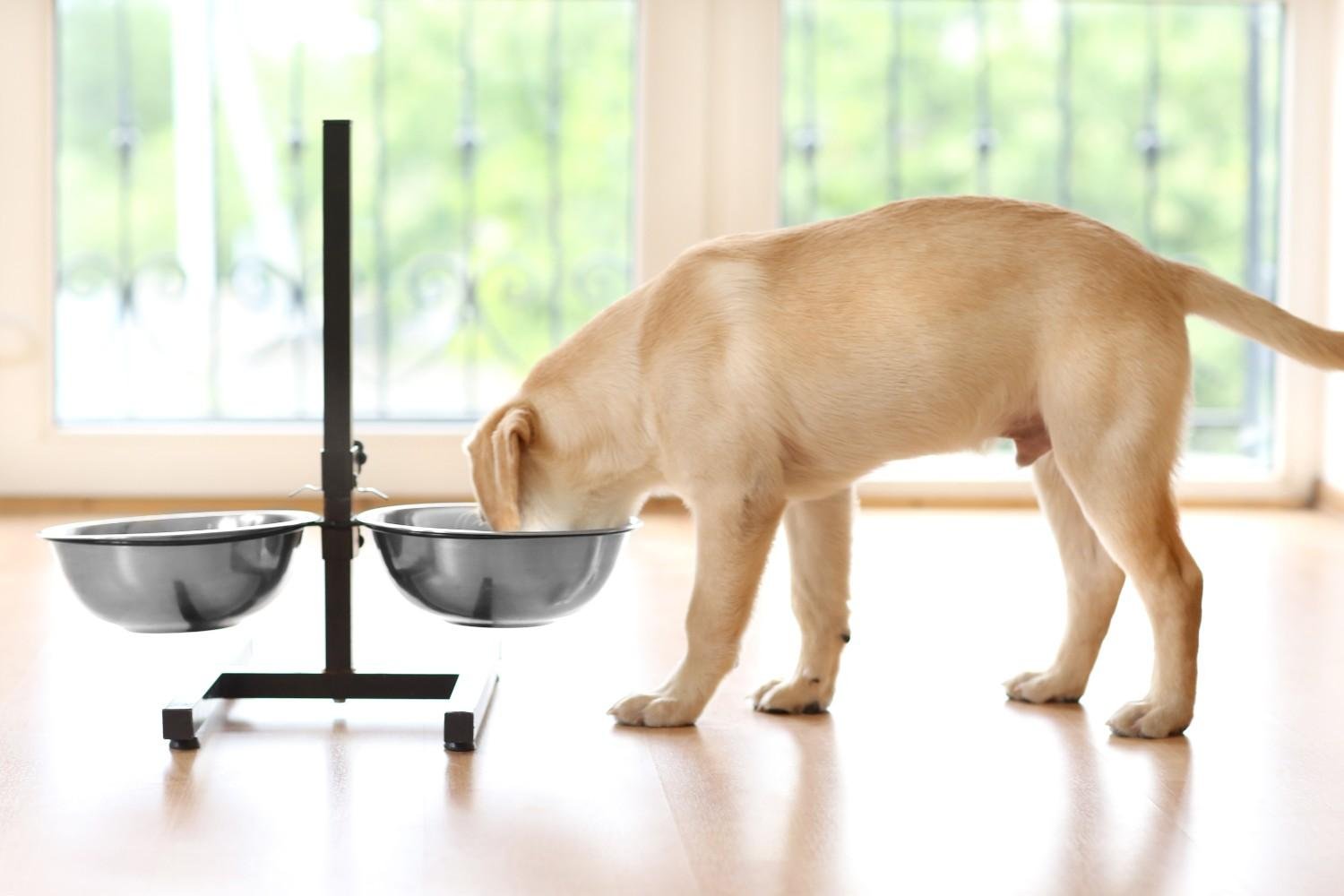
Working, endurance, and highly active dogs may require considerably more energy than household pets. Nursing dogs have especially high needs and may require two to four times normal adult calories at peak lactation, so they need an individualized plan.
A sedentary, indoor, neutered, or obesity-prone dog may need less than the package estimate. Reducing the starting amount by about 10% can be reasonable, followed by gradual adjustments. Merck notes that some dogs maintain ideal condition on 10%–30% less food than the label recommends.
How Can I Tell Whether I Am Feeding Enough?
At an ideal body condition, you should feel the ribs beneath a light fat covering, see a waist from above, and notice an abdominal tuck from the side. WSAVA’s body condition chart provides a useful visual reference.
Measure kibble with a standard 8-fluid-ounce cup or a digital kitchen scale. Count treats too. Veterinary guidance recommends keeping treats below 10% of daily calories so at least 90% comes from complete and balanced food.
Frequently Asked Questions (FAQs)
1. Is a Dog Feeding Chart Per Meal or Per Day?
It usually shows the entire daily amount. Divide it between two adult meals or several smaller puppy meals.
2. Should I Use My Dog’s Current or Ideal Weight?
Use ideal weight when possible, especially for an overweight or underweight dog. Ask your veterinarian to establish an appropriate target.
3. Can I Use This Chart for Wet Dog Food?
No. Wet, fresh, and dry foods contain different calories. Calculate portions from calories per can, pouch, ounce, or cup.
4. How Accurate Is a Dog Feeding Chart by Weight in Pounds?
It offers a useful starting estimate, but calorie density, age, activity, body condition, treats, and health determine the final portion.
Final Takeaway
I would begin with the chart and package directions, divide the total into scheduled meals, and reassess body condition every two to four weeks. This approach is especially important when choosing the best dog food for senior dogs with no teeth, since texture, calorie density, and ease of eating can affect portion sizes. The best dog feeding chart by weight in pounds is not the one with the most exact-looking number; it is the one you adjust as your dog’s needs and food change.











One thought on “Dog Feeding Chart by Weight in Pounds: Find the Perfect Bowlful”