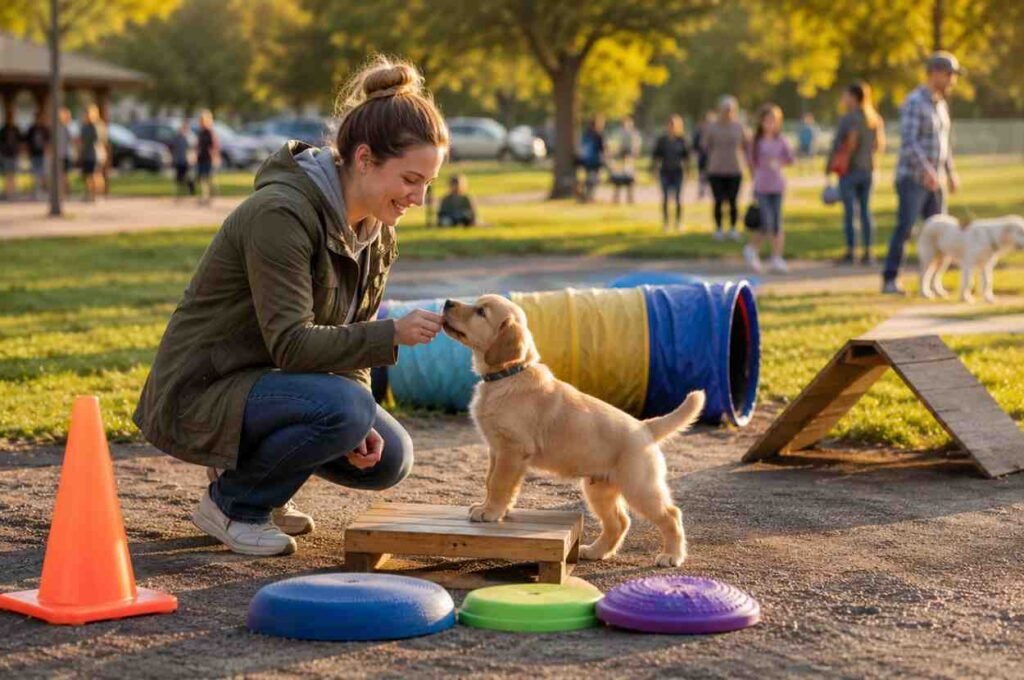
The first time I watched a puppy hesitate at something as simple as a cardboard box, I almost laughed. It didn’t seem scary to me at all. A few minutes later, after a little patience and a handful of treats, that same puppy walked over, sniffed it, and proudly stepped on top of it. That small moment completely changed the way I looked at confidence. It wasn’t something puppies were simply born with. It was something they learned, one positive experience at a time.
I’ve also seen the opposite happen. Well-meaning owners often try to push puppies into unfamiliar situations, hoping they’ll “get used to it.” Sometimes it works, but more often it leaves the puppy even more uncertain. Building confidence isn’t about making a puppy face every challenge. It’s about helping them believe they can handle new experiences without feeling afraid.
Why Confidence Shapes Your Puppy’s Future

Confidence affects far more than how adventurous a puppy appears. It influences how they respond to strangers, unfamiliar places, loud noises, other dogs, and everyday changes in their environment.
A confident puppy is usually more willing to learn, recover from surprises, and adapt to new situations. That doesn’t mean they’ll never feel nervous. It means they’re better equipped to work through those moments instead of becoming overwhelmed.
The early months of a puppy’s life are especially important because they’re constantly learning what feels safe and what doesn’t. Every positive interaction helps build emotional resilience that can last well into adulthood.
Let Your Puppy Explore at Their Own Pace
One of the easiest mistakes to make is assuming confidence grows by pushing puppies outside their comfort zone. In reality, confidence develops when puppies choose to explore on their own.
If your puppy pauses before approaching a new object, resist the urge to pull them closer. Give them time to observe, sniff, and decide when they’re ready. That freedom helps create trust instead of fear.
Small victories matter. Walking across a different surface, meeting one calm stranger, or hearing a new household sound without panic all become stepping stones toward greater confidence.
Turn New Experiences Into Positive Memories

Socialization isn’t about exposing your puppy to everything as quickly as possible. It’s about making each new experience feel safe.
Whenever your puppy notices something unfamiliar, reward calm curiosity with praise or a favorite treat; over time, they’ll begin connecting new sights, sounds, and people with positive outcomes instead of uncertainty.
Distance also matters. If your puppy seems uncomfortable around bicycles, children, or traffic, move farther away until they relax. As confidence grows, you can slowly decrease that distance without creating unnecessary stress.
Learn to Read Your Puppy’s Body Language
Puppies communicate constantly, even when they aren’t making a sound.
A tucked tail, flattened ears, lip licking, yawning during stressful moments, avoiding eye contact, or trying to hide are all signs that your puppy may need more space.
Paying attention to these signals allows you to respond before fear becomes overwhelming. When puppies feel that their owners understand them, trust grows naturally.
Ignoring stress signals often teaches puppies that scary situations can’t be escaped, making fearful behavior more likely in the future.
Reward Curiosity Instead of Bravery

Many owners celebrate when a puppy rushes toward something unfamiliar, but confidence isn’t measured by boldness alone.
Sometimes the bravest thing a puppy can do is calmly watch a new experience before deciding to investigate. Rewarding those quiet moments of curiosity encourages thoughtful behavior instead of impulsive reactions.
Positive reinforcement works because it helps puppies associate learning with success. Whether you’re using treats, toys, praise, or play, rewarding desired behavior creates stronger learning than punishment ever will.
Make Everyday Training Feel Like a Game
Confidence often grows during ordinary moments rather than formal training sessions.
Simple activities like asking your puppy to sit before meals, searching for hidden treats around the house, or solving food puzzles give them regular opportunities to succeed. Every successful challenge teaches them that trying new things leads to positive outcomes.
Short training sessions also strengthen communication between you and your puppy, making unfamiliar situations feel less intimidating because they know what to expect from you.
Give Your Puppy a Safe Place to Recharge

Even confident puppies need breaks.
After a busy walk or an exciting play session, your puppy benefits from having a quiet space where they can relax without interruption. A properly introduced crate or a cozy corner with familiar bedding often becomes that safe haven.
Rest is just as important as socialization. Puppies process new experiences while they sleep, making recovery an essential part of healthy emotional development.
Mistakes That Can Accidentally Create Fear
Most fearful behavior doesn’t develop because owners don’t care. It often comes from trying to help too quickly.
Common mistakes include:
- Forcing interactions before a puppy feels ready.
- Punishing fearful reactions instead of reassuring calm behavior.
- Introducing too many new experiences in a single day.
- Comparing one puppy’s progress to another instead of respecting individual personalities.
Patience almost always produces better results than pressure.
FAQs: Puppy Confidence Building Tips That Help Prevent Fearful Behavior
1. When should puppy confidence building begin?
Confidence building should begin as soon as your puppy settles into their new home. Early positive experiences help them adapt more easily to new environments, people, sounds, and routines while reducing the chance of fearful behavior later.
2. Can shy puppies become confident?
Yes. Every puppy develops at a different pace. With patience, reward-based training, gentle socialization, and consistent routines, even naturally cautious puppies can become more confident over time.
3. What should I do if my puppy gets scared?
Stay calm, create distance from whatever caused the fear, and reward relaxed behavior. Avoid forcing your puppy to approach something they aren’t ready to face.
4. How long does confidence building take?
There isn’t a fixed timeline. Some puppies gain confidence within weeks, while others need several months. Consistency and positive experiences matter far more than speed.
Confidence Grows One Small Step at a Time
Looking back, the most confident dogs I’ve met weren’t the ones that faced every challenge without hesitation. They were the ones that had been given the chance to learn at their own pace, supported by patient owners who understood that trust couldn’t be rushed. Every calm introduction, successful training session, and positive experience quietly built the foundation for the dog they eventually became.
Confidence isn’t created in a single day. It’s built through hundreds of small moments that help a puppy believe the world is a safe place to explore.