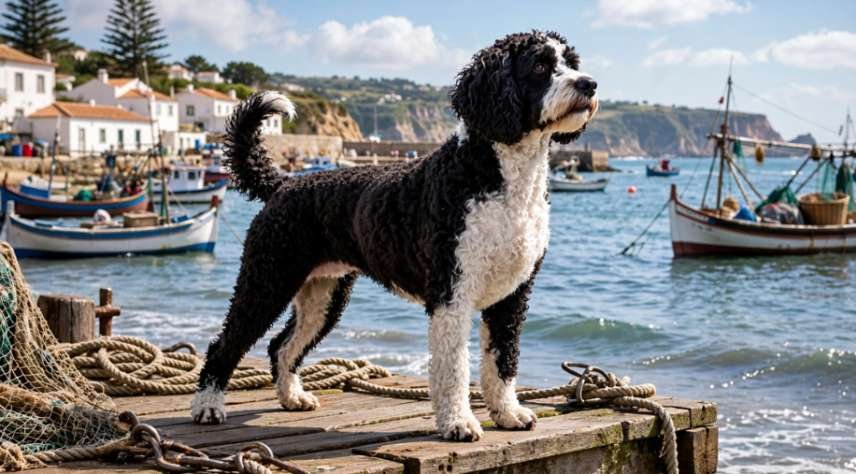
The Portuguese Water Dog size and appearance can surprise people who have only seen the breed in photographs. Beneath that thick, curly coat is a strong, athletic dog with substantial bone, powerful legs, and a body shaped for demanding water work.
When I first looked closely at the breed, I noticed that it appeared sturdier than a Poodle but more compact than many retrievers. That balance between strength, agility, and manageable size defines the Portuguese Water Dog.
Portuguese Water Dog Height and Weight
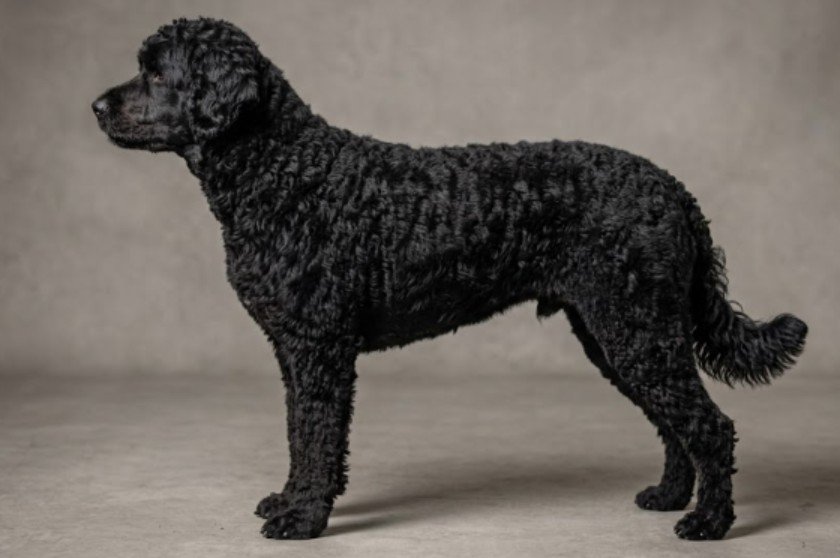
The Portuguese Water Dog is officially classified as a medium-sized working breed. However, its muscular frame and dense coat can make it appear larger than its measurements suggest.
The American Kennel Club breed standard gives separate height and weight ranges for males and females. Height is measured at the withers, which is the highest point of the shoulder blades.
Male Portuguese Water Dog Size
An adult male normally stands between 20 and 23 inches tall at the shoulder. The ideal height listed in the breed standard is 22 inches.
Males generally weigh between 42 and 60 pounds. A well-conditioned male should look powerful without appearing heavy, bulky, or slow.
Female Portuguese Water Dog Size
An adult female usually stands between 17 and 21 inches tall. The breed standard identifies 19 inches as the ideal female height.
Females normally weigh between 35 and 50 pounds. They may look slightly finer than males, but they should still have strong bone and visible athletic substance.
Individual dogs can mature at different rates. Genetics, nutrition, exercise, and overall health may influence adult weight, although a healthy dog should remain within a proportionate range.
What Does a Portuguese Water Dog Look Like?
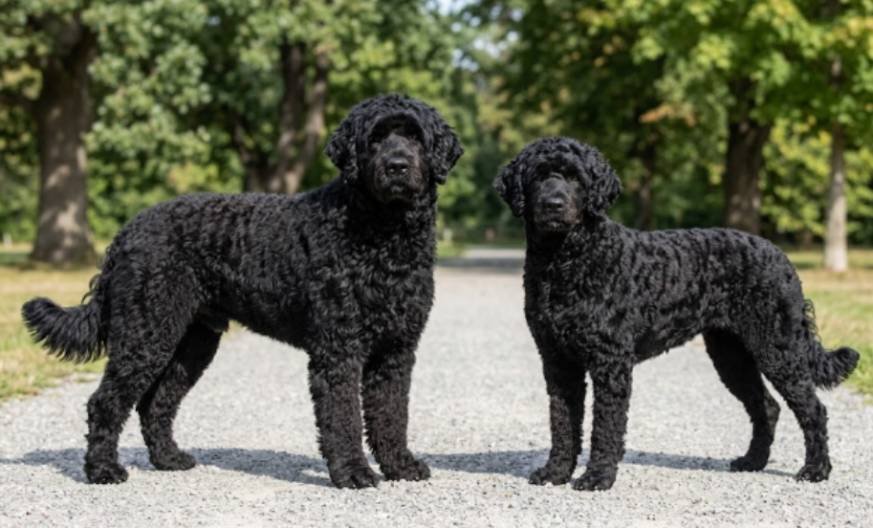
The most important feature of the Portuguese Water Dog size and appearance is balance. The dog should not resemble a fragile, narrow athlete or an oversized, heavy retriever.
Its entire structure reflects endurance, swimming ability, and the strength once needed to work beside fishermen.
Body Shape and Muscular Build
The official breed standard describes the body as “off-square.” This means the dog is slightly longer from chest to rear than it is tall from shoulder to ground.
The difference is subtle. A Portuguese Water Dog should still look compact and balanced rather than long-backed.
The body includes a deep chest, strong shoulders, muscular hindquarters, and substantial bone. Its build is more solid than many people expect beneath the coat. The Royal Kennel Club also describes the breed as robust, well-balanced, and strongly muscled through the shoulders.
A useful visual test is to imagine the coat removed. The remaining silhouette should show a powerful working dog, not a narrow or delicate companion breed.
Head, Eyes, and Expression
The head is broad, large, and well proportioned to the body. A strong muzzle and developed jaws add to the breed’s workmanlike appearance.
The eyes are medium-sized and set well apart. They may be black or various shades of brown, although darker eyes are preferred under the AKC standard.
The expression should appear steady, alert, and attentive. Heart-shaped ears hang close to the head and contribute to the breed’s distinctive outline.
This focused expression often matches the breed’s alert nature. Readers interested in how physical presence connects with behavior can also explore portuguese water dog temperament and personality.
Webbed Feet and Rudder-Like Tail
Portuguese Water Dogs have noticeable skin between their toes, commonly described as webbing. This feature helps increase the surface area of the feet during swimming.
Their feet alone do not create swimming ability. Strong shoulders, muscular rear legs, balance, conditioning, and confidence in water also matter.
The tail is thick at its base and narrows toward the tip. It is carried in a ring when the dog is alert and helps with balance and direction in water. The breed’s webbed feet and water-working ability remain among its best-known physical characteristics.
Portuguese Water Dog Coat Types and Colors
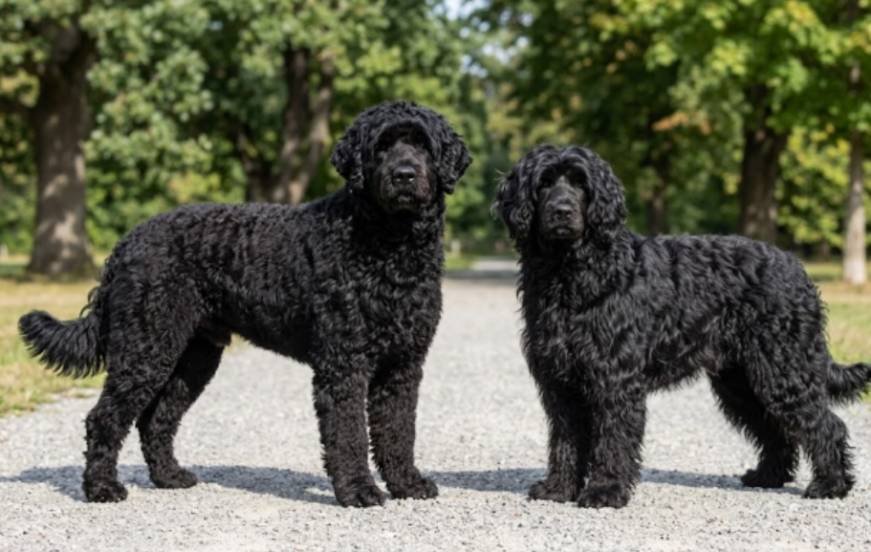
The coat has a major influence on the Portuguese Water Dog size and appearance. A full coat can hide the waist, broaden the chest, and make the legs look thicker.
The breed has a profuse, single coat without the typical undercoat found in many double-coated working dogs. It sheds minimally but continues growing and requires consistent maintenance.
Curly Coat
The curly variety has compact, cylindrical curls. Its texture may appear dense and somewhat matte rather than glossy.
Curls can differ slightly across the body. Hair around the ears may appear softer or more wavy than the coat along the back.
Wavy Coat
The wavy coat falls in loose, flowing waves instead of forming tight curls. It may have a slight sheen and often creates a softer outline.
Neither coat type receives preference under the American breed standard. A curly dog and a wavy dog can both represent the breed correctly.
Accepted Coat Colors
Recognized colors include black, white, and various shades of brown. Black-and-white and brown-and-white combinations are also accepted.
White Portuguese Water Dogs are not albino when they have correct dark pigment around the nose, mouth, and eyelids. Coat color does not determine the dog’s adult size, working ability, or personality.
Although the coat is often marketed as hypoallergenic, no dog breed is completely allergy-free. Dog allergens can come from saliva, dander, and urine, not simply loose hair. The American College of Allergy, Asthma and Immunology advises allergy-sensitive families to evaluate their response to individual dogs before making a commitment.
Lion Clip vs Retriever Clip
Grooming can dramatically change the perceived Portuguese Water Dog size and appearance.
The retriever clip trims the entire body to follow its natural outline. The coat must remain no longer than one inch, while the hair at the end of the tail stays full. This clip reveals the dog’s athletic proportions clearly.
The lion clip leaves the coat longer over the front of the body. The muzzle, middle section, hindquarters, and base of the tail are clipped closely. A full plume remains at the tail tip.
Both presentations are accepted equally under the AKC standard. The lion clip creates a dramatic, traditional outline, while the retriever clip offers a practical and even appearance.
How Large Does a Portuguese Water Dog Look Indoors?
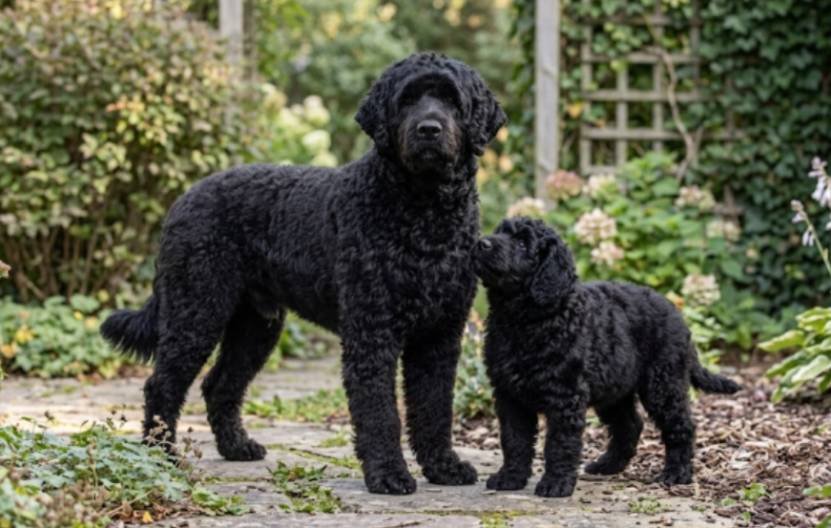
Measurements do not always explain how much physical space a dog occupies.
A 50-pound Portuguese Water Dog may look larger than a short-coated dog of equal weight because the coat adds visual volume. Its active movement, long tail, and strong body also require more practical room than the term “medium-sized” might suggest.
I use a simple space test when evaluating this breed. Picture a dog standing beside a standard kitchen counter. Its back remains well below the counter, but its head may approach the surface when it stretches upward.
This breed can fit into many homes, including apartments, but floor space alone should not drive the decision. Daily activity, training, coat care, and access to safe exercise matter more.
Owners should also learn how to introduce your dog to unfamiliar environments, especially when taking an energetic Portuguese Water Dog to new parks, homes, training facilities, or travel destinations.
How to Recognize the Breed at a Glance
A quick silhouette check can help distinguish a Portuguese Water Dog from a Standard Poodle, Labradoodle, or another curly-coated dog.
Look for three features together:
- A compact body that is slightly longer than tall
- Strong bone with a broad, substantial head
- A curly or wavy coat paired with an athletic working outline
A Poodle usually presents a more refined, square profile with a narrower impression. A Portuguese Water Dog should appear rugged, muscular, and ready for physical work.
Coat texture alone is not enough for identification. Mixed breeds can inherit similar curls, colors, or facial furnishings without sharing the Portuguese Water Dog’s proportions.
Appearance Changes From Puppy to Adult
A puppy may look round, fluffy, and somewhat short-legged because its coat and body proportions are still developing.
As the dog matures, the chest deepens, the head broadens, and the limbs gain muscle. Many Portuguese Water Dogs reach close to adult height during their first year, but their chest and overall substance may continue developing afterward.
Owners should avoid judging final Portuguese Water Dog size and appearance from an eight-week-old puppy. The parents’ structure, pedigree, sex, and growth pattern offer better clues.
Regular body-condition checks are also important. Thick curls can hide ribs, a narrowing waist, or gradual weight gain. I prefer using my hands to assess the ribs and waist instead of relying only on the dog’s outline.
Frequently Asked Questions
1. Is a Portuguese Water Dog considered a medium or large dog?
It is officially a medium-sized dog, although its muscular frame and full coat can make it look larger.
2. How big does a full-grown male Portuguese Water Dog get?
A mature male usually reaches 20 to 23 inches and weighs between 42 and 60 pounds.
3. Does a Portuguese Water Dog have hair or fur?
It has a continuously growing, low-shedding coat that may be curly or wavy and requires regular grooming.
4. Does grooming change Portuguese Water Dog size and appearance?
Grooming changes the visible outline significantly, but it does not alter the dog’s actual height, weight, or body structure.
Final Splash: Built for More Than Good Looks
The Portuguese Water Dog size and appearance tell the story of a genuine working breed. Its muscular body, broad head, strong legs, webbed feet, and functional coat were shaped by demanding work around water.
I would never choose this breed based only on its curls or stylish haircut. The coat may attract attention, but the athlete underneath defines the dog.
Before bringing one home, meet several adult Portuguese Water Dogs in person. Watch them move, feel the density of the coat, and compare males with females. That experience will give you a far more accurate picture than photographs alone.