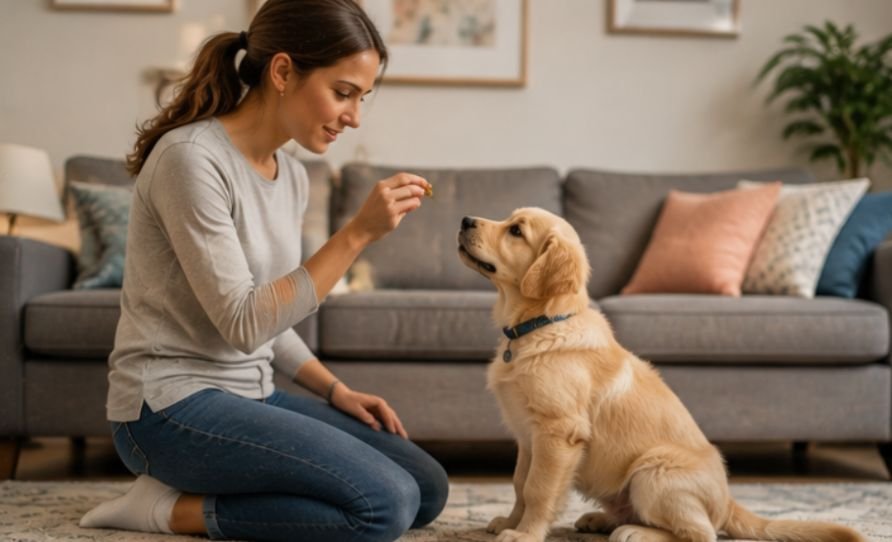
A bouncing puppy can make training feel like comedy. Learning how to teach a puppy to sit gives both of you an easy first win and creates a calm behavior for daily puppy care. This guide uses positive reinforcement, small treats, precise timing, and short sessions.
Sit helps before meals, walks, play, doors, and greetings. It builds focus and confidence without shouting or pushing. Consistent practice also helps your puppy understand that calm behavior earns attention, access, comfort, and everyday rewards.
Key Takeaways
- Use tiny, tasty rewards.
- Mark the exact sitting moment.
- Keep sessions under five minutes.
- Fade the food lure gradually.
- Practice during normal routines.
Prepare for Training
Preparation makes training easier. Choose a quiet area, rewards, and safe flooring.
Choose a Calm Space
Start indoors with few distractions. Remove toys and nearby distractions. Use a non-slip mat. Contact a veterinarian if sitting appears painful or uneven.
Pick Useful Rewards
Choose pea-sized, smelly treats. Kibble may work indoors, while higher-value food may help outside.
Praise, toys, attention, and play can also reinforce sitting. The American Kennel Club notes that rewards should match what each dog values.
Plan Short Sessions
Practice for three to five minutes, up to three times daily. Finish while your puppy still wants more. Training should feel like a game.
Where To Begin Teaching?
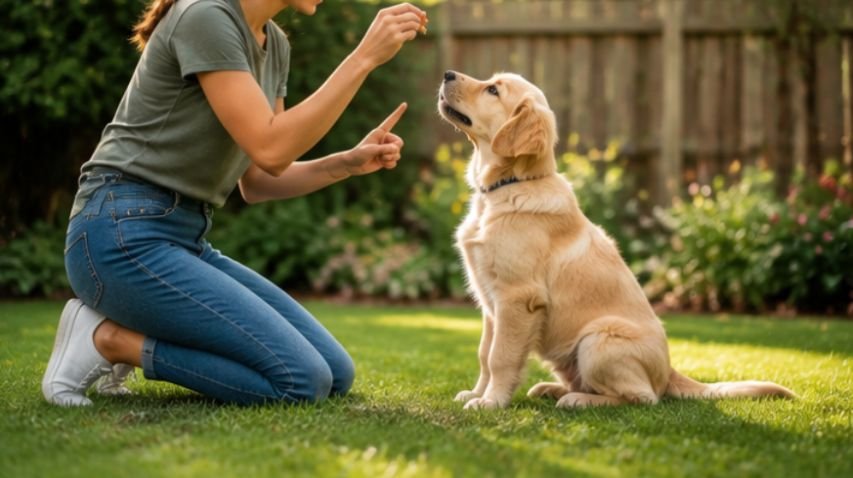
This lure training method uses food to guide movement before the visible treat is faded.
1. Get Their Attention
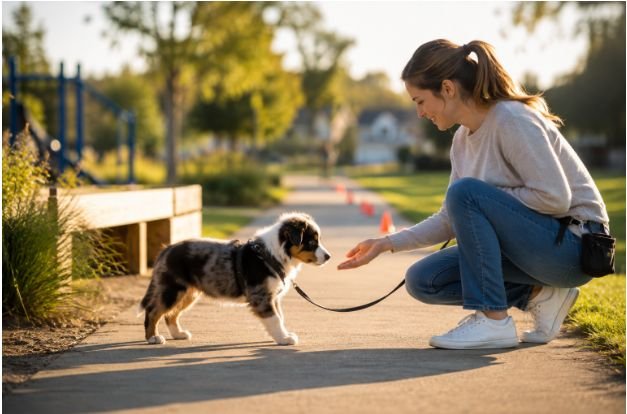
Hold a treat near your puppy’s nose without letting them grab it. Wait for four paws down. Calm movements reduce jumping and confusion.
2. Lure the Position
Move the treat slowly upward and slightly back, keeping it near the nose. As the head rises, the bottom should lower naturally. Never press the hips or pull the collar.
3. Follow the Nose
If your puppy backs away, use a smaller upward curve near a wall without trapping them. Lower the treat for jumping. Reset if your puppy lies down.
4. Mark and Reward
The instant your puppy’s bottom touches the floor, say “yes” or click a clicker. Give the treat immediately while your puppy remains seated.
Precise timing tells your puppy which action earned the reward. Prepare treats beforehand so you can reward within one or two seconds.
5. Add the Sit Cue
Once your puppy follows the hand reliably, say “sit” once before moving the lure. Repeating the word may teach your puppy that the first cue can be ignored.
Next, make the same hand movement without food. Reward from your pocket or other hand. Gradually shrink the gesture into a clear hand signal.
Practice Often
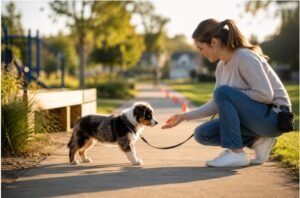
Repeat in short daily sessions. Begin in one quiet room, then try another room, the yard, driveway, and other safe places.
When practising beyond the home, follow safe how to socialize a puppy before vaccinations strategies by choosing clean, controlled environments and avoiding areas frequently used by unknown dogs.
Increase only one challenge at a time. Add duration, distance, or distraction separately. Outdoor practice may require better rewards.
Make Sit Useful
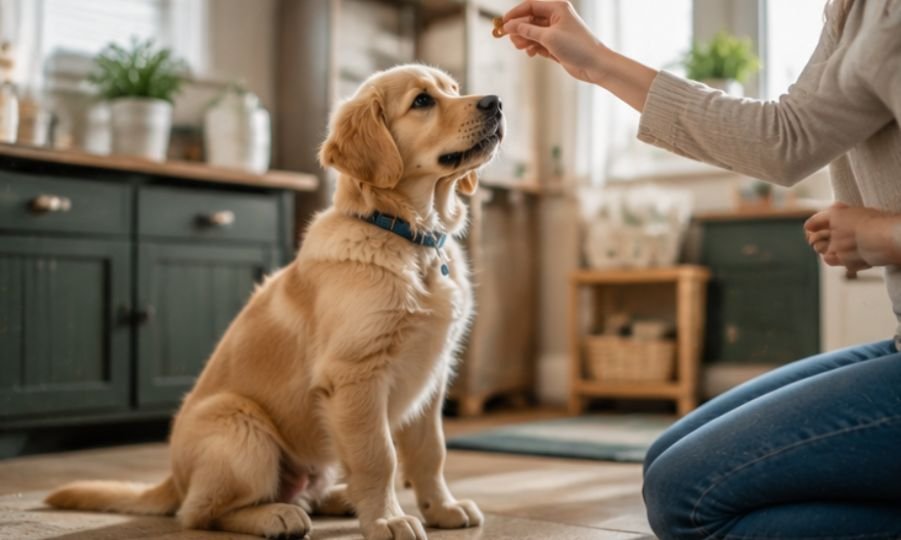
A trained behavior becomes reliable when it appears in normal puppy care routines. Ask for a polite sit before something valuable happens.
Use Real-Life Rewards
Request a brief sit before placing the food bowl down, clipping on the leash, opening a door, throwing a toy, or giving attention.
Mealtime training becomes easier once you understand when can puppies eat dry food only, since age-appropriate food can double as a convenient reward during short practice sessions.
Keep expectations fair. A puppy who urgently needs a bathroom break should not hold a long sit. Care comes before perfect obedience.
Add a Release Cue
After rewarding the sit, say “free,” “okay,” or another consistent release word, then invite your puppy to stand.
Begin with one second and slowly increase the time. Reward while the puppy remains seated so standing early does not become a habit.
Set a Success Goal
Your puppy understands the basic cue when they sit after one word or hand signal four times out of five without seeing food first.
Continue in different places. Dogs do not automatically know that a cue means the same thing everywhere.
Fix Common Problems
Most puppy training problems are not stubbornness. They usually mean the setting is too difficult, the reward is weak, or the puppy is confused.
Puppy Backs Away
Move the treat upward instead of far backward. Keep your hand close to the nose, use a smaller curve, and practice on a secure surface. Working beside a wall may help, but leave enough space for comfort. Never corner your puppy.
Puppy Ignores Treats
Try a quieter place or a better reward. Your puppy may be tired, full, worried, or distracted. Pause and return later.
Some puppies prefer toys or praise. Notice what creates genuine enthusiasm and use that motivation safely.
Puppy Stands Too Soon
Feed the reward directly to your puppy’s mouth while they remain seated. Reaching forward can pull them up.
Give two tiny treats during one short sit, then use the release cue. Reduce extra treats gradually.
Avoid Training Mistakes
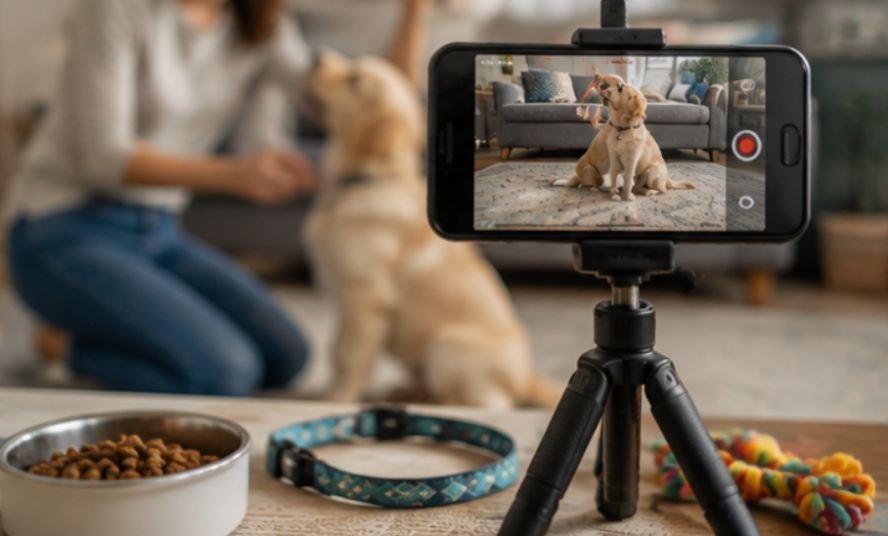
Clear communication protects your bond and prevents confusion. Positive puppy training should feel safe, predictable, and rewarding.
Do Not Repeat Cues
Say “sit” once, then pause. Repeating it teaches your puppy that responding immediately is optional. Help with the hand signal if needed.
No response usually means the exercise is too hard. Reduce distractions, improve the reward, or return to luring briefly.
Do Not Use Force
Never press your puppy’s bottom, shout, jerk the leash, or punish mistakes. These actions can create fear and make a puppy avoid training.
The American Veterinary Society of Animal Behavior supports reward-based methods. Positive reinforcement teaches the desired choice while protecting trust.
Do Not Rush
A perfect kitchen sit does not guarantee success at a park. Practice in gradually harder locations and improve rewards as distractions increase.
Expect setbacks during teething, growth, fear periods, or household changes. Calm repetition works better than frustration.
Frequently Asked Questions
1. At What Age Should You Teach a Puppy to Sit?
Most puppies can begin simple sit training around eight weeks old after settling into their home. Keep lessons gentle, brief, age-appropriate, and focused on successful repetitions.
2. What Are Common Puppy Training Mistakes?
Common mistakes include repeating cues, rewarding late, practicing too long, displaying food before every response, adding distractions quickly, choosing weak rewards, and punishing normal confusion.
3. How to Teach a Stubborn Puppy to Sit?
Use a quieter space, better reward, secure surface, and shorter lesson. A stubborn puppy may actually be distracted, tired, uncomfortable, worried, or unclear about the task.
4. What Is the First Command You Should Teach Your Puppy?
Name recognition and recall matter for safety, while sit is an excellent first manners cue. Teach all three early through brief, positive sessions.
Sit Happens: Celebrate the Win
Learning how to teach a puppy to sit creates more than a cute trick. It gives your puppy a calm option during meals, greetings, walks, play, and open doors.
Use small treats, precise timing, clear cues, and cheerful daily practice. Fade the lure gradually, reward real-life success, and remember that patient training builds reliable manners and a stronger bond.