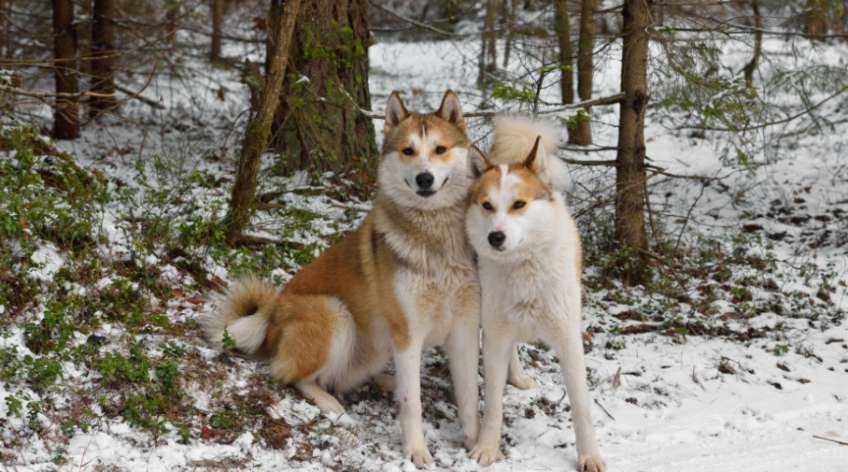
The West Siberian Laika looks lean, alert, and ready to move before it takes a single step. When I examine the west siberian laika size and breed characteristics, I see a dog shaped by function rather than exaggerated appearance. Its strong frame, insulating coat, sharp senses, and independent nature all support demanding work in forests and severe weather.
This Russian hunting breed falls between a medium and large dog. However, its athletic proportions often make it appear lighter and faster than other dogs of a similar height.
West Siberian Laika Size at a Glance
Official breed standards emphasize clear differences between males and females. Males should look distinctly masculine, while females should retain a lighter, more feminine build.
The Fédération Cynologique Internationale places male height at 55 to 62 centimeters. That converts to roughly 21.5 to 24.5 inches. Female height ranges from 51 to 58 centimeters, or about 20 to 23 inches. The United Kennel Club lists a similar range, placing males at 21 to 23.5 inches and females at 20.5 to 23 inches.
Male Height and Weight
An adult male usually stands about 21 to 24 inches at the shoulder. A typical healthy weight falls near 50 to 55 pounds, although working condition and body structure affect the number.
A well-conditioned male should look powerful without appearing bulky. I would expect visible muscle through the shoulders and hindquarters, but not the heavy outline of a mastiff or livestock guardian.
Female Height and Weight
An adult female generally stands 20 to 23 inches tall and weighs approximately 40 to 50 pounds. Females usually appear slightly finer through the head, neck, and body.
These measurements show why the west siberian laika size and breed characteristics suit endurance work. The dog has enough strength for difficult terrain without carrying unnecessary weight.
Athletic Build and Body Proportions
The West Siberian Laika has a strong, dry, and muscular body. “Dry” describes a firm working physique without loose skin, excessive fat, or heavy features.
Its body is slightly longer than its height. The chest reaches close to the elbows, while the abdomen rises moderately toward the rear. A strong back and well-developed hindquarters help the dog accelerate, turn, and cross uneven ground.
One useful way I assess this breed is through a function test. Each feature should help the dog travel, locate game, or cope with weather. A broad, heavy body would reduce speed. An overly fine body would reduce stamina. The correct Laika sits between those extremes.
That balance is one of the most useful insights behind the west siberian laika size and breed characteristics. The breed was developed for practical performance, not merely for a wolf-like silhouette.
Wolf-Like Head, Eyes, Ears, and Tail
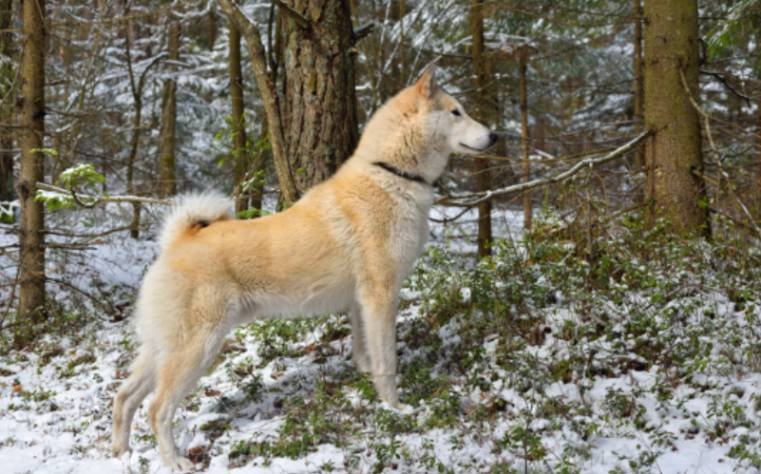
The Laika’s head and expression create much of its distinctive appearance. However, these features also support hearing, scenting, communication, and environmental awareness.
Head and Facial Expression
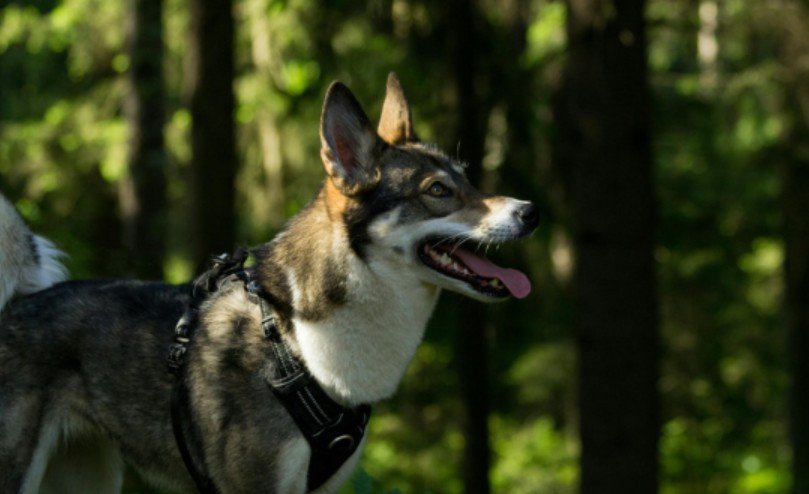
The head is wedge-shaped when viewed from above. It narrows gradually toward a pointed muzzle without appearing weak or excessively sharp.
Its almond-shaped eyes sit at a slight angle. Official standards favor brown or dark brown eyes, which create an attentive and intelligent expression. Amber shades may appear in some dogs, but very pale or blue eyes do not represent the preferred breed-standard appearance.
The lips remain tight and clean. Strong jaws and a complete scissor bite reflect the breed’s hunting background.
Ears and Curled Tail
The ears are erect, high-set, mobile, and usually V-shaped. Their upright position helps the dog detect faint sounds while searching through dense woodland.
The tail forms a tight curl over the back or hip. It carries thick hair and contributes to the classic northern spitz outline. A curled tail is not just decorative. Northern dogs can use a heavily furred tail to cover the nose and face while resting in cold conditions.
These details make the west siberian laika size and breed characteristics easy to distinguish from those of heavier shepherds or streamlined sighthounds.
West Siberian Laika Coat Colors and Texture
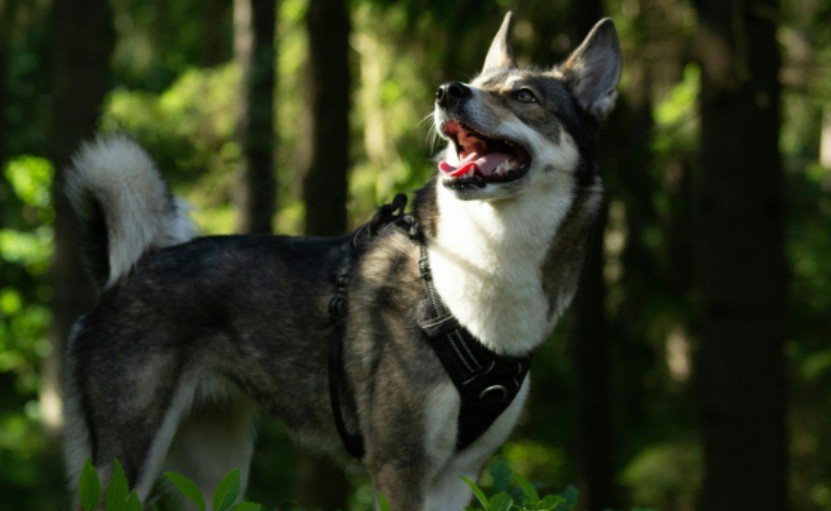
The coat protects the dog from snow, moisture, wind, brush, and rapid changes in temperature. Owners should expect a natural working coat rather than a soft, flowing ornamental one.
A Double Coat Built for Cold Weather
The outer coat consists of harsh, straight guard hairs. Beneath it sits a dense, soft undercoat that provides insulation.
Hair grows longer around the neck, shoulders, cheeks, and tail. This creates a modest ruff, particularly in males. The coat should stand away from the body rather than hanging flat.
The FCI standard describes the breed as having a hard, straight outer coat with a well-developed undercoat. This texture explains why routine brushing matters, especially when the dog releases its seasonal undercoat.
Frequent shaving can damage the coat’s protective function. I would manage shedding with brushing, bathing when necessary, and thorough drying instead.
Accepted Colors and Markings
Common colors include gray, red, fawn, reddish brown, and white. Dogs may also display combinations of these colors with patches.
Wolf gray remains one of the breed’s most recognizable shades. Gray coats can range from pale silver to deep, dark gray. White markings may appear on the chest, legs, face, or body.
Color attracts attention, but structure and movement matter more. A striking coat cannot compensate for weak proportions or poor working condition.
Movement, Endurance, and Hunting Ability
The West Siberian Laika should move freely and efficiently. Its normal working gait often alternates between a trot and a gallop, allowing it to cover large areas without wasting energy.
Strong, compact feet support movement over rough ground. Flexible toes and firm pads help the dog manage woodland floors, snow, and uneven trails.
This movement explains another practical point about west siberian laika size and breed characteristics: the breed is not designed for short bursts alone. Its moderate weight and balanced frame support sustained activity.
A Laika may track, search, listen, and work independently at a distance from its handler. Therefore, physical endurance works alongside alertness and decision-making ability.
Temperament Behind the Athletic Appearance
The breed’s physical features cannot be separated from its behavior. This dog was developed to hunt with initiative, so blind obedience should not be expected.
A West Siberian Laika often forms a deep attachment to one household. It can be affectionate, loyal, watchful, and calm indoors after receiving enough activity. However, it may remain reserved with unfamiliar people.
Its prey drive can be intense. Small pets, wildlife, and unsecured outdoor areas may create problems. Secure fencing and carefully managed introductions are essential.
Training should remain firm, calm, and fair. Harsh corrections can damage trust and increase resistance. For a fuller behavioral profile, read about west siberian laika temperament and personality before deciding whether this breed suits your experience.
Is This Breed Suitable for an American Home?
The west siberian laika size and breed characteristics suit active owners better than casual pet households. A large yard helps, but space alone does not meet the dog’s needs.
This breed benefits from hiking, scent games, tracking activities, controlled running, and structured exploration. A short walk around the block will rarely satisfy a mature working Laika.
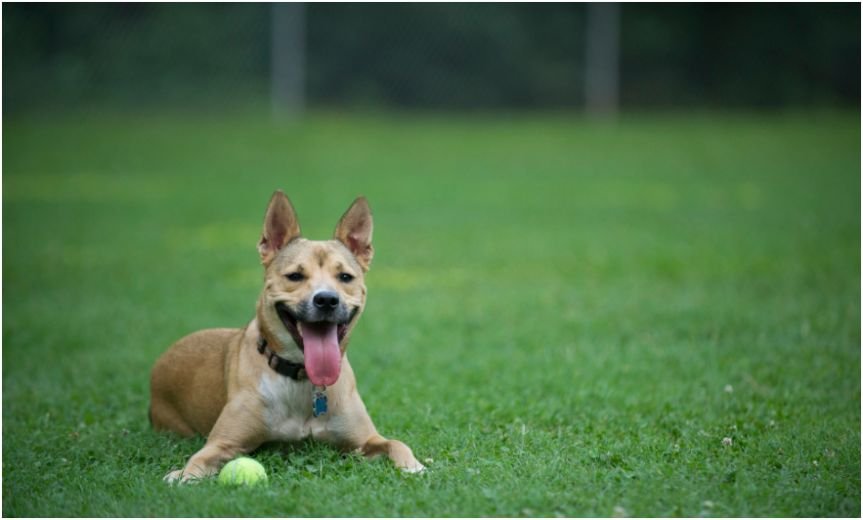
Family suitability depends on much more than a dog’s height, weight, or available yard space. Dog ownwers comparing primitive breeds may also consider is a Carolina Dog a good family pet to see how socialization, independence, exercise needs, and household structure influence everyday compatibility.
Warm climates require extra care because of the dense double coat. Exercise should take place during cooler hours, with constant access to shade and water. Air-conditioned indoor rest may be necessary during hot summers.
Apartment ownership is possible only with exceptional daily commitment. The greater concerns are prey drive, independence, boredom, and escape behavior rather than body size alone.
Before choosing a puppy, I would evaluate fencing, exercise time, training experience, climate, and nearby wildlife. Those factors matter as much as height or weight.
Frequently Asked Questions
1. How big does a West Siberian Laika get?
Most adults stand 20 to 24 inches tall and weigh approximately 40 to 55 pounds, with males usually larger than females.
2. Is a West Siberian Laika considered a large dog?
It is generally described as a medium-to-large breed with a lean, athletic build rather than a heavy frame.
3. What are the main West Siberian Laika size and breed characteristics?
Key traits include an athletic body, wedge-shaped head, erect ears, curled tail, dense double coat, high endurance, and strong hunting instinct.
4. Does a West Siberian Laika look like a wolf?
Yes. Its gray coloring, pointed muzzle, erect ears, slanted eyes, and balanced proportions create a noticeably wolf-like appearance.
Final Verdict: A Wolfish Look With a Working Heart
After studying the west siberian laika size and breed characteristics, I would never choose this dog for appearance alone. The curled tail and wolf-gray coat may win attention, but the working instincts define the breed.
This Laika needs movement, meaningful training, secure boundaries, and a respectful relationship. Measure your daily routine as carefully as you measure the dog. When its physical and mental needs are met, the breed can become a devoted, capable, and impressive companion.