Bringing home a puppy is exciting, messy, and full of questions. One of the biggest is how to socialize a puppy before vaccinations without exposing them to unnecessary health risks. The good news is that socialization does not require crowded parks or contact with unknown dogs. It begins with calm, controlled experiences that help your puppy understand everyday life.
Early socialization teaches a puppy how to respond to people, animals, sounds, surfaces, handling, travel, and unfamiliar places. The goal is not to make your puppy greet everyone. It is to build curiosity, confidence, and the ability to recover calmly when something feels new.
Early Socialization Matters
Learning how to socialize a puppy before vaccinations matters because puppies are tiny explorers with almost no life experience. A vacuum can sound like a monster, a person in a hat can look suspicious, and a shiny floor can feel like an ice rink. Gentle exposure teaches them that ordinary life is not a daily surprise party.
Puppies pass through an important developmental period during their first months. Positive experiences at this stage may reduce fear, nervousness, and overreaction later. The safest approach balances behavioral learning with disease prevention, guided by your veterinarian and local infection risks.
Safe Outings And Public Exposure
Public exposure can begin before full vaccination, but your puppy should experience the world without walking through areas used by unknown dogs.
Carry Your Puppy Outdoors
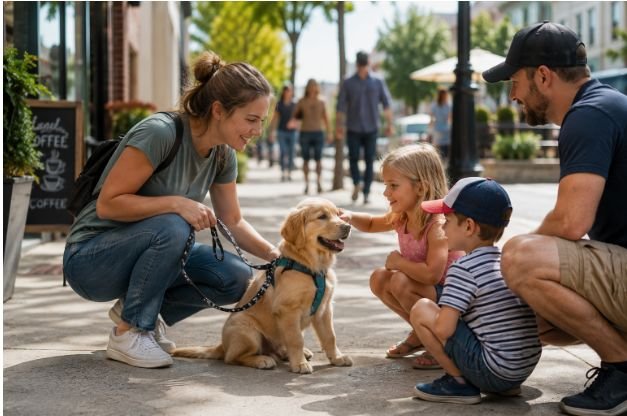
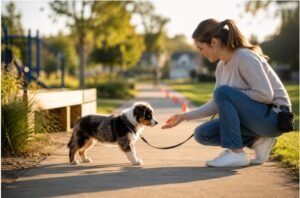
Use your arms, a secure sling, stroller, or clean wagon so your puppy can see traffic, bicycles, umbrellas, shopping carts, and different people. Keep their paws off public ground and reward relaxed watching with small treats or gentle praise.
Choose quiet locations first. Five minutes outside a café, school, shop, or park may be enough. Leave before your puppy becomes tired or frightened. Short successful outings are more useful than long, overwhelming adventures. Make sure puppy is of the age to go outside.
Create Clean Observation Spots
A clean bench, private patio, or freshly washed blanket can provide a safe observation point if your veterinarian approves. Keep your puppy on the protected surface and avoid places where dogs frequently toilet, gather, or share bowls.
Take Positive Car Rides
Short journeys help puppies become comfortable with travel before veterinary visits, grooming appointments, or family trips. Begin with brief drives and pair them with calm praise, a safe chew, or a few treats.
Controlled Animal And Human Interaction
Carefully selected introductions teach social skills without placing your puppy in uncontrolled environments.
Meet Known Healthy Dogs
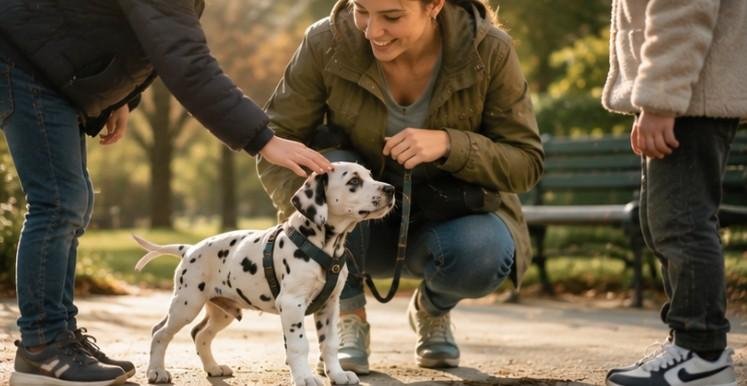
Invite one calm, fully vaccinated dog from a trusted household into your clean home or private yard. Confirm that the dog appears healthy and has not recently visited high-risk places such as dog parks or daycare centers.
Choose A Safe Puppy Class
A well-managed puppy class can combine socialization, basic puppy training cues, and professional support. Choose one that checks vaccination records, excludes sick puppies, disinfects the floor, controls play, and uses reward-based methods.
Ask whether puppies are grouped by size, confidence, and play style. Your veterinarian should approve attendance based on your puppy’s age, health, vaccination progress, and local disease risk. The American Veterinary Society of Animal Behavior supports carefully managed early socialization.
Invite Different People Home
Ask trusted friends and relatives of different ages, heights, voices, and appearances to visit. Hats, glasses, coats, walking sticks, and backpacks create useful variety without requiring a risky public trip.
Home Acclimation And Handling
Your home provides many safe opportunities to prepare a puppy for daily life, grooming, veterinary care, and future adventures.
Introduce Household Sounds
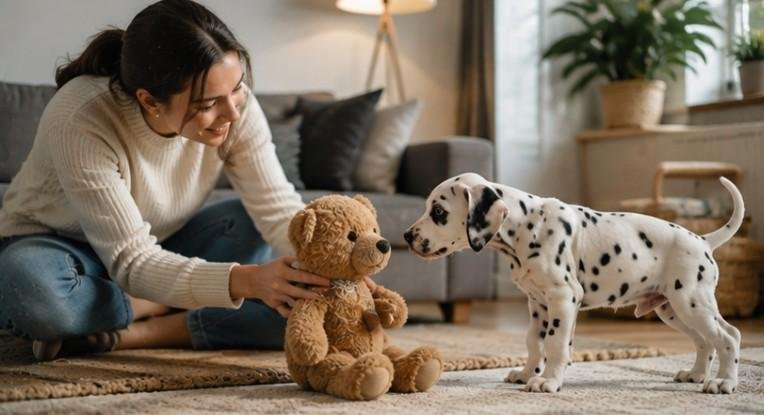
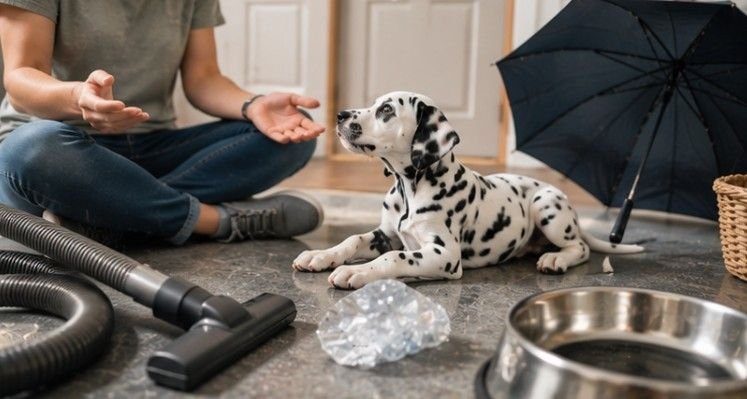
Gradually expose your puppy to the vacuum, blender, hair dryer, doorbell, television, washing machine, and kitchen noises. Start from another room or at a low volume, then pair the sound with food, play, or calm attention.
Practice Gentle Handling
Briefly touch your puppy’s paws, ears, tail, mouth, collar, and body each day. Reward calm behavior and stop before discomfort develops. These short exercises prepare puppies for nail trims, tooth brushing, grooming, and veterinary examinations.
Explore Indoor Surfaces
Let your puppy walk over tile, carpet, wood, rubber mats, cardboard, towels, and other clean surfaces. Different textures improve body awareness and make unfamiliar buildings less intimidating later.
Follow A Simple Socialization Routine
A repeatable routine makes how to socialize a puppy before vaccinations safer, easier, and less stressful for everyone. Keep a diary of new experiences, reactions, and improvements so you can adjust each future session with care.
Pick One New Experience
Choose one person, sound, surface, object, animal, or environment for each session. Keep the first exposure easy and prepare tiny treats before beginning.
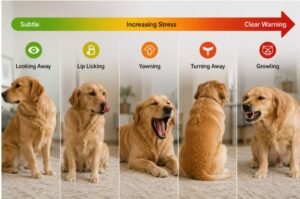
Watch body language carefully. A relaxed puppy may sniff, explore, eat, and return attention to you. A worried puppy may freeze, crouch, tremble, hide, bark, refuse food, or try to escape.
Pair It With Something Positive
Offer food, gentle play, praise, or extra distance as soon as your puppy notices the experience. They should be free to watch, approach, or move away. Calm observation counts as successful socialization.
Stop Before Stress Builds
Finish after a few positive repetitions. Young puppies tire quickly and breath heavy, and fatigue can cause biting, barking, hiding, zooming, or difficulty learning. Stopping early helps preserve a pleasant memory.
Places To Avoid
Some environments carry greater risk because many dogs use them and their health histories are unknown.
Skip High-Traffic Dog Areas
Avoid dog parks, pet-store floors, daycare facilities, communal apartment toilet areas, shared bowls, busy rest stops, and heavily used dog-walking routes. These places may contain contaminated soil, waste, or surfaces.
Avoid Forced Contact
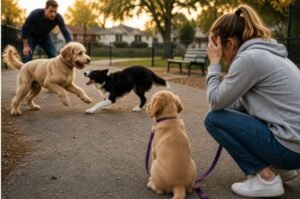
Do not let strangers pass your puppy around, allow unknown dogs to rush them, or place them in crowded situations. More exposure is not always better. The emotional quality of each experience matters most.
Frequently Asked Questions
1. What Is The 7 7 7 Rule For Puppies?
The 7 7 7 rule is a flexible checklist encouraging puppies to experience seven examples from categories such as people, surfaces, places, challenges, containers, eating locations, and play activities.
2. Is 12 Weeks Too Late To Socialize A Puppy?
No, twelve weeks is not too late. Begin gentle exposure promptly, move at your puppy’s pace, and seek professional support if intense fear, avoidance, or slow recovery appears.
3. What Do Vets Recommend For Puppy Socialization?
Veterinarians generally recommend controlled positive exposure while avoiding high-risk environments. Ask your veterinarian how to socialize a puppy before vaccinations based on health, vaccine progress, and local disease levels.
4. What Not To Do With A Puppy Before Vaccinations?
Avoid dog parks, unknown dogs, shared bowls, contaminated ground, pet-store floors, communal toilet areas, overwhelming crowds, forced greetings, and any location your veterinarian considers unsafe.
Tiny Adventures Build Brave Dogs
Understanding how to socialize a puppy before vaccinations means choosing thoughtful exposure instead of complete isolation or risky freedom. Carry your puppy in public, arrange safe playdates, consider trusted classes, introduce home experiences, and respect stress signals. With patient practice and veterinary guidance, small daily adventures can help your puppy become confident, adaptable, and ready for a bigger world.