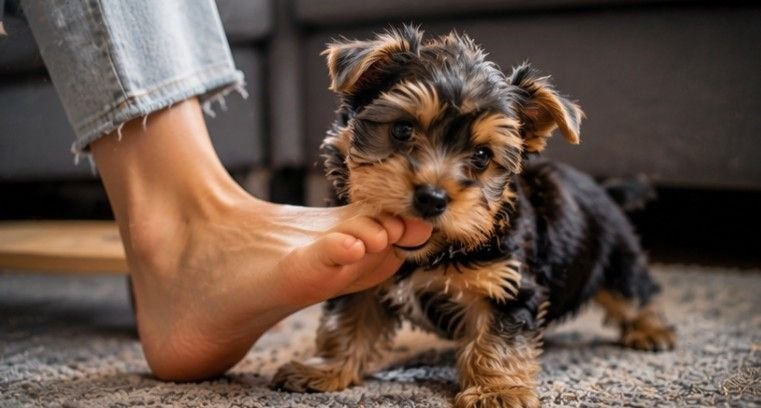
A tiny puppy can turn a walk across the living room into an ankle-chasing adventure. After watching a playful pup treat fingers, socks, and slippers like moving toys, “puppy biting hands and feet how to stop” becomes a very real question. Thankfully, calm reactions, smart redirection, enough rest, and consistent training can protect your skin without frightening your new companion.
Key Takeaways
- Puppy biting is normal, but calm training prevents lasting habits.
- Freeze instead of pulling away, then redirect to a suitable toy.
- Briefly remove attention when teeth keep touching skin or clothing.
- Regular naps, enrichment, and simple cues reduce overtired nipping.
- Never use physical punishment; seek help for fearful or forceful biting.
Why Do Puppies Bite So Much?
Understanding puppy biting hands and feet how to stop saves your socks, patience, and favorite pajama bottoms. More importantly, it teaches bite inhibition before your puppy becomes a stronger adult dog. A clear household plan prevents mixed messages, so everyone responds safely instead of turning the hallway into an accidental chase game.
Puppies explore with their mouths, play through nipping, and chew to soothe teething gums. Moving hands and feet are exciting because they resemble fast toys. The goal is not to punish normal puppy behavior. It is to show your pup what to bite, how gently to interact, and when play must pause.
Immediate Reactions
Your first response can calm the situation or make biting more exciting. Use the same sequence whenever teeth touch skin.
Freeze And Go Limp
Stop moving and let your hand or foot become boring. Pulling away can trigger another chase. The puppy mouthing guide explains that mouthing is normal, but puppies still need to learn gentler play.
Wait for the release, praise calmly, and offer an approved chew. Skin stops the game, while toys keep it going.
Use One Short Sound
One calm “ouch” may interrupt some puppies. High-pitched squeals can excite energetic or herding puppies, so watch your puppy’s response. If the sound increases biting, skip it. Freeze silently and redirect.
Remove Attention Briefly
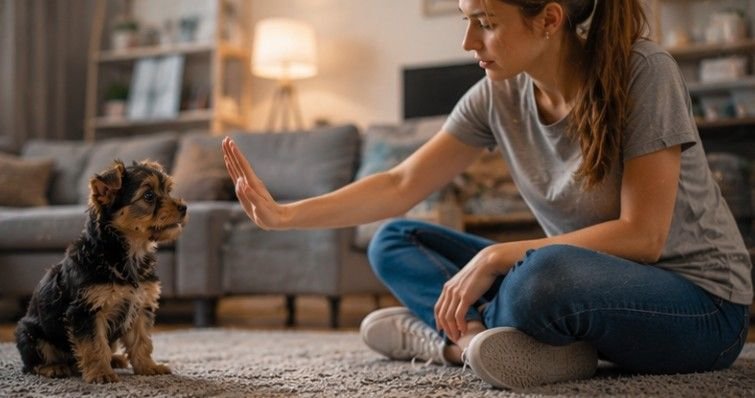
If your puppy returns to skin after redirection, stand up, turn away, or step behind a baby gate for about 30 seconds. Keep the pause boring, without eye contact, talking, or angry gestures.
Return when your puppy settles and restart with a toy. This brief reset teaches a practical rule: gentle play continues, but biting people makes attention disappear.
Redirection And Training
Preventing a bite is easier than reacting afterward. Keep better choices nearby.
Keep A Toy Ready
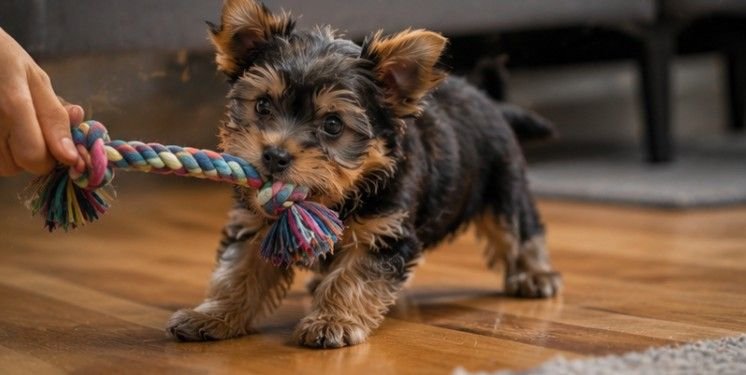
Place safe chew toys where biting happens most. Carry a small tug toy and offer it before your puppy reaches for skin. Rotate textures to maintain interest.
Choose correctly sized toys, supervise chews, check for damage, and ask your veterinarian about safe options.
Teach A Reliable Sit
Ask for a sit before petting, greeting, or play. It gives an excited puppy a job. Mark it with “yes,” then reward.
Practice briefly while your puppy is relaxed. Quiet practice makes the cue easier around hands, shoelaces, and visitors.
Reward Better Choices
Praise your puppy for approaching without nipping, walking beside your feet, chewing a toy, or relaxing on a mat. Small treats and gentle attention make calm behavior valuable.
For more ideas, see Rover’s puppy biting advice. Videos can show timing, but choose qualified trainers on YouTube and treat Reddit experiences as personal stories, not expert guidance.
Management And Routine
Exhausted or overexcited puppies struggle to make good choices. Daily management reduces biting while training develops.
Schedule Regular Naps
Overtired puppies often become noisy “landsharks” that grab sleeves and ankles. Young puppies may need 18 to 20 hours of daily sleep, according to the American Kennel Club. Needs vary with age, breed, health, and activity.
Plan toilet breaks, food, play, training, and sleep. Guide your puppy to a quiet crate or pen before frantic biting begins. Naps must feel safe.
Use Helpful Barriers
Baby gates and pens help when supervision is impossible. They prevent ankle attacks while allowing safe rest and chewing.
Barriers do not replace interaction. Provide water, bedding, and enrichment. Children must not tease or enter unsupervised.
Meet Daily Needs
Offer suitable exercise, sniffing, food puzzles, training, and calm contact. Mental enrichment can be better than nonstop physical play.
Keep a biting diary with time, activity, sleep, and triggers. Patterns may reveal hunger, rough play, teething, or missed naps.
Puppy Biting Hands And Feet How To Stop
Use this sequence whenever biting begins. Freeze first, give one calm interrupter only if it helps, and offer a nearby toy. Praise the moment your puppy chooses it. If teeth return to skin, remove attention for 30 seconds, then restart calmly.
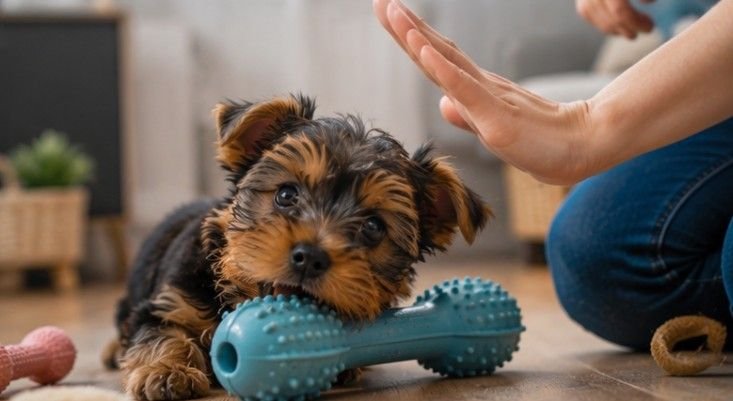
Next, check the cause. Your puppy may need a chew, sniffing game, or nap. Ask for a familiar sit before petting or walking again. Every family member should follow the same response.
Track progress weekly rather than expecting perfection. Fewer bites, softer mouth pressure, faster recovery, and choosing toys without prompting are meaningful signs that your puppy is learning and developing well.
Never hit, tap the nose, alpha-roll, or hold the mouth shut. Physical corrections can create fear or defensive biting. Positive reinforcement builds trust.
When To Get Help
Most playful puppy biting during play improves with maturity and consistent training. However, seek help for stiff posture, hard staring, guarding, repeated skin-breaking bites, fear, sudden behavior changes, or difficulty calming down.
Begin with your veterinarian to rule out pain or illness. Then contact a qualified reward-based trainer or veterinary behaviorist. Keep children and vulnerable adults separated from unsafe interactions until a professional plan is ready.
Frequently Asked Questions
1. Why Does My Puppy Keep Biting My Hands And Feet?
Hands and feet move, smell interesting, and trigger playful chasing. Teething, tiredness, boredom, overstimulation, and attention-seeking can also increase mouthing, so identify the likely trigger before responding.
2. Do Puppies Grow Out Of Biting Hands?
Most puppies improve as teething ends and self-control develops, but consistent bite inhibition training is still important. Without guidance, attention-rewarded nipping can remain a practiced habit beyond puppyhood.
3. Is It Okay To Push A Puppy Away When Biting?
No. Pushing can feel like play or make a worried puppy defensive. Freeze, redirect to a toy, and briefly remove attention using calm, predictable movements every time.
4. At What Age Do Puppies Stop Puppy Biting?
Many puppies improve between six and ten months, although timing varies by breed, development, training, and teething. Persistent, intense, or fearful biting needs professional assessment.
Trade Tiny Teeth For Gentle Greetings
Learning puppy biting hands and feet how to stop is about teaching better choices, not winning a battle. Freeze, redirect, reward calm behavior, protect sleep, and use barriers wisely. With patient repetition, your puppy can replace ankle ambushes with toy play, relaxed greetings, and safer family fun while keeping your bond strong.