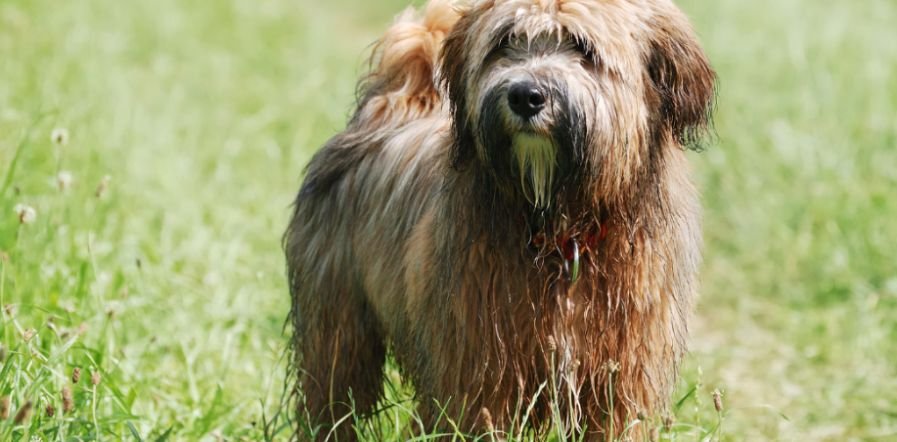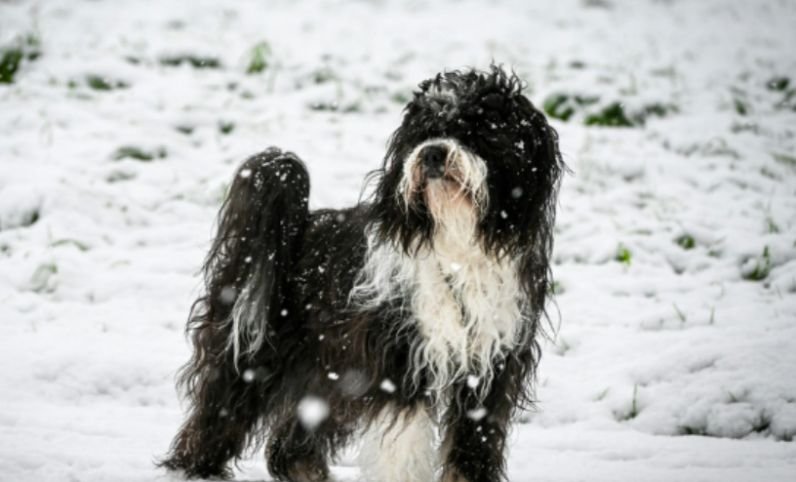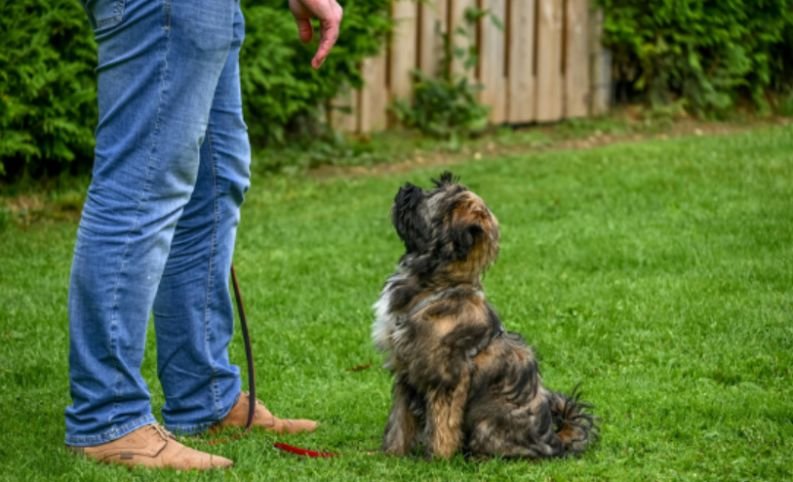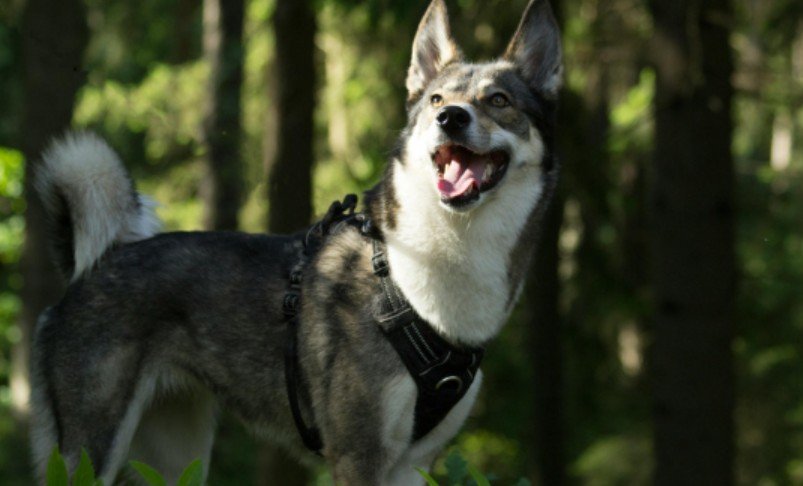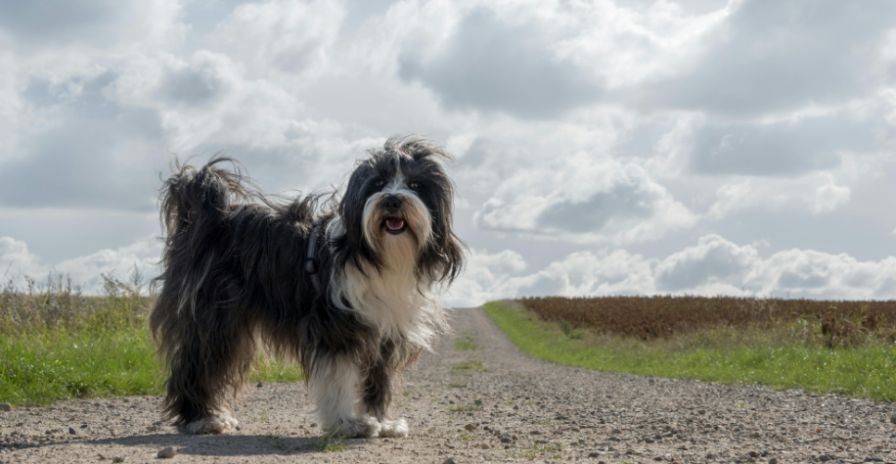
The first time I saw a Tibetan Terrier standing beneath its long coat, I expected a much larger dog. Its abundant hair, broad feet, and heavily feathered tail create a surprisingly substantial outline. However, the actual tibetan terrier size and breed characteristics place this sturdy dog comfortably within the medium-size range.
An adult Tibetan Terrier generally stands 14 to 17 inches tall and weighs 18 to 30 pounds. Beneath the dramatic coat is a compact, muscular, squarely built dog developed for movement across demanding Himalayan terrain.
Tibetan Terrier Height, Weight, and Body Proportions
Understanding the Tibetan Terrier’s measurements requires looking beyond the coat. The breed can appear heavy, but much of that visual volume comes from its profuse hair.
Average Height
The American Kennel Club lists the Tibetan Terrier’s typical height as 14 to 17 inches at the shoulder. The official US breed standard describes an average height of 15 to 16 inches for males, with females usually being slightly smaller.
Measure a dog from the ground to the highest point of the shoulder blades. Do not measure to the top of the head or coat.
The Royal Kennel Club uses a slightly narrower preferred range. Its standard lists males at 14 to 16 inches, with females somewhat smaller. Small differences between national standards are normal and do not change the breed’s overall medium-size classification.
Healthy Adult Weight
Most adult Tibetan Terriers weigh between 18 and 30 pounds. The official AKC standard identifies 20 to 24 pounds as the average range, although healthy dogs may fall above or below that figure depending on height, sex, frame, and condition.
A well-conditioned dog should feel solid rather than delicate. You should be able to feel the ribs beneath the coat without seeing sharp bones or pressing through a thick layer of fat.
The coat can make body condition difficult to judge visually. I find that a hands-on rib and waist check gives a more accurate picture than appearance alone.
Why the Square Body Shape Matters
One of the defining Tibetan Terrier breed characteristics is its square proportion. The distance from the shoulder to the rear of the body should closely match the dog’s height at the shoulder.
This shape gives the breed a compact, balanced outline. It should not look long-backed, low to the ground, or unusually tall and narrow.
The Tibetan Terrier Club of America describes the breed as powerful, profusely coated, and square in proportion. Its construction supports strong, efficient movement rather than exaggerated speed or bulk.
Distinctive Tibetan Terrier Physical Characteristics
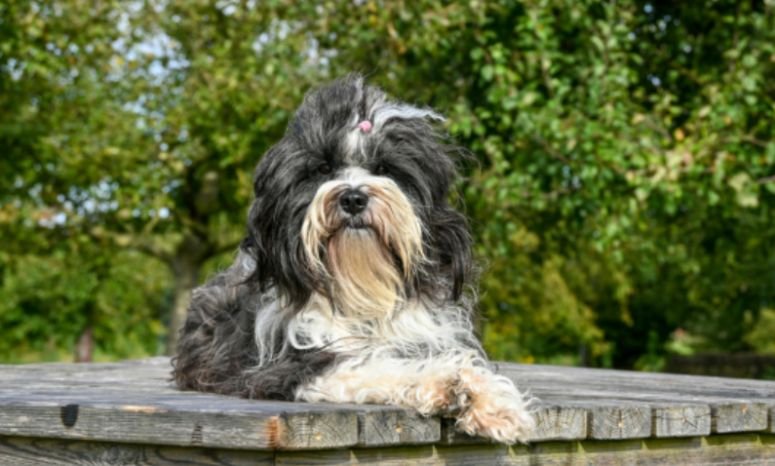
The most memorable features of this breed are not decorative accidents. Many reflect the type of dog preserved for centuries in Tibet.
Large Snowshoe Feet
Tibetan Terriers have unusually large, round, flat feet. Unlike the compact, arched feet seen in many breeds, these feet create a broad surface sometimes described as a snowshoe effect.
The official breed description connects this shape with improved traction. Broad feet would have helped dogs maintain their footing across snow, rocks, and uneven mountain ground.
This feature provides an immediate identification clue. When I compare a Tibetan Terrier with a similarly coated dog, the broad feet often reveal the difference first.
Owners should inspect the hair between the pads regularly. Matted hair, ice, road salt, or small debris can make walking uncomfortable.
Long Double Coat
The Tibetan Terrier carries a protective double coat. The undercoat is fine and woolly, while the outer coat is abundant and may be straight or gently wavy.
The coat should look natural rather than silky, tightly curled, or artificially sculpted. It parts across the back and covers much of the dog’s body.
This weather-resistant coat helped insulate the breed in a harsh climate. In a modern home, however, it creates a serious grooming commitment. Brushing only the visible surface can leave dense tangles close to the skin.
Facial Hair and Dark Eyes
Long hair falls naturally over the eyes and foreface. This characteristic gives the Tibetan Terrier its unmistakable shaggy expression.
The hair may look as though it blocks the dog’s vision, yet the breed standard expects the eyes to remain visible when the coat is examined correctly. The eyes are generally large, dark, and set fairly wide apart.
Owners may tie the facial hair loosely or trim it for convenience. A show coat is usually maintained in a more natural condition.
Feathered Tail and Balanced Movement
The tail is heavily feathered, carried high, and curled over the back. It may fall toward either side rather than forming a perfectly centered circle.
The tail completes the breed’s compact outline. A low, thin, or sparsely coated tail would not produce the same characteristic appearance.
Despite the volume of hair, a Tibetan Terrier should move freely. Its gait should look smooth, balanced, and efficient. The breed is sturdy and agile rather than slow or cumbersome.
Is the Tibetan Terrier Actually a Terrier?
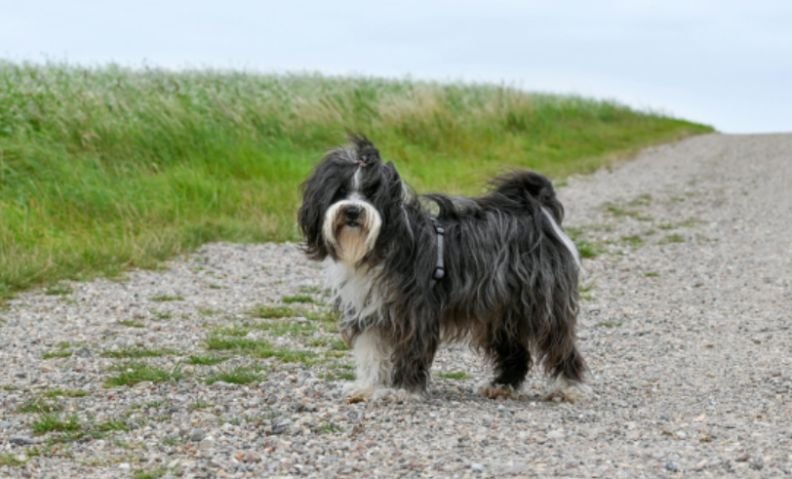
The name causes frequent confusion. The Tibetan Terrier is not a true terrier and was not developed primarily to pursue vermin underground.
The AKC places the breed in the Non-Sporting Group. Historical accounts describe Tibetan Terriers as companions, watchdogs, and versatile dogs associated with Tibetan communities and monasteries. The word “terrier” was applied by Western observers because of the breed’s manageable size, not because of a shared working history with traditional terriers.
That distinction matters for owners. People expecting the intense digging, hunting, and prey-driven behavior associated with some terriers may find a different personality here.
For a closer look at the breed’s emotional nature, alertness, and family behavior, read about tibetan terrier temperament and personality traits.
How Big Does a Tibetan Terrier Look at Home?
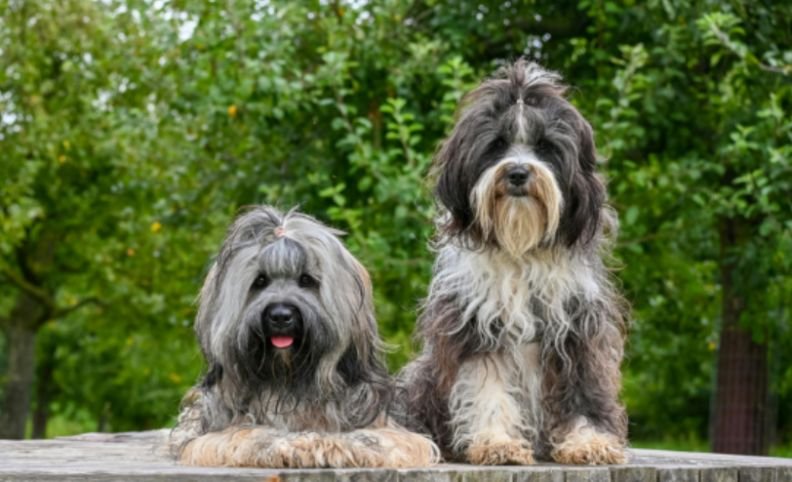
Measurements alone do not show how much space a dog occupies. A 22-pound Tibetan Terrier often looks closer in size to a heavier breed because its coat expands its silhouette.
My practical size comparison is this: the dog is usually compact enough to sit beside an adult on a sofa, yet substantial enough that carrying it for long periods becomes tiring. It is not a lap-sized toy breed.
A typical adult can fit comfortably in many apartments, provided it receives regular exercise. However, its tail, coat, and playful movement require more floor space than its weight might suggest.
Crates, beds, harnesses, and travel carriers should be selected using actual body measurements. Buying accessories based only on weight may result in a cramped fit.
Coat Colors and Overall Appearance
Tibetan Terriers occur in a broad range of colors and markings. Accepted shades may include white, black, cream, gold, gray, smoke, parti-color, and tricolor combinations.
The Royal Kennel Club standard permits many colors but excludes chocolate, liver, and merle. Standards can vary slightly by registry, so breeders and exhibitors should consult the rules governing their location.
Color does not determine adult size, working ability, or personality. Buyers should place health, structure, and responsible breeding above a preference for unusual markings.
Physical Traits That Affect Daily Care
The same tibetan terrier size and breed characteristics that make the dog appealing also shape its care requirements.
The double coat needs thorough brushing down to the skin. Common trouble spots include the ears, legs, armpits, collar area, belly, and tail. Owners who prefer easier maintenance often choose a shorter pet trim.
The broad, hairy feet require regular inspection and nail care. Long hair around the pads can reduce grip on smooth floors or collect moisture after outdoor walks.
The facial coat also needs attention. Food, water, and outdoor debris can cling to the hair around the mouth and eyes.
Weight monitoring deserves equal attention. Because the coat hides the waist and ribs, monthly hands-on checks can reveal changes earlier than photographs.
Because the long coat can conceal gradual weight changes, owners should combine regular body-condition checks with portions suited to the dog’s size, age, and activity level. A dog feeding chart by weight in pounds can provide a practical starting point, although individual calorie needs may vary.
Does This Breed Suit Your Household?
The Tibetan Terrier offers a useful middle ground between a small companion and a large athletic dog. It is portable enough for many homes but sturdy enough for active walks, games, and canine sports.
Its size may suit families who want a substantial dog without the food costs, equipment, and physical handling demands of a much larger breed. However, coat care can require more time than many short-haired large dogs need.
Prospective owners should consider grooming, barking, exercise, training, and emotional sensitivity alongside measurements. Breed size determines only part of the ownership experience.
A responsible breeder should willingly discuss the parents’ adult size, health testing, coat type, and temperament. Meeting mature dogs provides a clearer expectation than viewing young puppies alone.
Frequently Asked Questions
1. How big does a full-grown Tibetan Terrier get?
Most adults reach 14 to 17 inches tall and weigh approximately 18 to 30 pounds.
2. At what age is a Tibetan Terrier fully grown?
Most reach close to their adult height during the first year, although their body, coat, and muscle may continue maturing afterward.
3. Is a Tibetan Terrier a small or medium dog?
It is generally classified as a medium-sized dog, although smaller adults may sit near the upper end of the small-dog range.
4. What are the most recognizable Tibetan Terrier size and breed characteristics?
The square build, broad snowshoe feet, long double coat, facial fall, and feathered curled tail are the clearest identifying features.
Shaggy Outside, Surprisingly Solid Inside
The Tibetan Terrier may resemble a soft, flowing cloud, but beneath that coat is a powerful and carefully balanced dog. Its moderate height, 18-to-30-pound weight range, square body, and broad feet separate it from lighter companion breeds.
Before choosing one, meet a fully grown adult and handle the coat with your own hands. That simple step reveals the breed’s real size, solid build, and grooming demands far better than a puppy photograph ever could.